
OpenAI OpenWorks is a U.S. pilot that connects eligible independent small businesses with local AI practitioners for free, hands-on help. A participating business chooses a practical problem, such as customer outreach, an ad campaign, or an internal tool, then works with an OpenWorks Partner and receives three months of ChatGPT Business at no cost. Partners can receive a monthly stipend of up to $8,000 for doing local work and hosting workshops. OpenAI launched the pilot on November 23, 2026.
Key takeaways
- OpenWorks is free for eligible independently owned U.S. small businesses during the pilot.
- The pilot currently covers 20 communities, including Chicago, Austin, Seattle, Houston, and New York City.
- Participants get one-on-one help from a local partner plus three months of ChatGPT Business.
- Partners are expected to spend at least four full days each month helping businesses and host one monthly community workshop.
- Software and SaaS companies, venture-backed businesses, and private equity-owned businesses are not eligible for business support.
What is OpenAI OpenWorks?
OpenAI OpenWorks is a program designed to make practical AI help available to small businesses that may not have an in-house technical team, budget for a consulting firm, or time to learn every new AI tool alone. The program matches a business with a nearby OpenWorks Partner who works alongside the owner and staff on a project the business selects.
This is different from simply giving a business a chatbot subscription. The stated goal is hands-on work and skill building. A partner may help a team identify a repeated task, test an AI-assisted workflow, create a simple reusable tool, and show employees how to operate it after the engagement ends.
The launch material provided for this article identifies OpenAI leaders Jake Ottiger and Greg Brockman as associated with the effort. Reporting published after the launch identifies Ottiger as the program's founder, while OpenAI's public program and help pages describe the application process, eligibility, and partner commitments. Local reporting from Live 5 News described the program as free, personalized, hands-on training for small business owners.
Who can use OpenWorks?
The pilot is for independently owned U.S. small businesses. OpenAI specifically lists restaurants, retailers, service businesses, and manufacturers as examples. No technical experience is required from the business owner or staff.
There are clear exclusions. A business cannot use the pilot if it is a software or SaaS company, venture-backed, or owned by private equity. This makes the program more focused on local operating businesses that may have fewer resources for AI training and implementation.
| Applicant | What OpenWorks offers | Main requirements or limits |
|---|---|---|
| Independent U.S. small business | Free local project support and three months of ChatGPT Business | Must be eligible and located in, or connected to, a pilot community |
| OpenWorks Partner | Tools, program support, a peer community, and a stipend of up to $8,000 per month | Hands-on AI experience, local work, four full days per month, and one workshop per month |
| Software, SaaS, venture-backed, or private equity-owned business | Not eligible for the business pilot | Can still follow OpenAI's public product offerings outside OpenWorks |
As of November 25, 2026, the pilot locations are Chicago, Kansas City, Fargo, Madison, Cleveland, South Bend, St. Louis, Jackson, Charlotte, Oklahoma City, Charleston, Nashville, Austin, Houston, Atlanta, Los Angeles, Incline Village, Olympia, Seattle, and New York. OpenAI says people outside those locations can still express interest, but it does not promise that the program will expand to a requested area or that a partner will be available.
How the OpenWorks process works
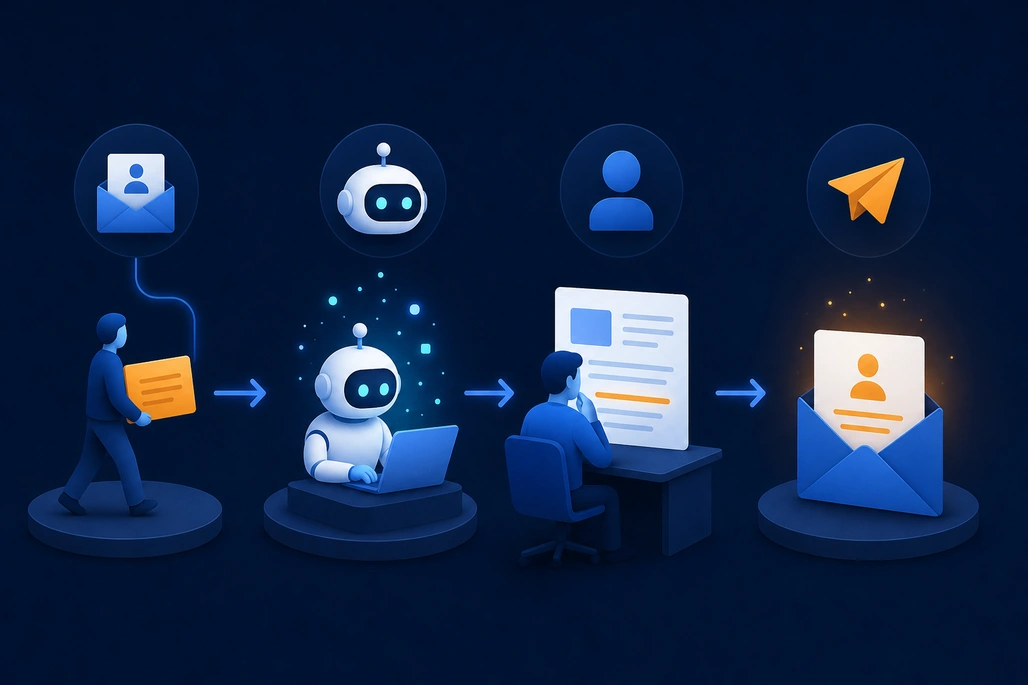
Start with a narrow task and keep a person responsible for the final output.
The process starts with a business problem, not with a request to “use AI.” That distinction matters. A useful first project has a clear owner, a repeated task, available examples of the work, and a way to tell whether the result is helping.
- The owner applies to work with a local OpenWorks Partner.
- The owner and partner identify a task or opportunity that matters to the business.
- They explore where AI can help and build or configure a workflow together.
- The business team practices using the workflow and keeps the skills after the partner leaves.
OpenAI gives examples such as reaching new customers, launching an ad campaign, and building a tool the team can continue using. That scope is sensible for beginners. Start with work that happens every week, not a large attempt to automate the whole business.
OpenAI's support documentation says partners are contractors and should plan for at least four full days of business work per month, plus a monthly workshop. The company has not published how it calculates individual stipends, how many partners it will fund, the pilot budget, or how long the pilot will run. OpenAI's OpenWorks application help page is the best place to check the current process before applying.
What a good first small business AI project looks like
A good first project is narrow, reviewable, and useful even when a person checks the final result. For example, a local home services company might receive many similar website inquiries. Staff may manually read each message, decide the service type, send a reply, and log the lead.
The business should not begin by asking AI to send messages automatically. Start by using AI to prepare a draft that a staff member reviews. This keeps a person responsible for pricing, availability, customer promises, and anything that could affect the business's reputation.
Worked example: creating a customer inquiry reply workflow
Imagine a two-person plumbing company that receives inquiries through a website form. The owner wants faster replies without letting a tool invent prices or booking times. An OpenWorks project could create a simple repeatable prompt and review process.
- Collect 20 to 30 past inquiries with personal information removed.
- List the categories staff already use, such as emergency repair, installation, estimate request, and service area question.
- Write approved business facts: service hours, service area, phone number, and the rule that prices are never quoted by the AI.
- Use ChatGPT Business to create a draft reply and categorize each inquiry.
- Require a staff member to check every draft before it is sent.
- Track reply time, number of leads contacted, and errors found during review for a few weeks.
You are helping a local plumbing business reply to a website inquiry.

Use only the approved business facts below. Do not invent pricing,
availability, licensing claims, warranties, or service areas.

Approved facts:
- Service area: [list cities]
- Business hours: [hours]
- Phone number: [number]
- Emergency policy: [policy]

Tasks:
1. Classify the inquiry as Emergency repair, Installation, Estimate,
   Service area question, or Other.
2. Write a friendly reply of 80 to 120 words.
3. Ask for the minimum missing details needed for a staff member to help.
4. Add a line that says: "Draft for staff review."

Customer inquiry:
[paste inquiry here]
This is not custom software. It is a controlled operating procedure that a nontechnical team can learn. If it works, the next step may be a form, a spreadsheet, or an approved automation. But the business should first prove that the categories, instructions, and review process produce good drafts.
How to use the three months of ChatGPT Business well
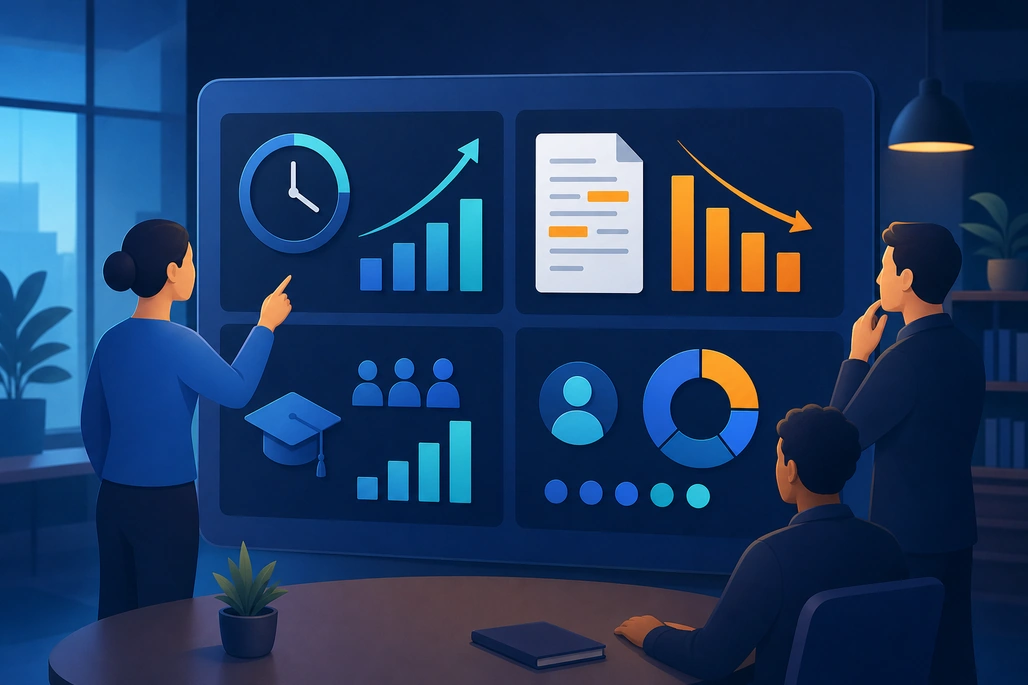
A few practical measures can show whether an early AI workflow is helping.
Three free months can disappear quickly if the team treats the account as a general experiment. Pick one or two workflows, decide who owns them, and schedule time each week to review what is working.
Before placing business material into any AI service, decide what staff may enter. Customer contact details, payroll information, payment data, health information, private contracts, and credentials need special care. A partner can help define a simple rule set, but the business owner remains responsible for data handling, final decisions, and customer communication.
Give employees examples of acceptable use. A retail team may use AI to draft product descriptions from approved specifications. It should not use AI to fabricate stock levels, delivery promises, product safety statements, or return policies.
Use a simple project scorecard
You do not need advanced analytics to judge an early project. Use a spreadsheet with a few before-and-after measures:
- How long the task took before and after the workflow.
- How many drafts required major correction.
- How many staff members can complete the task without help.
- Whether customers received faster or clearer replies.
Keep the scorecard honest. If the workflow saves time but creates too many corrections, narrow the task or improve the instructions. If nobody uses it after training, the process may be too hard or aimed at the wrong problem.
What OpenWorks does not promise
OpenWorks is a pilot, not a guaranteed consulting engagement for every applicant. OpenAI says applicants can express interest outside the listed communities, but it cannot promise availability. The company also does not publicly state the number of businesses it will accept or the duration of the pilot.
The $8,000 figure is a maximum monthly partner stipend, not a salary guarantee or a published standard rate. Decrypt's launch coverage and Forbes reporting both noted that the business support is free, while several program details, including the funding scale and duration, remain undisclosed.
It also does not remove the need for business judgment. AI can draft, summarize, classify, and help staff work through routine content. It can also make errors, expose weak processes, or produce a confident but wrong answer. Keep people responsible for approvals, money, customer commitments, and sensitive data.
How small businesses and AI practitioners can get started
Business owners should apply through OpenAI's OpenWorks page and describe one business problem they want to improve. Do not make the application vague. “We want to use AI” gives a partner little to work with. “We spend six hours each week writing follow-up emails after estimates” is a much better starting point.
AI practitioners and small teams can apply to become partners. OpenAI says applicants should have hands-on AI experience and include a problem they have solved with AI, what they did, what changed for the user, and one link to a social profile or portfolio. A degree is not listed as a requirement.
I would start with one task that is repetitive, low risk, and easy to review. Get a working result. Train two people. Measure it for a few weeks. Then decide whether the business should keep it, improve it, or move on to a better project.
Frequently asked questions
What is OpenAI OpenWorks?
OpenAI OpenWorks is a pilot that funds local AI practitioners to provide free, hands-on support to eligible independent U.S. small businesses. Businesses select a project and work with a local partner to build skills and practical AI workflows.
Is OpenWorks free for small businesses?
Yes. OpenAI says participation is free for eligible independently owned U.S. small businesses in the pilot. Participants also receive three months of ChatGPT Business at no cost.
Which businesses are not eligible for OpenWorks?
Software and SaaS companies, venture-backed businesses, and private equity-owned businesses are excluded from the OpenWorks small business pilot.
How much can an OpenWorks Partner earn?
OpenAI offers partners a monthly stipend of up to $8,000. Partners are expected to spend at least four full days each month working with local businesses and host one monthly workshop. OpenAI has not published the formula for individual stipend amounts.
Can a business apply if it is outside an OpenWorks pilot city?
Yes, a business can express interest. However, OpenAI says it cannot promise that OpenWorks will launch in every location or that a local partner will be available.
Based on reporting by X (formerly Twitter), OpenAI, OpenAI Help Center and Live 5 News.


Nidhi KumariPosted Nov 25, 2026, 6:01 AM EST
Thanks for sharing