

Introduction
The HandleError attribute is used to display user-friendly error pages to the end users when there is an unhandled exception.
Step 1
Step 2
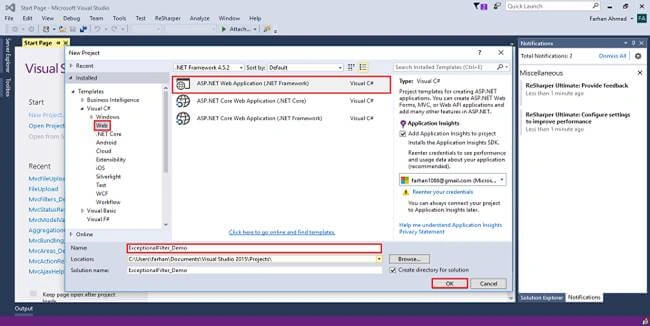
Step 3
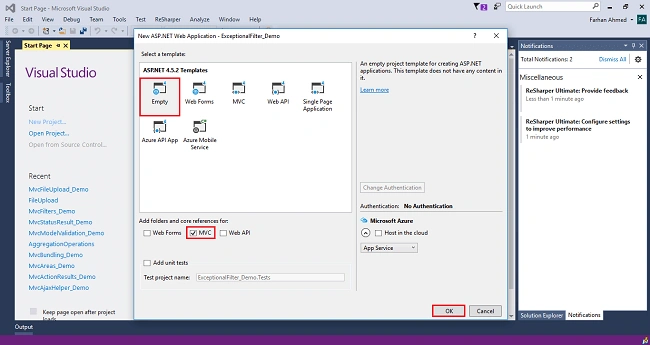
Step 4
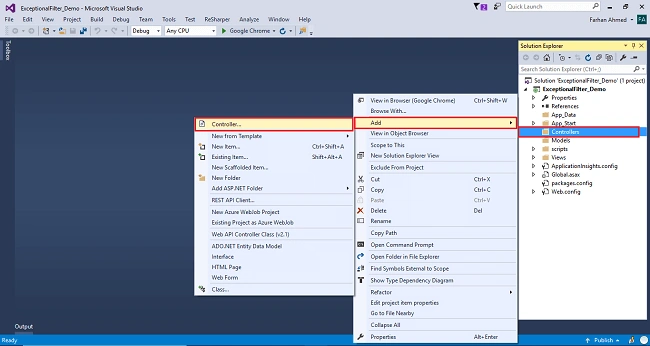
A window will appear. Choose MVC5 Controller-Empty and click "Add".
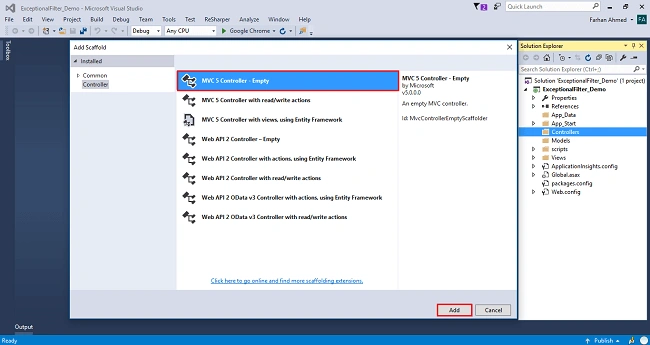
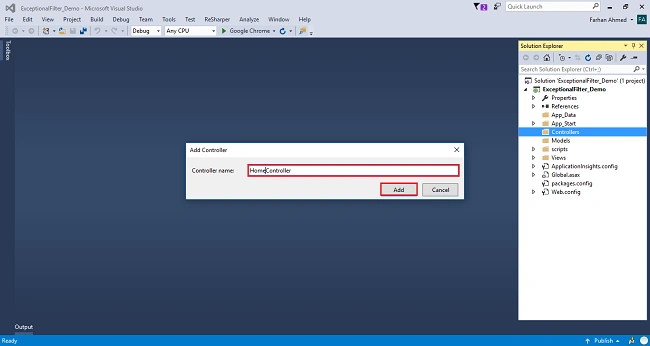
After clicking on "Add", another window will appear with DefaultController. Change the name to HomeController and click "Add". The HomeController will be added under the Controllers folder. Don’t change the Controller suffix for all controllers, change only the highlight, and instead of the default, just change Home.
The complete code for Home Controller
- using System;
- using System.Collections.Generic;
- using System.Linq;
- using System.Web;
- using System.Web.Mvc;
- namespace ExceptionalFilter_Demo.Controllers
- {
- public class HomeController : Controller
- {
- // GET: Home
- public ActionResult Index()
- {
- throw new Exception("Something went wrong...");
- //return View();
- }
- }
- }
Step 5
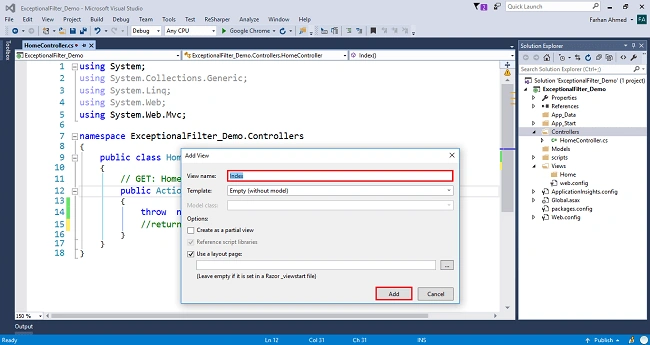
Step 6 - Built and run project ctrl+F5
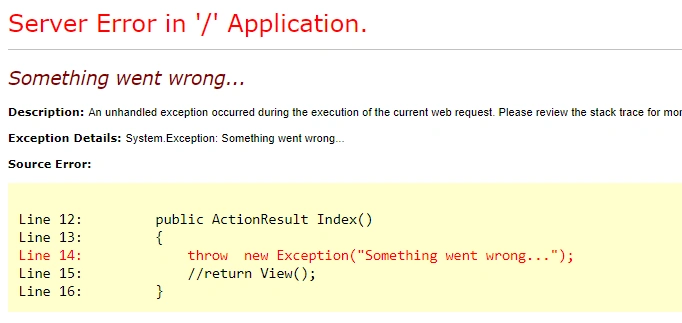
The Index action method throws an exception. As this exception is not handled when we run the application, we will get the default yellow screen of death which does not make sense to the end user.
Step 7
Enable custom errors in the web.config file that is present in the root directory of MVC application. The “customErrors” element must be nested under “<system.web>“.
- <customErrors mode=”On”>
- </customErrors>
Step 8
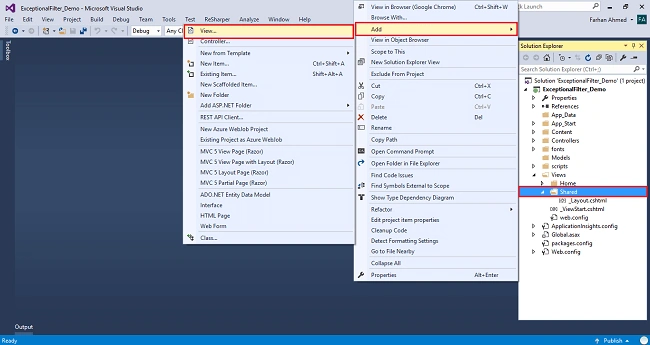
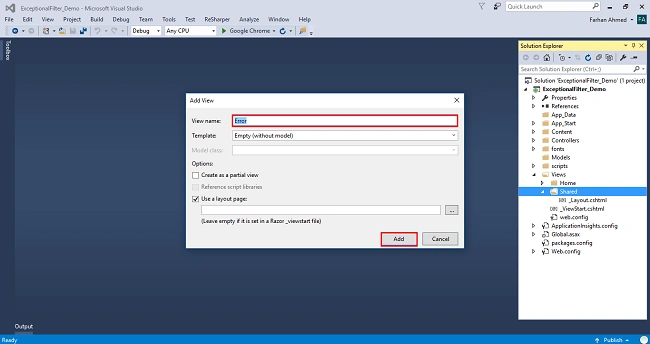
Run the application and notice that you are redirected to the friendly Error view instead of the generic Yellow screen of death. We have not specified the error page (View) name anywhere, but still, in the response, we get error view whenever an error occurs.
Step 8
- using System;
- using System.Collections.Generic;
- using System.Linq;
- using System.Web;
- using System.Web.Mvc;
- namespace ExceptionalFilter_Demo.App_Start
- {
- public class FilterConfig
- {
- public static void RegisterGlobalFilters(GlobalFilterCollection filters)
- {
- filters.Add(new HandleErrorAttribute());
- }
- }
- }
Step 9
- using System;
- using System.Collections.Generic;
- using System.Linq;
- using System.Web;
- using System.Web.Mvc;
- using System.Web.Routing;
- using ExceptionalFilter_Demo.App_Start;
- namespace ExceptionalFilter_Demo
- {
- public class MvcApplication : System.Web.HttpApplication
- {
- protected void Application_Start()
- {
- FilterConfig.RegisterGlobalFilters(GlobalFilters.Filters);
- AreaRegistration.RegisterAllAreas();
- RouteConfig.RegisterRoutes(RouteTable.Routes);
- }
- }
- }
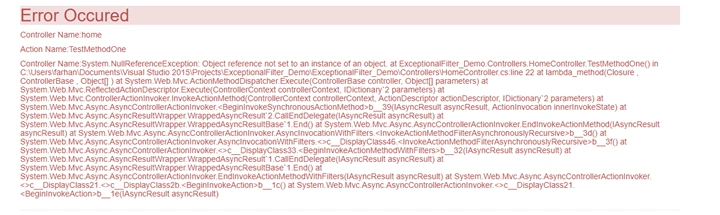
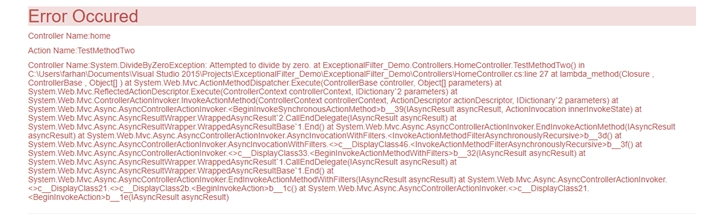
We will make our error view strongly typed view of model System.Web.Mvc.HandleErrorInfo and then, as usual, using @Model keyword we can access the members. One of the members is the Exception object.
Replace error view with the following code.
- @{
- ViewBag.Title = "Error";
- }
- <h2 class="alert-danger">Error Occured</h2>
- <hgroup>
- <h5 class="text-danger">Controller Name:@Model.ControllerName</h5>
- <h5 class="text-danger">Action Name:@Model.ActionName</h5>
- <h5 class="text-danger">Controller Name:@Model.Exception</h5>
- </hgroup>
- cshtml
- cshtml
Step 12
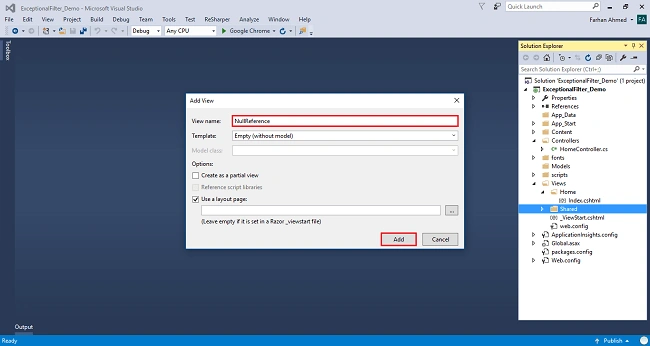
- @{
- ViewBag.Title = "NullReference";
- }
- <h2 class="alert-danger">Error Occured</h2>
- <hgroup>
- <h5 class="text-danger">Controller Name:@Model.ControllerName</h5>
- <h5 class="text-danger">Action Name:@Model.ActionName</h5>
- <h5 class="text-danger">Controller Name:@Model.Exception</h5>
- </hgroup>
Step 13
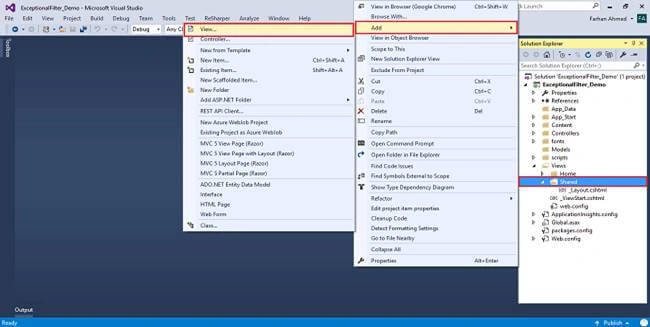
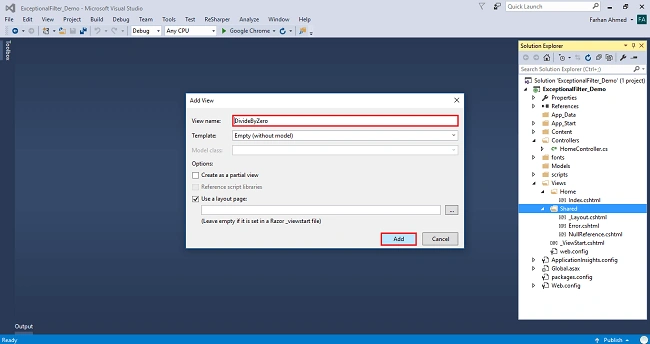
- @{
- ViewBag.Title = "DivideByZero";
- }
- <h2 class="alert-danger">Error Occured</h2>
- <hgroup>
- <h5 class="text-danger">Controller Name:@Model.ControllerName</h5>
- <h5 class="text-danger">Action Name:@Model.ActionName</h5>
- <h5 class="text-danger">Controller Name:@Model.Exception</h5>
- </hgroup>
Complete controller code
- using System;
- using System.Collections.Generic;
- using System.Linq;
- using System.Web;
- using System.Web.Mvc;
- namespace ExceptionalFilter_Demo.Controllers
- {
- public class HomeController : Controller
- {
- [HandleError(ExceptionType = typeof(NullReferenceException),View = "NullReference")]
- [HandleError(ExceptionType = typeof(DivideByZeroException),View = "DivideByZero")]
- [HandleError]
- public ActionResult Index()
- {
- throw new Exception("Something went wrong...");
- //return View();
- }
- public ActionResult TestMethodOne()
- {
- throw new NullReferenceException();
- }
- public ActionResult TestMethodTwo()
- {
- throw new DivideByZeroException();
- }
- }
- }
Some of the limitations of the HandleError attribute are -
- The error won’t get logged anywhere.
- Exceptions raised outside controllers will not be handled. Example- exception raised because of invalid URL won’t be handled.
- Exception Handling based on the scenario is not possible. Example – So one error page when the request comes via AJAX and a different one when comes via normal request.
http://localhost:60124/home/TestMethodOne
http://localhost:60124/home/TestMethodTwo
Join the conversation! Your thoughts help the community grow.