

Introduction
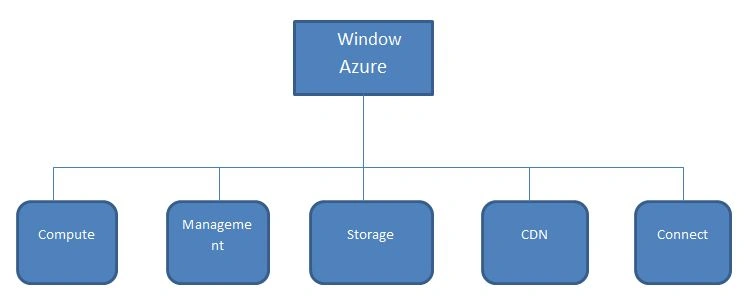
It is the Microsoft operating system for Cloud Computing. It provides both a Platform As A Service (PAAS) and an Infrastructure As A Service (IAAS) model and supports many programming languages like C++, C#, Java, JavaScript, Python and tools like Visual Studio and Eclipse and frameworks like .Net, Zend, Node, JavaScript and as well as various operating systems (Windows Server, SUSE, Ubuntu, Open Logic) for Virtual Machines. Windows Azure provides on-demand compute and storage to host, scale and manage web applications on the internet through Microsoft datacenters. Windows Azure offers a distributed operating system where we can build, test and deploy applications without caring about the classic front-end interface. For instance, we don't need to rely on the typical IIS console to configure sites, virtual directories or application pools. Windows Azure uses SQL Azure to store relational data on the cloud. Windows Azure is totally based on Cloud Computing. The Content Delivery Network (CDN) provides developers a solution for providing high-bandwidth content that's hosted in Windows Azure.
Cloud Computing
Cloud Computing is the latest terminology that's based on utility and the consumption of computing resources. Cloud Computing is the technology where everything is on the cloud, it's just a device like a PC, tablet and mobile phone connected with an internet connection. Running applications in the clouds have many benefits for running programs, like faster service. Cloud Computing reduces the cost using the optimal resources utilization. Cloud Computing is used to improve the ability to satisfy business targets.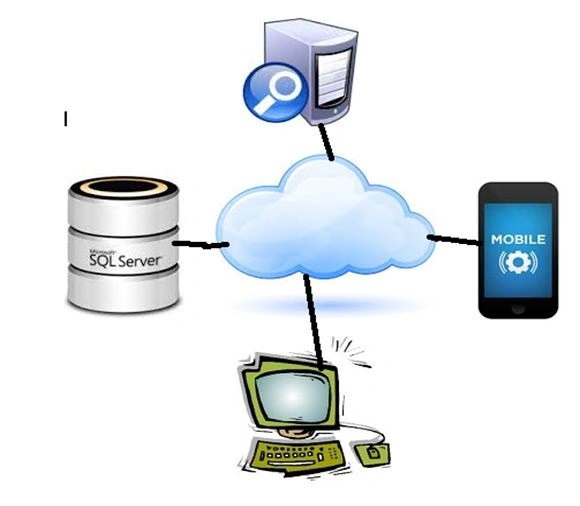
-
File Storage
Cloud Computing provides the ability to store your files and retrieve them from web enabled interfaces. Cloud Computing provides the high quality data storage on the web, if we have availability, speed, scalability and security for our environment. It also provides the possibility to store the data, either off or on premises, depends on the regulatory compliance requirement. -
Backup
Backing up data has always very complex and a time-consuming operation. It includes maintaining a set of drives and manually collecting them and dispatching them to a backup facility. There is also time necessary to load the backup devices for restoration operations.
The following are some main points that we should be familiar with about cloud computing to help the organization and its benefits.
-
Two Versions of Cloud to be familiar with
In Cloud Computing there are the two popular versions offered, they are Software As A Service (SaaS) and Infrastructure As A Service (Iaas). In SaaS, the Cloud Services provider hosts the enterprise application and data associates on the server and storage system. In IaaS, providers offer the virtual machines, storage and connectivity resources to run our enterprise applications using the web browsers. -
Cloud Computing offers effective flexibility in delivering IT Services
Businesses are dynamic currently. Cloud Computing Services let companies fast-ramp capacity up and down to match business requirements. Today's Cloud Computing Services are offered by the month or totally based on the consumption of the resources. -
Cloud Computing provides ability to refresh infrastructure without incurring costs
This is especially for the companies that are trying to gather new technologies, like many companies today are virtualizing their mission-critical applications so they require the virtual machines associated with those applications to run on effective and resilient servers. -
Cloud computing is the economical way to supports new IT Services
Cloud Computing provides an economical solution to support new technologies. Many data centers are out of space that require creating new data centers or pay to expand their existing data centers. Here again, Cloud Computing provides companies to move their applications to the provider's infrastructure and save the cost of a data center expense. -
Cloud Computing Frees up staff for various projects
Cloud Computing offers infrastructure as well as management services to allow companies to offload tasks to the provider for freeing up the IT staff to work on various projects that are more critical to the success of the business.
SQL Azure
SQL Azure is the Microsoft's cloud database. SQL Azure is totally based on the SQL Server database technology and built on Microsoft's Windows Azure cloud computing platform, SQL Azure provides organizations to store data in the cloud and quickly scale the size of the database. Data is managed, hosted and provisioned in Microsoft data centers. SQL Azure helps in the easy management of large databases.
Syntax
- Create table table-name
- (
- [field 1] [data type]
- [field 2][data type]
- [field 3][data type]
- )
Advantages of Windows Azure
The following are the advantages of Windows Azure:
-
Reduces the effort and cost of IT Management.
-
Consumes Computing Resources only when the need arises.
-
Scales your IT resources up and down based on your needs.
-
Responds quickly to changes in your business and customer needs.
-
Reduces the cost of building and extending on-premises resources.
-
Removes the need to manage hardware.
-
Use your existing development skills to build cloud applications.
-
Consistent development and management experience across on-premises and the cloud.
Yatendra SharmaPosted Mar 16, 2015, 12:38 AM
10nx Gowtham
Gowtham RajamanickamPosted Mar 14, 2015, 4:39 AM
good show..
Yatendra SharmaPosted Mar 13, 2015, 8:15 AM
Thanx Rizwan Bhai
Rizwan AliPosted Mar 13, 2015, 12:13 AM
good start