Loading
Everything in Kubernetes
- Featured
Containerize React JS and .NET Core Apps with Docker and Kubernetes
This guide demonstrates how to build a sample product management application using .NET Core Web API for the backend and React JS for the frontend. The app is containerized with Docker and Kubernetes for easy deployment. It covers setting up CRUD operations, integrating with Axios, and deploying via Docker.
- Featured
Containerized Apps: Auto Scaling & Monitoring with Kubernetes
Learn the fundamentals of Docker and Kubernetes, including auto-scaling. Follow a detailed guide to implement a Weather Forecast API using .NET Core 6 Web API, containerize the application with Docker and Kubernetes, set up auto-scaling with HPA and VPA, configure Metric Server for monitoring.
- Featured
Containerize the .NET Core 7 Web API with Docker and Kubernetes
Containerize the .NET Core 7 Web API with Docker and Kubernetes
- Featured
Deploy And Run .NET Core 7 Web API On Azure Kubernetes Service (AKS)
In this article, you will learn how to deploy and Run .NET Core 7 Web API on Azure Kubernetes Service (AKS).
- Featured
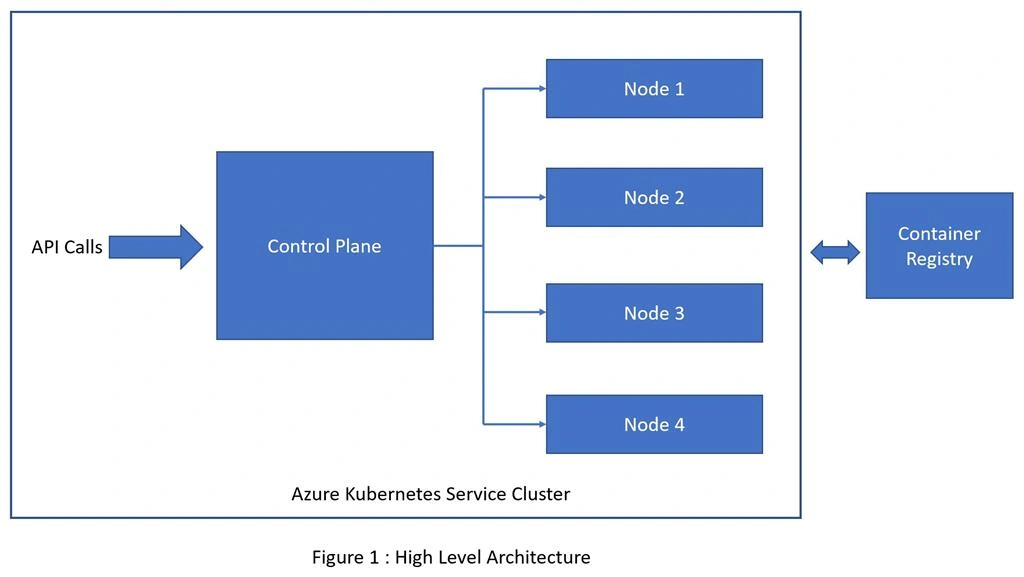
Azure Kubernetes Service Architecture
This article walks us through the internal architecture of Azure Kubernetes Service and gives a clear understanding of the Control Plane and the Node
Running Kubernetes Workloads With Confidential Containers
Learn how Confidential Containers use hardware-backed TEEs, Kata Containers, and remote attestation to protect sensitive Kubernetes workloads.
Managing Batch and GPU Job Queues in Kubernetes With Kueue
Learn how Kueue manages Kubernetes batch and GPU workloads using queues, resource quotas, ResourceFlavors, and workload admission policies.
Automatically Stopping a Kubernetes Canary Release When Metrics Degrade
Learn how to use Kubernetes, Argo Rollouts, and Prometheus to evaluate canary metrics, halt unhealthy promotions, and roll back failed releases.
Argo CD Sync Waves and Hooks: How to Control Deployment Order
Learn how Argo CD sync waves and resource hooks control Kubernetes deployment order, including PreSync jobs for database migrations and post-deployment validation.
Helm Chart Validation: How to Catch Kubernetes Configuration Errors Early
Learn how to validate Helm charts with linting, JSON schema checks, template rendering, Kubernetes manifest validation, and CI/CD pipeline tests before deployment.
Kubernetes Gateway API vs Ingress: Which One Should You Use?
Compare Kubernetes Gateway API and Ingress, their routing models, controllers, traffic management features, and when each option fits your cluster.
How to Test Kubernetes Pod Disruptions Before a Cluster Upgrade
Learn how to test Kubernetes pod disruptions before a cluster upgrade by validating PodDisruptionBudgets, node drains, readiness, scheduling, and application availability.
How to Verify Container Image Signatures Before Kubernetes Deployment
Learn how to sign and verify container image digests with Cosign and enforce trusted images before Kubernetes workloads are deployed.
Kubernetes Network Policies Not Working? How to Find the Cause
Troubleshoot Kubernetes NetworkPolicies by checking CNI support, pod and namespace selectors, ingress and egress isolation, and conflicting policy rules.
How to Use Kubernetes Network Policies to Control Pod Communication
Learn how to use Kubernetes NetworkPolicies to restrict ingress and egress traffic between frontend, backend, and database pods across namespaces.
Validating and Troubleshooting AKS Deployments
Learn how to connect to an AKS cluster, verify pod health, diagnose common Kubernetes errors, view logs, and find the public IP of LoadBalancer services.
Demystifying CrashLoopBackOff: How to Diagnose and Fix Crashing Kubernetes Pods Using kubectl
Learn how to diagnose Kubernetes CrashLoopBackOff errors using kubectl logs and describe, interpret exit codes and events, and resolve common pod restart causes.
Zero to Production: Automating AKS Deployments with Azure Container Registry and GitHub Actions
Set up an automated CI/CD pipeline that builds Docker images, pushes them to Azure Container Registry, and deploys them to Azure Kubernetes Service with GitHub Actions.
Automating Kubernetes Deployments: An End-to-End Guide to Configuring ACR, AKS, and GitHub Actions
Set up Azure Container Registry, connect it to an AKS cluster, and create Azure service principal credentials for GitHub Actions deployment automation.
The Complete Guide to Automating Kubernetes Deployments with Azure and GitHub Actions
Learn to create an Azure Container Registry, connect it to AKS, configure GitHub Actions credentials, and automate Docker image builds and Kubernetes deployments.
End-to-End CI/CD for ASP.NET Core on AKS: Multi-Environment Routing and Troubleshooting
Build a branch-driven CI/CD pipeline for an ASP.NET Core app on AKS, with namespace isolation, NGINX Ingress routing, and fixes for Azure and DNS timeout issues.
Kubernetes Readiness vs. Liveness Probes: How to Choose the Right Settings
Learn how Kubernetes readiness and liveness probes differ, how probe failures affect traffic and restarts, and how to configure health checks for Deployments.
Kubernetes Readiness vs. Liveness Probes: How to Choose the Right Settings
Learn how Kubernetes readiness, liveness, and startup probes control traffic routing, container restarts, and safe initialization, with guidance on choosing reliable probe settings.
Troubleshooting Node.js Memory Issues in Kubernetes: From Heap Limits to Pod OOMKilled Errors
Learn how to align Node.js V8 heap settings with Kubernetes memory limits, diagnose OOMKilled pods, and investigate memory leaks.
Troubleshooting Frontend 502 and 503 Errors in Kubernetes: A Diagnostic Playbook
Diagnose frontend 502 and 503 errors in Kubernetes by checking cluster resources, service endpoints, readiness probes, ingress logs, routing, and network policies.
Enabling and Tuning Node Swap in Kubernetes
Learn how Kubernetes node swap works, how to configure kubelet swap policies, and how to assess Linux swap behavior and production risks.
What Happens When Kubernetes Uses cgroup v2 for Resource Limits
Learn how Kubernetes uses cgroup v2 to enforce CPU and memory limits, diagnose throttling and memory pressure, and inspect container resource settings.
Kubernetes cgroup v2 Changes: Check Container CPU and Memory Accounting
Learn how Kubernetes uses cgroup v2 for container CPU and memory limits, and how to inspect cgroup files to troubleshoot throttling, usage, and OOM events.
Kubernetes Node Swap: Keeping Memory-Heavy Workloads Running Under Pressure
Learn how Kubernetes manages Linux swap, including kubelet settings, cgroup v2 requirements, LimitedSwap behavior, and which Pods can use swap under memory pressure.
Kubernetes cgroup v2 Migration: Checking CPU and Memory Behavior
Learn how to verify Kubernetes CPU, memory, cgroup driver, and runtime behavior when migrating Linux nodes from cgroup v1 to cgroup v2.