Loading
- Featured
R Data Frame Operations - Merging/Joining Two Data Frames In R
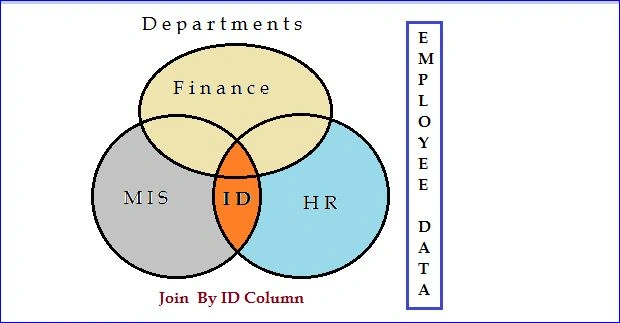
In this article, we shall learn about the different ways of joining or merging two Data Frames in R.
- Featured
R Services In SQL Server 2017
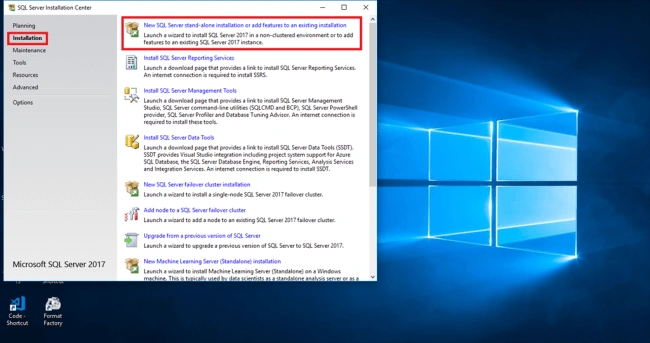
Hello Everyone. In this article I will be demonstrating how to use R Services in SQL Server 2017. This article is intended for those who have a basic idea of R language. If you don't, still no worries. You can still go through and grab it easily. I will go into details of R language in some other article.
- Featured
Installing And Setting Up R Environment On Windows
Learn how to install the R language and set up the R environment on Windows, including verifying the installation and preparing to use an IDE.
- Featured
What Is R Language
R is a programming language and software environment for statistical computing and graphics.
Use Of If Statement In R
Explore the versatile use of if statements in R for decision-making and control flow. Learn how to implement conditional logic, perform data filtering, and drive program behavior based on logical tests. Enhance your understanding of programming logic and data analysis with this fundamental concept in R.
How To Use Dplyr Package To Manipulate Data In R
In this article, we will learn efficient data manipulation in R using the powerful Dplyr package. Discover essential functions for filtering, summarizing, arranging, and transforming data.
How To Create A Function In R
Learn how to create and use functions in R with this comprehensive guide. Understand the syntax for defining functions, specifying arguments, and defining default values. Explore examples demonstrating function calls, handling return values, and utilizing return functions.
How To Access Data Of Predefined Datasets In R
In R, accessing predefined datasets involves importing data from packages or using built-in datasets. Utilize functions like data() or datasets:: to load datasets for analysis, exploration, and visualization, leveraging R's powerful data manipulation capabilities for statistical analysis and visualization."
How To Read Tabular Data From CSV Files In R
Learn how to import and manage CSV data in R. Discover the read.csv function for reading tabular data with and without headers. Explore the structure of the imported data frame. Additionally, understand the usage of read.table for data import and get insights into managing data headers and contents effectively.
How To Use XLSX Package To Read Data In R
The XLSX package in R facilitates reading data from Excel files. It offers functions to import Excel data into R as data frames, providing flexibility in handling spreadsheet data for analysis, manipulation, and visualization within the R environment.
How To Use Readxl Package To Read Data In R
Learn to efficiently import data from Excel files into R using the readxl package. Simplify data reading, analysis, and manipulation for seamless data science workflows.
How to Import a CSV File in R with Easy Steps
In this article, we'll delve into importing a CSV file in R. We'll explore two user-friendly methods to accomplish this task: leveraging the intuitive Graphical.
Statistical Analysis in R Programming
Statistical analysis forms the bedrock of deriving meaningful insights from data, guiding decision-making processes in various fields. R programming, renowned for its statistical prowess, provides a robust set of tools and packages for conducting a wide range of statistical analyses.
What is Data Manipulation in R
Data manipulation is an essential part of data analysis and plays a vital role in turning raw data into valuable insights. R programming for efficient data manipulation. Dive into data structures, subsetting, filtering, reshaping, sorting, aggregating, merging, string manipulation, handling missing data, and applying functions.
Matrix In R - How To Create Matrix In R
R is an important programming language used heavily by statisticians. It is also used in machine learning, data science, research, and many more new fields. It is a computing environment where statistical data may be implemented. In this article, we shall discuss and learn about the packages in R.
Matrix In R - Adding Rows And Columns To A Matrix In R
In this article, we shall learn how to add rows and column to a matrix in R using R studio?
How To Define Variables And Constants In R
Learn how to name, assign, inspect, and remove variables in R, and how to use numeric, character, and predefined constants.
Functions in R Programming
In this article, we will delve into the world of functions in R programming, exploring their syntax, examples, outputs, and even creating flow diagrams to illustrate their operation.
Control Structures in R Programming
In this article, we will explore the various types of control structures in R, with their syntax, and present example programs with output to illustrate their usage.
Data Structures in R Programming
In this guide, we'll explore the various data structures in the R language. Provided with syntax examples and illustrate how each data structure is used in practical scenarios in detail.
Vectors in R Programming
In this comprehensive guide, we'll look into the vectors in R program. We'll start by defining what vectors are, explore the various types of vectors, examine the syntax for creating and manipulating vectors, and provide illustrative examples to solidify your understanding.
R Programming
Learn the fundamentals of R programming, including variables, data types, arithmetic, vectors, functions, conditional statements, and loops.
R Data Frame Operations - Adding Observations / Rows And Variable / Column To A Data Frame In R
In this article, we shall learn about adding observations/rows and variables/column to a Data Frame in R in different ways.
R for Advanced Analytics - AI42 -S02 Ep. 01
In this lecture, we will talk about the importance of the R community and structuring your data science process.
Introduction To Machine Learning Using R
In this article, you will learn about machine learning using R.