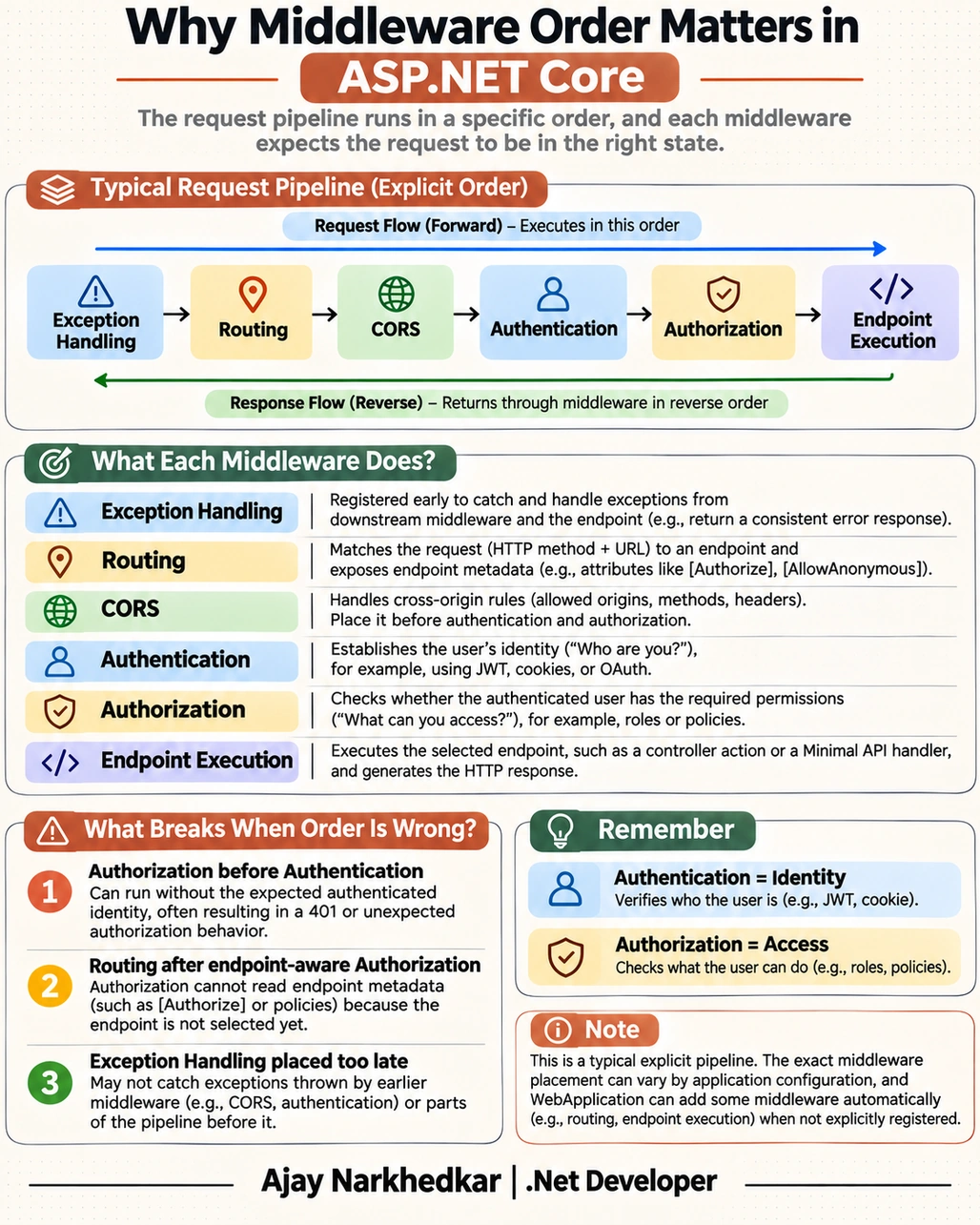
𝗪𝗵𝘆 𝗱𝗼𝗲𝘀 𝗠𝗶𝗱𝗱𝗹𝗲𝘄𝗮𝗿𝗲 𝗢𝗿𝗱𝗲𝗿 𝗺𝗮𝘁𝘁𝗲𝗿 𝗶𝗻 𝗔𝗦𝗣.𝗡𝗘𝗧 𝗖𝗼𝗿𝗲?
Your API may have correct authentication and authorization code, but placing middleware in the wrong order can still create security and functionality problems.
Let's understand why.
𝗔 𝘁𝘆𝗽𝗶𝗰𝗮𝗹 𝗽𝗶𝗽𝗲𝗹𝗶𝗻:
1️⃣ Exception Handling
Place it early so it can catch exceptions thrown by middleware and endpoints that execute later.
2️⃣ Routing
Identifies the matching endpoint and makes its metadata available to later middleware.
3️⃣ CORS
Handles cross-origin request rules. It should run before authentication and authorization so CORS responses are handled correctly.
4️⃣ Authentication
Answers: Who are you?
It validates the credentials or token and establishes the user's identity.
5️⃣ Authorization
Answers: What are you allowed to access?
It checks whether the authenticated user has permission to access the selected endpoint.
6️⃣ Endpoint Execution
The selected controller action or Minimal API handler executes.
𝗪𝗵𝗮𝘁 𝗰𝗮𝗻 𝗴𝗼 𝘄𝗿𝗼𝗻𝗴?
🔸 Authentication before routing can prevent endpoint-aware authorization from getting the selected endpoint metadata it needs.
🔸 Authorization before authentication means authorization may run without the expected authenticated identity.
🔸 Exception handling placed too late may fail to catch exceptions from middleware registered before it.
🔸 CORS in the wrong position can cause browser requests to fail, especially preflight requests.
𝗥𝗲𝗺𝗲𝗺𝗯𝗲𝗿:
Authentication identifies the user. Authorization checks permissions. Routing provides endpoint information. Exception handling protects the pipeline from unhandled errors.
Middleware order is part of application correctness and security—not just code organization.
𝗤𝘂𝗲𝘀𝘁𝗶𝗼𝗻:
What could happen if "UseAuthorization()" is registered before "UseAuthentication()"?