Loading
Articles by Rasul Huseynov
Object Oriented Design Balancing with Anti-Single Responsibility
This article will change your perspective on working with the Single Responsibility Principle (SRP). The main point is to focus on finding balance when designing object-oriented systems and applying SRP.

Example of Aspect Oriented Paradigm with DispatchProxy Class
This article explores how to implement cross-cutting concerns in .NET using the DispatchProxy class. It demonstrates dynamic proxy creation for logging and other concerns, highlighting the benefits of AOP (Aspect-Oriented Programming) to enhance modularity, separation of concerns, and maintainability.

ASP.NET Core Middleware
ASP.NET Core Middleware plays a crucial role in the request processing pipeline of web applications. It allows developers to add custom functionalities, such as authentication, logging, and error handling, to handle HTTP requests and responses efficiently.
Validation of Complex Objects in Multi-Lingual Environment Using DynamicVNET With ASP.NET Core
DynamicVNET is a lightweight, rule-based validation library for .NET applications, designed to validate POCOs while adhering to the Single Responsibility Principle (SRP). It integrates seamlessly with ASP.NET Core, enabling flexible and dynamic validation for API requests with minimal configuration.
Understanding Builder Design Pattern
The Builder is a pattern that belongs to the creational design patterns family. What makes it special is its ability to provide abstraction to the client by encapsulating different types of the same object with various combinations during the creation process.

Understanding LINQ While Writing Your Own
LINQ (Language-Integrated Query) in .NET offers a unified, declarative way to query diverse data sources like objects, databases, XML, and more. It simplifies data manipulation with methods like Where, Select, and GroupBy, supporting both query and method syntax.

Behind the Scenes of OWIN (Open Web Interface for .NET)
OWIN is the acronym of Open Web Interface for .NET and it is a specification that provides to decouple web servers with web applications. This specification is an also open standard for all .NET ecosystems.
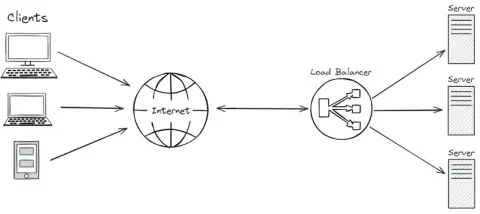
Understanding of Load Balancers
Load balancers are essential for managing network traffic and ensuring high availability, scalability, and fault tolerance in server environments. They distribute incoming traffic across multiple servers, optimize resource use, and prevent overload.
A Different Perspective of Stack Memory in .NET
A Different Perspective of Stack Memory in .NET" explores the intricacies of stack memory management within the .NET framework. It delves into the differences between stack and heap, the role of value and reference types, stack frames, and performance optimization.

Under The Hood Of Thread Synchronization With LOCK
The LOCK keyword is the most popular mutual-exclusive thread synchronization construct. The LOCK statement in C# is crucial for thread synchronization, preventing race conditions by restricting access to shared resources. Under the hood, it translates to the Monitor class, enhancing code efficiency and reliability.
Monitor Class as Hybrid Synchronization Construct in .NET
The Monitor class is hybrid thread synchronization construct. So, it provides a mutual-exclusive lock supporting spinning, thread ownership, and recursion.
Introduction to Monitor Class in C#
The Monitor class is built on dotNET’s FCL (Framework Class Library) infrastructure. In general, it provides to achieve thread safety.
Deep Dive Into Race Condition Problem in .NET
In a multithreading environment, there are many benefits and challenges to consider. In our case, we will focus on one of the most popular challenges the Race Condition Problem.
Understanding of ConcurrentDictionary in .NET
Everything is becoming more concurrent, so usually server-based(or multithreaded environments) applications are faced with non-thread-safe problems such as race condition.
Better Implementation Of Singleton Pattern in .NET
This article explains the mistakes made in writing Singleton Pattern in the multithreaded environment create a bug and how to bring a solution to it.