Loading
Sagar Lad's contributions
Data Maturity Assessment: Where Does Your Company Stand?
A Data Maturity Assessment helps organizations evaluate their data management capabilities, identify gaps, and improve decision-making. Advancing through maturity levels ensures better governance, analytics, AI adoption, and business success.
What Is a Data Strategy and Why Does It Matter?
A data strategy is a comprehensive plan for managing and utilizing data to drive business decisions. It includes data collection, storage, analysis, and governance.
AI Ready Data for Enterprise : Unlocking the Future of Business Intelligence
AI-ready data is crucial for enterprises to leverage AI effectively. It involves ensuring data is accurate, structured, labeled, and scalable, enabling AI models to make data-driven decisions, optimize processes, and gain a competitive edge.
Unleashing power of Agentic AI: Shaping the Future of Intelligent Systems
This article delves into how autonomous, self-directed AI agents are revolutionizing industries, enabling smarter automation, and driving innovations in machine learning, cognitive computing, and next-gen technologies.

Auto Pause/Start Azure Synapse Analytics
In this blog, you will learn about Auto Pause/Start Azure Synapse Analytics.
Automate Deployment of NonNative Azure Tool Using Azure Devops+Ansible
In this blog, you will learn about Automate Deployment of NonNative Azure Tool using Azure Devops+Ansible.
Introduction To Delta Sharing For Secure Data Sharing
Learn how Databricks Delta Sharing securely shares live Delta Lake data across cloud platforms, including providers, recipients, authentication, governance, and scalability.
Cost Optimizations Best Practices For Azure Cloud
Practical Azure cost optimization tips for Databricks, Data Factory, virtual machines, databases, App Service, Cosmos DB, and resource budget alerts.
Fast Track Multi-Cloud Adoption With Oracle Cloud And Microsoft Azure
In this article, you will learn about fast track Multi-Cloud Adoption with Oracle Cloud and Microsoft Azure.
Create Python Wheel File And Deploy Production Pipelines With Python Wheel Task In Databricks
In this article, you will learn how to create python wheel file and deploy production pipelines with python wheel task in databricks.
Integrate Data Bricks Data Lineage With Azure Preview
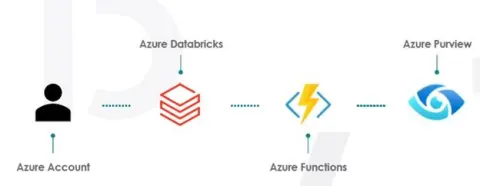
In this blog, we explore about how to integrate data bricks with Azure Purview to get data lineage with Data bricks notebooks using spline.
Data Factory Data Flow Vs Azure Data Bricks
In this article, you will learn about Data Factory Data Flow vs Azure Data Bricks.
Data Engineering And Secure Coding With A Vulnerability Database
In this article, you will learn about data engineering and secure coding with a vulnerability database.
Scalable Data Engineering With Azure Databricks
Learn how Azure Databricks supports scalable data engineering with Apache Spark, ETL and ELT pipelines, data transformation, streaming, and Azure data storage.

Data Analysis With Power BI Measures
In this article, we will take a look at how to perform data analysis with measures in Power BI.
Execute Python Script From Power BI
Learn how to configure Python in Power BI Desktop, run Python scripts, and use Python in Power Query for data preparation and visualization.
Cloud Computing Security Threats
This is a second article from the series of article about security as a service for cloud computing. In this article, we will explore about more cloud security threats in detail
Docker Container With Azure Container Instance
In this article, how to work with Azure container instance on azure