Loading
Articles by Vijay Kumari

Microsoft Transforms Windows 11 into the AI-Powered PC Platform
Windows 11, powered by AI, transforms everyday computing with smarter settings, creative tools, and real-time assistance—making work, play, and productivity seamless on next-gen Copilot+ PCs.
What Is BEP-20? How It Compares to ERC-20
This article compares BEP-20 and ERC-20 token standards, explaining their similarities, differences, use cases, and benefits to help developers and crypto users choose the best option for their projects.
Why Big Brands Are Choosing Base for Web3
Base, Coinbase’s Layer-2 blockchain built on Optimism’s OP Stack, offers scalability, low fees, security, and seamless onboarding, making it an attractive, trusted Web3 foundation for big brands and developers alike.
How Generative AI Is Transforming Digital Marketing Strategies
Explore how generative AI transforms digital marketing—from ad copy to audience segmentation—boosting ROI, speed, and personalization. Discover strategies, tools, and real-world success stories to future-proof your marketing game.
What is New in JDK 24?
JDK 24 introduces preview features like unnamed variables, pattern matching for primitives, string templates, and performance boosts, enhancing Java's productivity, readability, and native integration for modern development.
Google Cloud Next 25 Unveils AI Innovations to Transform Businesses
At Google Cloud Next, Google unveiled major AI innovations, including the Ironwood TPU, Gemini 2.5, and Cloud WAN—advancing enterprise efficiency, quantum computing, and scalable AI across industries worldwide.
Creating Ghibli-Style Images for Free with Grok AI
Grok AI enables users to create stunning Studio Ghibli-style images effortlessly by generating artwork from descriptive prompts. With simple tools, anyone can produce whimsical, vibrant visuals inspired by Ghibli’s enchanting aesthetics.
Word Guessing Game in Python with Code
The Word Guessing Game is an interactive Python project where players guess a randomly selected word by suggesting letters, receiving feedback on accuracy, and aiming to reveal the entire word within limited attempts.
Top Python AI Libraries for Machine Learning
TensorFlow and PyTorch are leading deep learning frameworks, offering robust tools for neural networks. Scikit-Learn excels in traditional machine learning tasks. Keras, now multi-backend, simplifies neural network development. LightGBM and XGBoost are efficient gradient-boosting libraries for high-performance models.
How to use Apple’s new ‘Invites’ App?
Apple has launched Invites, an app that simplifies creating personalized event invitations on iPhones and the web. Users can design and share invites, manage RSVPs, and curate event soundtracks.

C# 14 - New Features and Updates
C# 14, supported on .NET 10, introduces features like field-backed properties, implicit span conversions, and enhanced lambda expressions, simplifying code and boosting performance. Developers can download the .NET 10 SDK from the official .NET downloads page or through Visual Studio 2022.

.NET 10 Preview 1 Features and Enhancements Unveiled
.NET 10 introduces runtime optimizations, library enhancements, and SDK improvements, boosting performance, usability, and productivity. With LTS support, it ensures stability while offering cutting-edge features for modern application development.
Top AI Libraries for Java Developers
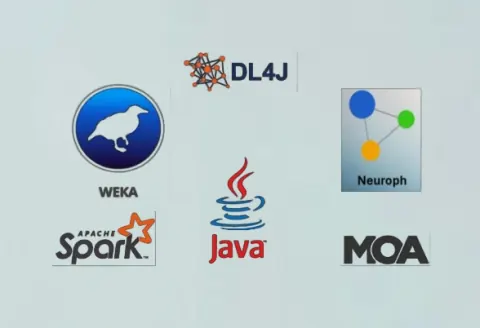
Java developers can enhance their applications with AI capabilities using libraries like Deeplearning4j for deep learning, Weka for data mining, MOA for data stream analysis, Spark MLlib for scalable machine learning, and Neuroph for neural network development.
Web Scraping Using Python
Learn how to scrape book details like titles, prices, and ratings from 'Books to Scrape' using Python. This guide covers web scraping basics, data extraction, and enhancements for efficient data handling.
Building a Number Guessing Game in Java
Learn how to create a number guessing game in Java. This beginner-friendly project covers random number generation, user input handling, loops, and conditionals, with enhancements like difficulty levels and input validation.
Building a Translation Application Using Python
Create a Python-based translation app in Google Colab using the googletrans library and ipywidgets. This interactive tool supports 100+ languages, real-time translation, and user-friendly features for seamless multilingual communication.
Build a Fun and Interactive Quiz App Using Python
Build an interactive Python Quiz App with multiple-choice questions, real-time validation, score tracking, and performance feedback. Enhance it with GUI, randomized questions, difficulty levels, leaderboards, and a timed mode.
Swap First and Last Rows in a Matrix Using Java with Code
Learn how to interchange the first and last rows of a matrix in Java using simple loops or efficient methods like `System.arraycopy()`, complete with examples, explanations, and practical tips.
Printing a 2D Array in Java with Code
Explore methods to print a 2D array in Java, including nested loops, Arrays.deepToString(), for-each loops, and Java 8 streams, with detailed explanations and code examples for effective implementation.
Merging Two Arrays in Java with Code
This article explores merging arrays in Java, covering efficient techniques like `System.arraycopy()`, manual iteration, Java Streams, and ArrayList, with code examples to suit various programming needs.
Copying All Elements of One Array to Another Array in Java with Code
Learn how to copy arrays in Java using user input, iterative methods, and `System.arraycopy()`. This article demonstrates seamless duplication of entire arrays and subsets with practical examples.
Sum of Fibonacci Series Up to a Number N in Java with Code
This article explains how to calculate the sum of Fibonacci numbers up to a given number \( N \) in Java, with step-by-step logic, code examples, and practical implementation details.
Print Fibonacci Series in Java Using Different Methods
This article explores four methods to generate the Fibonacci series in Java: iteration, recursion, dynamic programming (memoization), and Java streams, offering optimized, modern, and functional approaches for various scenarios.
Checking Two Matrices Are Equal in Java or Not
Learn how to compare two matrices in Java by implementing a `Matrix` class to handle creation, input, and comparison. This article covers object-oriented concepts, user input, and array manipulation.
Google Chrome AI Upgrades Enhance Your Browsing Experience
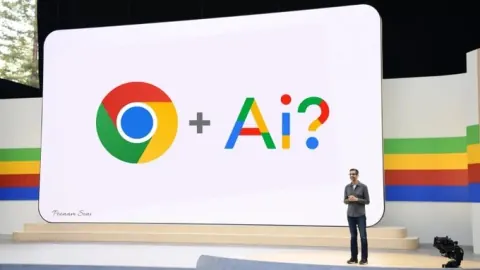
Discover 11 AI-powered Google Chrome features, including Google Lens, tab organizers, and enhanced security, designed to streamline searching, browsing, and productivity while personalizing and protecting your online experience.