Loading
Vijay Kumari's contributions
How do Neural Networks Work?
Learn how neural networks work, how they mimic the human brain, and how they power AI tools like ChatGPT and image recognition systems. Includes real-world analogies and beginner-friendly code.
What's the difference between AI, Machine Learning (ML), and Deep Learning (DL)?
Discover the key differences between Artificial Intelligence (AI), Machine Learning (ML), and Deep Learning (DL). Understand their relationship, use cases, and how they power today’s smart technologies.
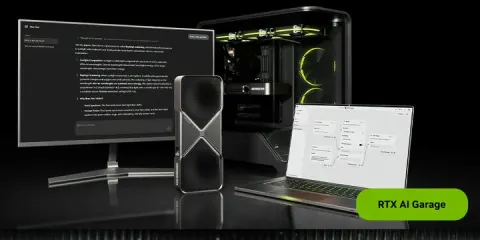
OpenAI’s New Open Models Now Run Faster on NVIDIA GeForce RTX & RTX PRO GPUs
NVIDIA and OpenAI optimize GPT-OSS models for RTX GPUs, delivering powerful, open-source AI reasoning on local PCs. This collaboration democratizes advanced inference, enabling seamless deployment for developers and enterprises.
NVIDIA Supercharges GPT-OSS from Cloud to Edge with 1.5M TPS Performance
NVIDIA and OpenAI launch GPT-OS-20 b and 120b, open-weight AI models offering high performance, flexible deployment, and accessibility, ushering in a new era of scalable, secure, and democratized AI innovation.
What are the Different Types of AI? (Narrow, General, etc.)
Learn about the three main types of Artificial Intelligence (Narrow AI, General AI, Super AI) with clear explanations, real-world examples, and practical C# code implementations.
What is artificial intelligence (AI)?
Discover what Artificial Intelligence (AI) really is! Understand its definition, types, real-world applications, and practical C# code examples that introduce AI concepts to developers.
What are the basic datatypes supported in C?
Learn about the basic data types in C programming including int, float, char, double, and void. Understand their sizes, ranges, and usage with practical examples to build a strong foundation in C.
OpenAI Launches gpt-oss Open-Source Models on Azure AI Foundry & Windows AI Foundry
OpenAI's GPT-OSS-120B and 20B models debut on Microsoft Azure and Windows AI Foundry, empowering developers with open-weight AI for secure, customizable cloud-to-edge deployment, driving innovation with full transparency and control.
OpenAI's Models Now Available on AWS
OpenAI partners with AWS to offer GPT-OSS models via Amazon Bedrock and SageMaker, enabling millions of AWS customers to deploy powerful, cost-efficient generative AI models for scalable, enterprise-grade applications.
OpenAI Launches gpt-oss: Advanced Open-Weight AI Models for Developers
OpenAI’s GPT-OSS is a powerful open-source AI reasoning model for local deployment, offering high performance, privacy, and flexibility. Available in 20B and 120B versions, it empowers secure, efficient on-device AI applications.
🔐 Top 50 Cybersecurity Questions & Answers
AI-driven threat detection, Zero Trust Architecture, ransomware evolution, cloud security, IoT vulnerabilities, AI-enhanced phishing, and insider threats are reshaping cybersecurity strategies, demanding advanced skills, holistic governance, and proactive defense measures,
How does Generative AI differ from Traditional AI?
Discover the key differences between Traditional AI and Generative AI—one predicts and classifies, the other creates new content. Explore their use cases, models, and how they complement each other in AI’s future.
Top 50 Generative AI Interview Questions and Answers
Explore key concepts, tools, use cases, and challenges of Generative AI—from models like GPT and DALL·E to applications in healthcare, education, and beyond—through 50 concise, informative Q&As.
Langflow + NVIDIA RTX: A New Era of Local AI Agent Development
Langflow and Ollama empower anyone to build private, high-performance AI workflows locally—no coding needed. With drag-and-drop tools and RTX GPU support, users can create intelligent assistants and offline AI apps.
Anthropic Partners with CMS to Advance AI-Powered Healthcare Interoperability
Anthropic joins the CMS Health Tech Ecosystem pledge to enhance U.S. healthcare data interoperability. Using AI, it aims to break data silos, improve patient outcomes, and modernize care delivery nationwide.
Apple Launches ‘Shop with a Specialist Over Video’ Service in India
Apple launches ‘Shop with a Specialist over Video’ in India, enabling customers to connect with experts via private video calls for personalized advice, product comparisons, trade-ins, and financing support—all online.
Google Rolls Out New AI Mode in Search for Better Learning & Exploration
Google’s AI Mode introduces powerful learning tools like image and PDF Q&A, Canvas for study planning, Search Live for real-time answers, and browser integration, making education smarter, personalized, and interactive.
GitHub Spark Launches in Public Preview for Copilot Pro+ Users
GitHub Spark transforms natural language into full-stack apps instantly. With AI-powered development, zero setup, and one-click deployment, it empowers anyone to build and launch applications in minutes.
OpenAI DevDay 2025 Announced: Date, Highlights, and What’s New
OpenAI DevDay 2025 unites 1,500+ developers for a day of innovation, previews, and networking. Featuring Sam Altman and more, the event celebrates developers’ impact on advancing AI for all.
AI: The Greatest Force of Empowerment in the Digital Age
OpenAI appoints Fidji Simo as CEO of Applications, aiming to democratize AI by expanding access to knowledge, health, creativity, economic freedom, time, and support, empowering individuals worldwide through inclusive innovation.
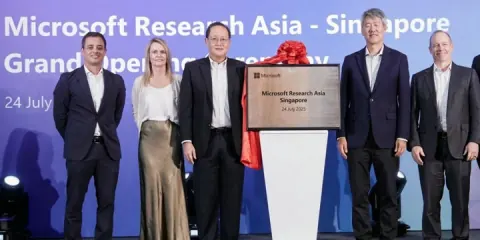
Microsoft Research Asia Launches Singapore Lab to Advance AI and Industry Transformation
Microsoft launches its first Research Asia lab in Southeast Asia, based in Singapore, to advance AI innovation, foster academic collaboration, and support regional industries like healthcare and finance with impactful research.
Google’s Gemini Founders Forum Now Accepting Startup Applications – Apply Today!
Google has launched applications for the Gemini Founders Forum, a two-day AI summit for Series A founders. It offers hands-on AI training, mentorship, networking, and strategic insights to accelerate innovation.
Google DeepMind Unveils Aeneas AI to Decode Ancient Texts and Lost Languages
Aeneas is a groundbreaking AI model that helps historians restore, interpret, and date ancient Roman inscriptions—combining text and image analysis to accelerate research and uncover lost historical connections.
Introducing Lumo: The AI Chatbot That Keeps Every Conversation Private
Proton launches **Lumo**, a privacy-first AI assistant with zero-access encryption, no data sharing, and no chat logs—offering secure, open-source AI designed to protect user data and digital sovereignty.