Loading

C# Curator's contributions
- Points
- 29.7k earned, all time
- Reads
- 74.8m all time
- Articles
- 274 and 11 blogs
- Forums
- 15 questions and answers

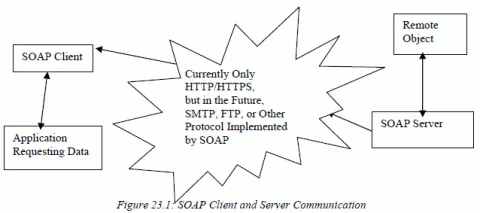
Introduction to Web Services and ASP.NET
In this article I will explain you about Web Services and ASP.NET.

Asynchronous Calls in .NET
Asynchronous means not synchronized by a shared signal such as a clock or semaphore, proceeding independently.

Common Interfaces Using C#
In this article, I will explain to you about Common Interfaces using C#. Common interfaces in C# provide a way to define a contract for classes, ensuring that they implement specific methods and properties. By using interfaces, developers can establish a common set of behaviors that classes must adhere to, enabling polymorphism and abstraction in their programs. Interfaces facilitate the decoupling of code, making it easier to change implementations without affecting the code that uses the interface. Additionally, interfaces play a crucial role in achieving dependency injection, allowing for flexible and testable software architectures. In summary, interfaces in C# promote code reusability, maintainability, and flexibility by defining a standard structure that classes can follow.
System.Security.Cryptography.Xml Namespace
In this article I will explain you about the System.Security.Cryptography.Xml Namespace.
System.Security.Principal in .NET
Explains .NET security principals and identities, including IIdentity, IPrincipal, WindowsIdentity, role checks, PrincipalPermission, and Windows impersonation.
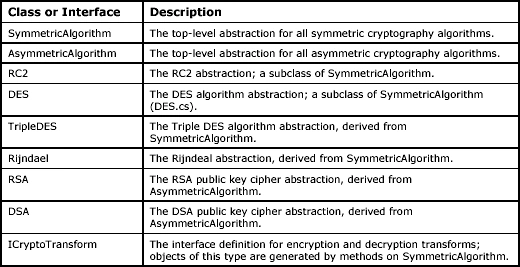
System.Security.Cryptography Namespace in .NET
In this article I will explain you about System.Security.Cryptography Namespace in .NET.
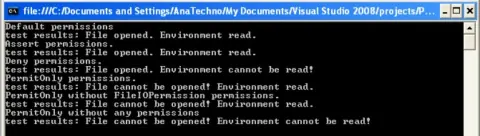
PermissionAttribute Class using C#
Learn how to use C# permission attributes for declarative code access security, including file, environment, registry, permission set, and strong-name demands.
PermissionSet Class In C#
The PermissionSet class in C# is a fundamental component of .NET security that allows developers to encapsulate a set of permissions for code execution. It enables the definition and management of fine-grained permissions required by an application to access various system resources and perform specific operations. With PermissionSet, developers can control actions like file operations, registry access, and network communication within the application's security context. By specifying the permissions a code segment needs, developers can enforce security policies, ensuring that the application runs securely and only performs authorized actions.
IsolatedStorageFile Class in .NET
In this article I will explain you about IsolatedStorageFile Class in .NET.
CASPOL Tool in .NET
Learn how to use the CASPOL command-line tool to view .NET code groups, policy levels, and permission sets for assemblies.
.NET Framework Security Tools
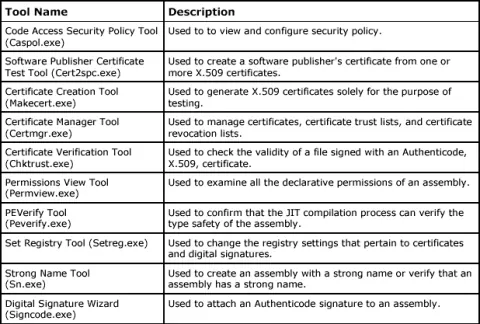
In this article I will explain you about the .NET Framework Security Tools.
Custom Code Access Permissions
In this article I will explain you about Custom Code Access Permissions in C#.
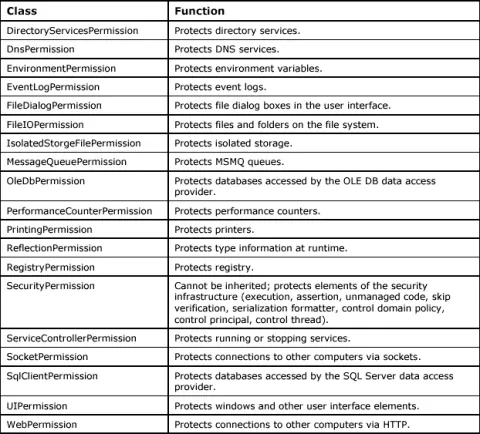
Permissions and Code Access Permission in C#
In this article I will explain you about Permissions and Code Access Permission in C#.
LevelFinal and Exclusive Attributes in C#
Explains how the LevelFinal and Exclusive attributes affect .NET code access security policy evaluation and permission decisions for code groups.
How to create Event Handlers in ASP.NET
In this article I will explain about creating Event Handlers in ASP.NET.
Windows Management Instrumentation in C#
Learn how to use WMI in C# to query and manage Windows systems, services, shares, processes, and remote machines with System.Management.
Evidence In C#
IIn C#, Evidence is a class within the System.Security.Policy namespace. It is used in .NET Framework applications to represent the evidence that is used to establish the permissions granted to an assembly. Evidence can include various types of information, such as zone, URL, strong name, and hash. This information helps the .NET runtime make security decisions regarding code execution based on the provided evidence.