Loading
Jay Krishna Reddy's contributions
- Article · PostgreSQL
Is PostgreSQL the Future of Databases?
This article explores whether PostgreSQL is the future of databases, highlighting its advantages in scalability, performance, and innovation. Discover how it compares to other database systems in today's evolving landscape.
- Article · JSON
What is JSON and Why Is It So Important?
JSON (JavaScript Object Notation) is a lightweight, language-independent data format that represents key-value pairs, supporting strings, numbers, arrays, objects, and complex structures widely used for web applications and data interchange.
- Article · .NET
Explaning .NET Razor ≠ .NET Blazor
Razor and Blazor are distinct web technologies. Razor is a server-side templating engine in ASP.NET Core MVC, combining HTML with C# for dynamic server-side content. Blazor, in contrast, enables interactive client-side web apps using C#, running directly in the browser and eliminating frequent server calls.
- Article · C#
Transitioning from Switch Statements To Switch Expressions in C#
Explore how to modernize your C# code by transitioning from traditional switch statements to the more concise and powerful switch expressions introduced in C# 8.0.
- Article · .NET Core
Learn About .NET 9 LINQ Enhancements
In .NET 9, two new LINQ methods enhance code simplicity and readability: .CountBy and .AggregateBy. .CountBy counts elements by key, simplifying grouping and counting tasks. .AggregateBy streamlines aggregation operations, reducing complexity.
- Article · ASP.NET Core
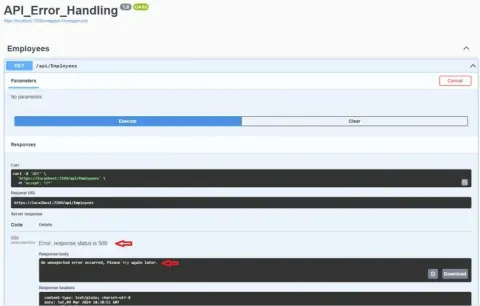
Best practices for API Error Handling in .Net
Explore best practices for API error handling in .Net, covering essential techniques for robust and resilient APIs. Learn how to effectively manage exceptions, log errors, and implement fault tolerance.
- Article · Entity Framework
EF Core Query Tags: What They Are and How to Use Them
Discover the power of EF Core Query Tags in optimizing and debugging your database queries. This guide explains what query tags are, their benefits, and how to implement them in your Entity Framework Core projects.
- Article · C#
Usage of “Required” Keyword in C#
In this article, we will learn about the usage of required keywords in C#. In C# 11, the `required` keyword enforces the initialization of properties and fields within classes, records, or structs, enhancing code reliability by preventing uninitialized members and ensuring data integrity.
- Article · .NET Core
.NET Core Feature Flags
Learn how to implement feature flags in .NET Core using appsettings.json or the FeatureToggle library for controlled releases, A/B testing, rollbacks, and environment-specific settings.
- Article · .NET Core
Data Annotations in .NET
In this article, we are going to learn about Data annotations and their importance in .Net Core. Data annotation is crucial in modern software development for ensuring data integrity and clarity. .NET provides a standardized way to convey metadata about data objects, enhancing code robustness and maintainability. Explore 25 essential data annotations in .NET with explanations and examples.
- Article · Entity Framework
Maximizing Performance in Entity Framework Core: Tracking vs No Tracking
In this article, we will learn about Maximizing Performance in Entity Framework Core and what is the difference between Tracking and No Tracking.
- Article · C#
Simplifying Your C# Code: Why You Should Avoid Using 'Else' keyword
In this article will be seeing the benefits of avoiding else keyword in C# programming.
- Article · Blazor
How to Use EventCallBacks for Two-Way Communication Between Blazor Components
How to Use EventCallBacks for Two-Way Communication Between Blazor Components.
- Article · Blazor
How Blazor Simplifies Web Development?
In this article we are going to learn how we can simplify the web development using Blazor
- Article · Blazor
Component {Parameters} in Blazor
In this article we are going to learn about the how to pass parameters between components in Blazor
- Article · Blazor
Blazor United: Combining The Power Of Blazor And Unity for Web Development
In this article, we are going to learn about the new features that are introduced in Blazor United (.Net 8).
- Article · SQL
Order of SQL Execution
In this article we are going to learn about the Order of the SQL execution
- Article · Entity Framework
Dapper Vs Entity Framework Core
Compare Dapper and Entity Framework Core for .NET data access, including performance, complexity, database support, flexibility, and example queries.
- Article · C#
Types Of Parallelism In C#
In this article we are going to explore about the different types of Parallelism and its usage in C#
- Article · Coding Best Practices
Avoiding Common C# Coding Mistakes - Do's And Don'ts To Remember
Learn common C# coding mistakes to avoid and best practices for writing readable, reusable, maintainable, and reliable code.
- Article · GO
Getting Started With Golang And Mux Framework
In this article, we are going to learn about how to get started with Goland and MUX
- Article · C#
Understanding Control Flow With Async And Await In C#
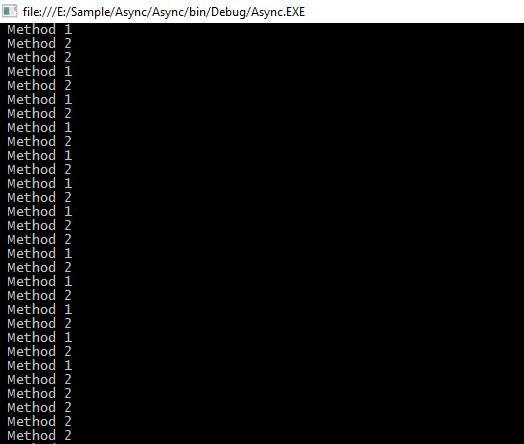
In this article we are going to learn about the control flow of the Async and await in C#
- Article · C#
Simplifying Development With .NET 7 And C# 11 - An Introduction To The Latest Features
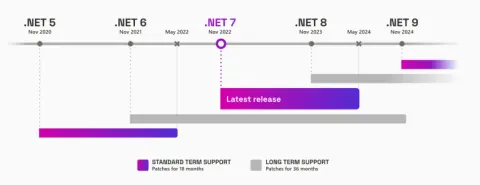
Learn about .NET 7 and C# 11 features, including performance improvements, support lifecycle, cloud development, security, and language enhancements.