Loading
Articles by Jobin S

Integrating PayU Payment Gateway with .NET Core API
Integrate PayU with your .NET Core API to securely accept payments. This guide covers creating a new .NET Core Web API project, configuring PayU settings, and implementing the payment service. Steps include setting up the project in Visual Studio, adding necessary packages, and creating the API controller for payment processing.

Entity Framework Performance Improvements with Code Examples
Learn how to optimize Entity Framework performance with practical code examples. This guide covers essential techniques to enhance database efficiency, improve query performance, and eliminate bottlenecks.
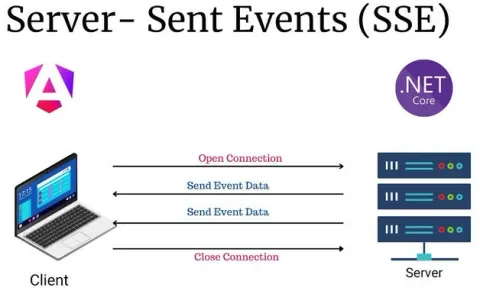
SSE in .NET Core API Real-time Updates in Angular
The implementation of Server-Sent Events (SSE) in a .NET Core API to deliver real-time updates to an Angular application. You'll learn how to set up SSE in the backend to push live data streams and configure Angular to receive and display these updates, enabling dynamic and interactive web experiences.
Implementing Model Binding in ASP.NET Core Web API
Model binding in ASP.NET Core automates the conversion of HTTP request data into .NET objects, simplifying data transfer between client-side requests and server-side code. It supports various data sources such as query strings, form data, route parameters, JSON payloads, and custom binders, enhancing API development efficiency.
Optimizing Performance with Dapper with .NET Core API
Learn Dapper best practices for optimal database interaction in .NET applications. Explore techniques like using output parameters and handling multiple result sets in stored procedures. Enhance efficiency with optimized query writing for delete operations.
API Security Best Ways Implemented in .NET Core API
This article covers essential API security practices, including encryption, authentication, authorization, input validation, rate limiting, and continuous monitoring, to protect APIs against security risks and ensure robust data protection.
Building CRUD Operations in .NET Core 8 with MongoDB
Learn to create CRUD operations in .NET Core 8 Minimal API with MongoDB via Entity Framework Core. Build RESTful endpoints for seamless data interaction, leveraging ASP.NET Core's capabilities for efficient development and MongoDB's flexibility for NoSQL data storage.

Deploying .NET 8 Core Web API in Cloud with .NET Aspire App"
Learn to build and deploy high-performance .NET Core Web APIs in cloud environments using ASP.NET Core. Explore best practices for scalability, containerization with Docker, and deployment on Azure or AWS.
Sending Recurring Emails Using HangFire in .NET Core Minimal APIs
Learn how to automate recurring email tasks using Hangfire in .NET Core Minimal APIs. Hangfire offers multi-threaded, scalable task scheduling, perfect for batch email notifications, database maintenance, and more. Configure Hangfire, schedule recurring jobs, and integrate email sending functionality seamlessly.
Simplifying File Uploads with .NET Core 7 Minimal APIs
Discover how .NET Core 7's Minimal APIs streamline file upload processes, enhancing development efficiency. Simplify backend tasks with minimalistic yet powerful approaches, optimizing file handling in web applications.

Understanding LINQ in C#: Query Syntax and Method Syntax
This article is an informative and in-depth exploration of LINQ (Language Integrated Query) within the context of C#, a widely used programming language in the software development industry. The guide delves into both the query syntax and method syntax aspects of LINQ, providing readers with a thorough understanding of how to effectively use LINQ to query and manipulate data in C# applications.
Creating, Publishing, and Using a .NET Core NuGet Package
This step-by-step guide will walk you through the process of creating, publishing, and using a .NET Core NuGet package. NuGet packages are essential in .NET development, enabling you to share and distribute libraries and code efficiently.
What is Dependency Injection in Angular?
Dependency Injection (DI) is a fundamental design pattern in Angular used to manage dependencies and data flow within an application. It promotes loose coupling between components, enhancing modularity, maintainability, and testability.
Achieving Dependency Injection in .NET Core WebAPI
This article outlines the process of implementing Dependency Injection (DI) in a .NET Core Web API application. DI is crucial for managing dependencies, enhancing modularity, and enabling testability. It begins by explaining the importance of DI in a Web API and then provides a step-by-step guide on how to achieve it.
Excel Sheet Generation in .NET Core 6 Web API and Angular 15
By implementing this approach, you create a hassle-free way for users to generate and download Excel sheets from your web application, improving data reporting and export capabilities. This can be particularly useful in scenarios where users need to work with tabular data in Excel format without manual data entry or complicated procedures.
Generate PDF Files in .NET Core 6 Web API Using PDFSharp
In this article, we will learn how to generate PDF Files in .NET Core 6 Web API Using PDFSharp. learn how to dynamically create PDF documents within a .NET Core 6 Web API application using PDFSharp.