Loading
Nitin Pandit's contributions
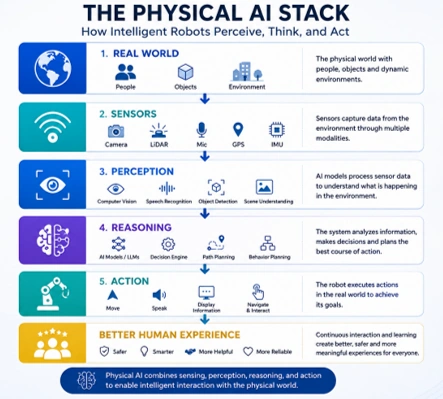
What is Physical AI? Why the Next AI Revolution Will Move Beyond the Screen
Discover what Physical AI is and how it combines AI, robotics, computer vision, sensors, and Large Language Models to enable intelligent machines that perceive, reason, and act in the real world. Explore key technologies, real-world applications, challenges, and the future of AI-powered robotics beyond screens.
Top Interview Questions and Answers on Prompt Engineering
Ace your Prompt Engineering interview! Master key concepts, from zero-shot to prompt chaining, and learn to craft effective prompts for accurate AI outputs.
Top Interview Questions and Answers on Generative AI
Prepare for Generative AI interviews with questions and answers covering LLMs, prompts, transformers, RAG, embeddings, vector databases, and practical AI applications.
Infragistics Releases 50+ Open-Source UI Components from Ignite UI
Infragistics open-sources 50+ Ignite UI components for Angular, React, Blazor, & Web Components. Build high-performance apps with enterprise-grade UI tools!
MCP vs RAG: The Ultimate Battle for AI Dominance
Unleash AI's potential! Explore MCP vs RAG: a head-to-head comparison of these powerful technologies for knowledge retrieval and task automation. Brains vs. Brawn!
🚀 Building a Local Document RAG System Using Node.js, Supabase, and OpenAI
Build a local RAG system with Node.js, Supabase, and OpenAI! Index PDFs, ask questions in natural language, and get accurate answers. Secure & scalable!
20 Essential Terms to Understand When Building RAG (Retrieval-Augmented Generation) Applications
Unlock the power of RAG! Master 20 essential terms for building robust Retrieval-Augmented Generation applications. Enhance accuracy and relevance in AI systems.
TOON vs JSON: Can Token-Oriented Object Notation Replace JSON?
Explore TOON, a new data format optimized for LLMs, and learn why it excels in AI workflows but won't replace JSON for general-purpose development. Discover its benefits!


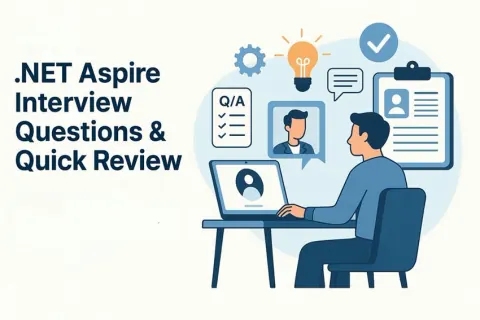
.NET Aspire Interview Questions & Quick Review
This chapter serves as your rapid revision guide for .NET Aspire, offering 20 thoughtfully categorized interview questions with concise answers.
From Custom Reporting Headaches to Self-Service Dashboards: The Reveal BI Advantage for SaaS
Here in this article, we'll see how from Custom Reporting Headaches to Self-Service Dashboards with the Reveal BI Advantage.
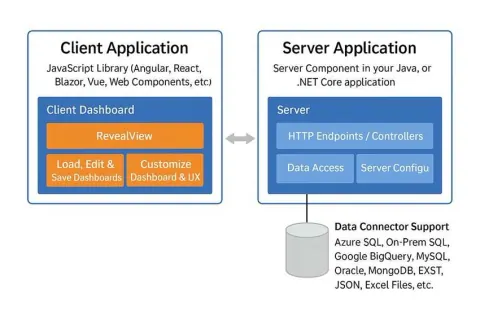
Introducing Reveal BI
In this article, you'll explore the architecture of Reveal BI and learn how it enables seamless integration of interactive dashboards into applications.
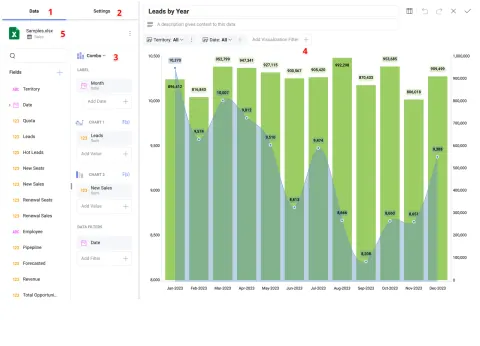
Reveal BI 1.7.4 Now Available
Reveal BI 1.7.4 introduces native Databricks support, improved mobile UX, new themes, and enhanced SDK controls empowering developers to build real-time, embedded analytics with ease.
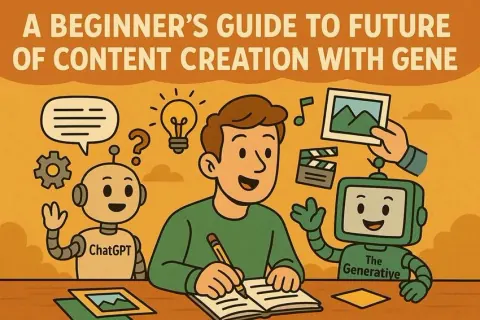
A Beginner’s Guide to the Future of Content Creation with Generative AI
How AI tools like ChatGPT, Gemini, Midjourney, and more are reshaping creativity for writers, designers, marketers, and everyday users.
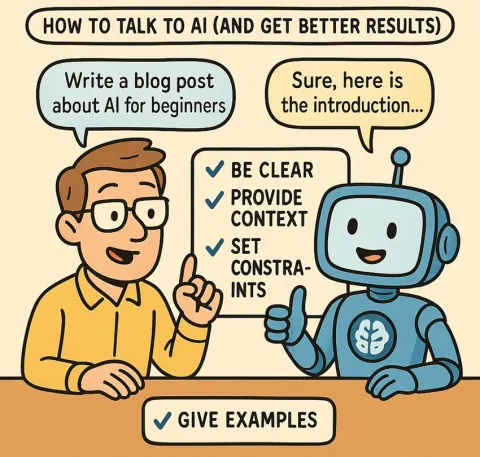
Prompt Engineering 101: How to Talk to AI (and Get Better Results)
This is a detailed and in-depth version of the Gen AI article, with additional explanations, practical tips, and real-world use cases about Prompt Engineering to Get Better Results.
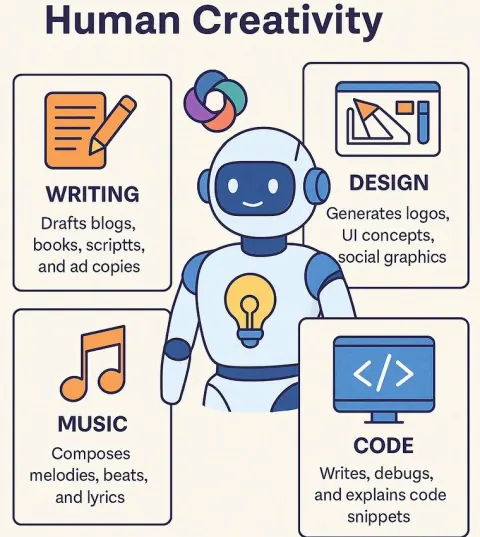
From Chatbots to Creativity: How GenAI Is Changing the World
Generative AI (GenAI) is transforming creativity—writing, coding, designing, and more—by blending human imagination with machine intelligence, enabling faster, smarter, and more innovative outcomes.

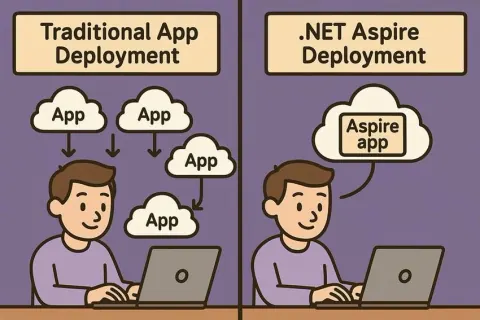
Deploy an Aspire App with Azure CLI
In this chapter, we’ll explore how to take your .NET Aspire applications from the development workstation to real-world production environments.
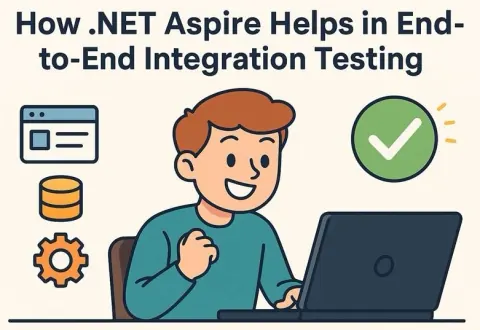
End-to-end integration testing with .NET Aspire
.NET Aspire simplifies end-to-end integration testing for microservices by providing service orchestration, containerized environments, automatic service discovery, and real/ mock service swapping—all in a seamless test setup.
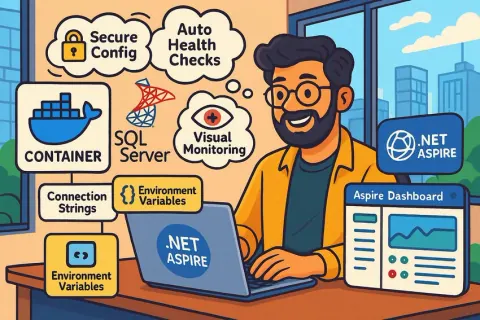
.NET Aspire Integrations (SQL Server Integration in Aspire Applications)
In this chapter, you'll learn how to integrate SQL Server into your .NET Aspire applications with minimal configuration and maximum flexibility.
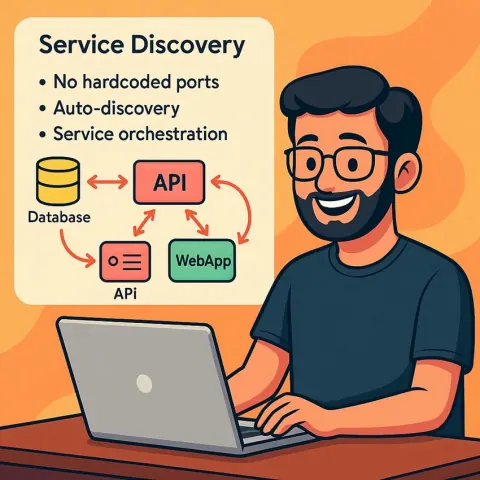
.NET Aspire Service Discovery
In this chapter, we are enabling dynamic connectivity between microservices without hard-coded endpoints using .NET Aspire Service Discovery.
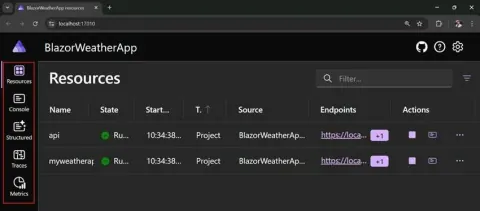
Observability with the Aspire Dashboard
We will learn how to monitor service health, track dependencies, view logs, and visualize metrics in real-time all from a unified observability dashboard designed for modern distributed systems.
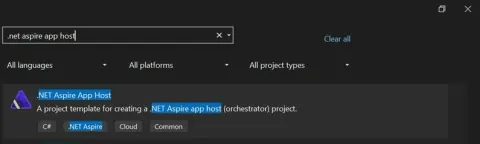
Service Orchestration in .NET Aspire
Learn how to streamline microservices communication using Service Orchestration in .NET Aspire. This guide covers key concepts, practical implementation steps, and best practices to build scalable, maintainable distributed systems with Microsoft's latest cloud-native .NET stack.
Enhancing Real-World Microservices with Resiliency in .NET Aspire
In this chapter, we’ll explore how to upgrade a real-world application using .NET Aspire, leveraging its key features like observability, microservices management, resilience, service discovery, and scalability.
Understanding Resiliency in .NET Aspire
Resiliency in .NET Aspire is key to building fault-tolerant applications. Using Polly, developers can implement retries, circuit breakers, timeouts, and fallback policies to handle transient failures.
Core Concepts of .NET Aspire
In this chapter, we will explore the fundamental building blocks of .NET Aspire and understand how they simplify cloud-native and microservices-based development.