Loading
Articles by Rohit Gupta
- Internet & Web
How To Delete Cookies In Chrome
In this article, you will learn to clear cookies in Chrome.
- Stratis Blockchain
Staking STRAX On A Raspberry Pi
In this article, I will be explaining how we can set up Stratis Wallet and start staking on Raspberry Pi.
- Stratis Blockchain
Installing Stratis Full Node On Raspberry Pi
In this article, I will demonstrate how to install and setup Stratis Full Node on Raspberry Pi.
- Python
How To Validate An Email Address In Python
In this article, you will learn different ways to verify whether an email address is valid or invalid in Python.
- Python
How To Get The Last N Characters Of A String In Python
The articles tell you different ways of finding the last N characters from a String in Python.
- AI
How To Optimize A Neural Network
In this article, I will tell how we can optimize various neural networks without affecting their performance.
- AI
Getting to know Intel DevCloud
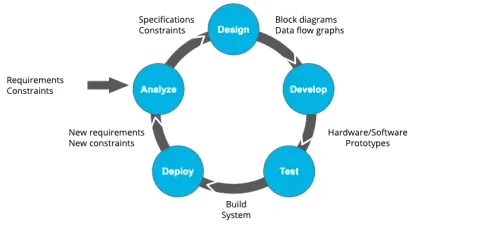
Learn the AI edge development lifecycle and how Intel DevCloud supports building, testing, and benchmarking OpenVINO workloads on Intel hardware.
- Internet of Things
Intel Architecture And Devices
In this article, we will be discussing about CPU, GPU, VPU, FPGA, etc.
- Internet of Things
Using MQTT Server For IoT
In this article, I will be discussing about MQTT used for IoT.
- AI
Intel OpenVINO Inference Engine
In this article, I will demonstrate how we can communicate with the inference engine to get our desired result
- AI
Intel OpenVINO Model Optimizer
In this article, I will be discussing in detail about Intel OpenVINO Model Optimizer.
- AI
Processing Images using Intel OpenVINO
In this article, we will see how we can use Intel OpenVINO to preprocess given images and predict their characteristics.
- AI
Using Intel OpenVINO Pre-Trained Models
In this article, we will learn how to use Intel OpeVINO using pre-trained models.
- Internet of Things
What is Edge Computing and Edge AI?
In this article, I will talk about why we should use edge IoT technologies in the future.
- Machine Learning
What is Support Vector Machine?
In this article, you will learn about Support Vector Machine.
- Machine Learning
Natural Language Processing
In this article, I will explain human-computer interactions and natural language processing.
- Machine Learning
KNN- K-Nearest Neighbors using Python
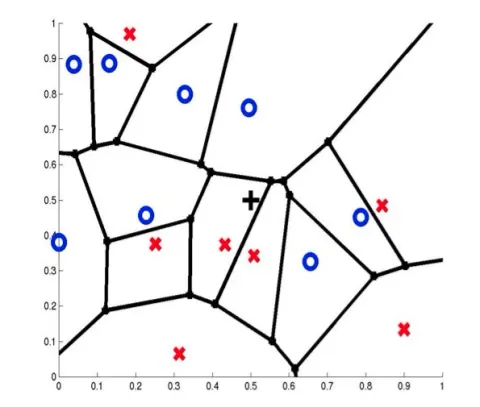
The k-nearest neighbors (KNN) algorithm is a simple, supervised machine learning algorithm that can be used to solve both classification and regression problems. It's easy to implement and understand but has a major drawback of becoming significantly slower as the size of the data in use grows. In this article, you will learn to implement kNN using python
- Machine Learning
Understanding K-Means Clustering using Python the easy way
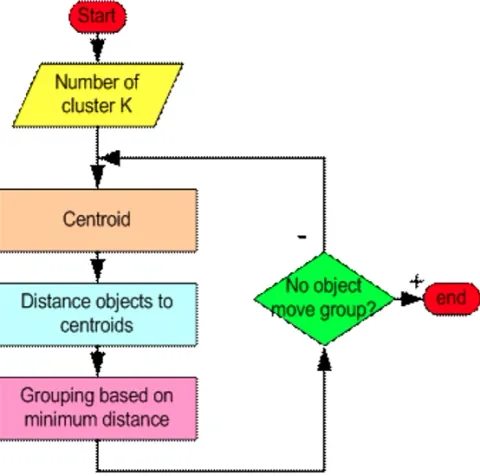
K-means clustering is a simple unsupervised learning algorithm that is used to solve clustering problems. It follows a simple procedure of classifying a given data set into a number of clusters, defined by the letter "k," which is fixed beforehand. In this article, we will learn to implement k-means clustering using python
- Machine Learning
Naive Bayes using Python- A Beginner's Tutorial
Naïve Bayes classifiers are a family of simple "probabilistic classifiers" based on applying Bayes' theorem with strong (naïve) independence assumptions between the features. They are among the simplest Bayesian network models. In this article, you will learn to implement naive bayes using pyhon
- Machine Learning
Implementation of Decision Trees In Python
Learn basics of decisions trees and their roles in computer algorithms and how decision trees are used in Python and machine learning.
- Machine Learning
Multiple Linear Regression using Python
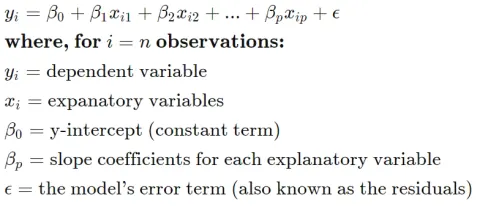
Multiple linear regression (MLR), also known simply as multiple regression, is a statistical technique that uses several explanatory variables to predict the outcome of a response variable. In this article, you will learn how to implement multiple linear regression using Python.
- Machine Learning
Logistic Regression using Python
Logistic regression is a statistical model that in its basic form uses a logistic function to model a binary dependent variable, although many more complex extensions exist. In regression analysis, logistic regression (or logit regression) is estimating the parameters of a logistic model (a form of binary regression). In this article, you will learn to implement logistic regression using python
- Machine Learning
Understanding Linear Regression using Python
In statistics, linear regression is a linear approach to modeling the relationship between a scalar response and one or more explanatory variables. The case of one explanatory variable is called a simple linear regression. For more than one explanatory variable, the process is called multiple linear regression. In this article, you will learn how to implement linear regression using Python.