Loading
Rohit Gupta's contributions
- Article · Machine Learning
Understanding K-Means Clustering using Python the easy way
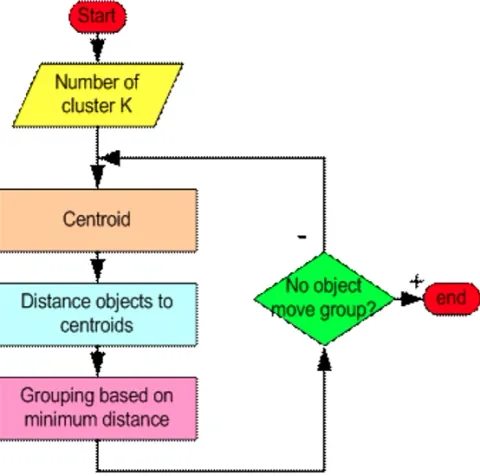
K-means clustering is a simple unsupervised learning algorithm that is used to solve clustering problems. It follows a simple procedure of classifying a given data set into a number of clusters, defined by the letter "k," which is fixed beforehand. In this article, we will learn to implement k-means clustering using python
- Article · Machine Learning
Naive Bayes using Python- A Beginner's Tutorial
Naïve Bayes classifiers are a family of simple "probabilistic classifiers" based on applying Bayes' theorem with strong (naïve) independence assumptions between the features. They are among the simplest Bayesian network models. In this article, you will learn to implement naive bayes using pyhon
- Article · Machine Learning
Implementation of Decision Trees In Python
Learn basics of decisions trees and their roles in computer algorithms and how decision trees are used in Python and machine learning.
- Article · Machine Learning
Multiple Linear Regression using Python
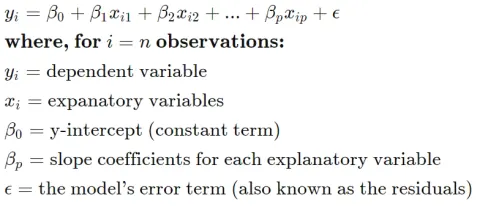
Multiple linear regression (MLR), also known simply as multiple regression, is a statistical technique that uses several explanatory variables to predict the outcome of a response variable. In this article, you will learn how to implement multiple linear regression using Python.
- Article · Machine Learning
Logistic Regression using Python
Logistic regression is a statistical model that in its basic form uses a logistic function to model a binary dependent variable, although many more complex extensions exist. In regression analysis, logistic regression (or logit regression) is estimating the parameters of a logistic model (a form of binary regression). In this article, you will learn to implement logistic regression using python
- Article · Machine Learning
Understanding Linear Regression using Python
In statistics, linear regression is a linear approach to modeling the relationship between a scalar response and one or more explanatory variables. The case of one explanatory variable is called a simple linear regression. For more than one explanatory variable, the process is called multiple linear regression. In this article, you will learn how to implement linear regression using Python.
- Article · Data Science
Data Science- A Beginner's Tutorial
This is the twelfth tutorial in this series. Data science is a multi-disciplinary field that uses scientific methods, processes, algorithms, and systems to extract knowledge and insights from structured and unstructured data.
- Article · Machine Learning
All about Deep Learning Tutorial
This is the eleventh tutorial in the series. In this tutorial, we will be studying Deep Learning. Deep learning is a subset of machine learning in artificial intelligence (AI) that has networks capable of learning unsupervised from data that is unstructured or unlabeled. Also known as deep neural learning or deep neural network
- Article · Machine Learning
All about Machine Learning
This is the tenth tutorial in the series. In this tutorial, we will be studying Machine Learning. Machine learning is the scientific study of algorithms and statistical models that computer systems use to perform a specific task without using explicit instructions, relying on patterns and inference instead
- Article · AI
What is Artificial Intelligence?
This is the ninth tutorial in the series. In this tutorial, we will be studying Artificial Intelligence and its functionalities. Artificial intelligence (AI) is the simulation of human intelligence processes by machines, especially computer systems. These processes include learning (the acquisition of information and rules for using the information), reasoning (using rules to reach approximate or definite conclusions) and self-correction.
- Article · Machine Learning
A Complete Python TensorFlow Tutorial
This is the eighth tutorial in the series. In this tutorial, we will be studying about Tensorflow and its functionalities. TensorFlow is a free and open-source software library for dataflow and differentiable programming across a range of tasks. It is a symbolic math library and is also used for machine learning applications such as neural networks
- Article · Python
A Complete Python Seaborn Tutorial
Learn how to install and use Python Seaborn for statistical data visualization, including relational, scatter, and line plots, and how it differs from Matplotlib.
- Article · Machine Learning
A Complete Python MatPlotLib Tutorial
This is the sixth tutorial in the series. In this tutorial, we will be studying about matplotlib and its functionalities.
- Article · Machine Learning
A Complete Python Scikit Learn Tutorial
This is the fifth tutorial in the series. In this tutorial, we will be studying about scikit-learn and its functionalities.
- Article · Machine Learning
A Complete Python Pandas Tutorial
This is the fourth tutorial in the series. In this tutorial, we will be studying about pandas and its functionalities.
- Article · Machine Learning
How to use NumPy in Python
This is the third tutorial in the series. In this tutorial, we will learn about numpy or numerical python.
- Article · Machine Learning
Best Python Machine Learning Libraries
Python and machine learning go hand and hand. Here is a list of most popular machine learning libraries for Python.
- Article · Python
Python Basics
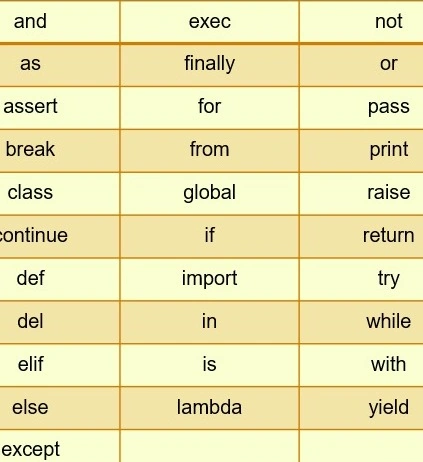
Python is a versatile, interpreted, high-level programming language created by Guido van Rossum. Named after Monty Python, it's widely used in software development, web development, scripting, and mathematics. Python is renowned for its simplicity, cross-platform compatibility, expressive syntax, and vast library support.
- Article · Java
How to use LinkedList in Java
Java LinkedList object stores data in a linked list form. This tutorial explains everything about LinkedList in Java and code examples of how to use Java LinkedList methods and properties.
- Article · Java
A Complete Java Loops and Control Statements Tutorial
Learn Java loop types and control statements, including for, foreach, while, do-while, infinite loops, and if-else conditions, with code examples.
- Article · Java
A Complete Java List Tutorial
A list in Java is a collection of data that allows functionality to insert, remove, update, find, and sort. This tutorial explains everything about List in Java and code examples of how to use Java List methods and properties.
- Article · Java
How to use Scanner in Java
Java Scanner reads input text in Java. In this tutorial, learn how to use Java Scanner methods and properties to read and parse text.
- Article · Java
How to use String in Java
The tutorial explains everything about String in Java. Learn how to use Java String methods and properties.
- Article · Java
How to use Array in Java
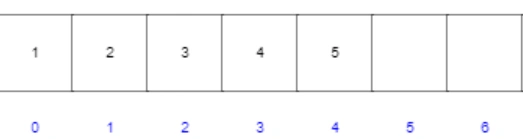
The tutorial explains everything about Array in Java. Learn how to use Java Array methods and properties.
- Article · Java
How to use ArrayList in Java
The tutorial explains everything about ArrayList in Java. Learn how to use Java ArrayList methods and properties.