Loading
Tahir Ansari's contributions

Simplify API Data Handling with ASP.NET Core Model Binding
In this article, we explore the versatile world of model binding in ASP.NET Core REST APIs. Model binding is a critical feature that simplifies data handling by automatically mapping HTTP request data to .NET objects. We'll delve into real-world use cases, including binding query parameters, route data, request bodies, and headers. Discover how model binding streamlines API development, improves code readability, and ensures data consistency. Whether you're a beginner or an experienced ASP.NET Core developer, understanding model binding is crucial for building efficient and maintainable RESTful APIs.
REST APIs vs. Web Services
distinguishing between REST APIs and Web Services is crucial. While these terms are often used interchangeably, they represent distinct approaches to facilitating communication between applications. In this article, we embark on a journey to explore and elucidate the disparities between REST APIs and Web Services, equipping readers with a comprehensive understanding of their unique characteristics, strengths, and ideal use cases.

Simplifying Code with Pattern Matching in C#
Discover how pattern matching in C# can simplify your code, improve readability, and enhance your development workflow. This comprehensive guide explores various pattern types, including type, constant, property, tuple, and positional patterns, and reveals how they can be applied in real-world scenarios.
Building a Bulk Email Sending Console App with NET Core 7.0
Build a .NET 7 C# console app that reads active recipients from SQL Server with Entity Framework Core and sends bulk email in SMTP batches.
Child to Parent Data Sharing in Angular
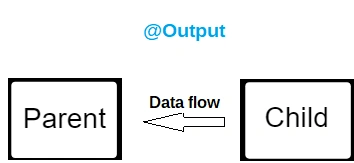
In Angular, component communication is a crucial aspect of building dynamic and interactive applications. One common scenario is sharing data from child components to parent components. The @Output decorator provides a mechanism to achieve this kind of communication. Here's a description of how to share data from a child to a parent component using the @Output decorator in Angular 16:
Document Viewer Capabilities in ASP.NET Core 7.0
Learn how to integrate, customize, and make the most of the new capabilities for seamless document viewing and interaction within your web applications.
Object-Oriented Programming (OOP) in C#
Dive into the realm of Object-Oriented Programming (OOP) with our comprehensive blog. Uncover the core concepts of encapsulation, inheritance, polymorphism, and abstraction, and learn how they shape modern software design. Explore how OOP mimics real-world entities, resulting in organized, reusable, and intuitive code. Whether you're new to programming or looking to deepen your understanding, our blog demystifies OOP's principles and showcases their application in creating robust and maintainable software systems."
Sharing Data from Parent to Child Components in Angular using @Input()
Angular is a popular front-end framework that promotes component-based architecture. One common scenario in web development is passing data from a parent component to a child component for rendering or interaction purposes. Angular provides a simple and effective way to achieve this using the @Input() decorator.

What is Delegates in C# .NET?
Delegates in C# act as method pointers, enabling dynamic invocation of methods. They enhance code modularity and flexibility, finding use in event handling, callbacks, and asynchronous programming.
Understanding the IComparable in C#
IComparable is a C# interface for comparing objects within the same type, enabling sorting based on specific criteria. Explore its definition, usage, and benefits in facilitating object comparison and sorting.
Angular CRUD Operation Using Entity Framework Core and .NET Core
In this blog, we will embark on a journey to create a simple Angular CRUD (Create, Read, Update, Delete) application using the cutting-edge tools, .NET Core 7 and Entity Framework Core. This beginner-friendly guide will provide you with the necessary steps and insights to kickstart your web development career with confidence.
How to Declare and Initialize a Tuple in C#?
Learn about C# tuples: immutable data structures for grouping elements, useful for returning multiple values from methods.