Loading
- Featured
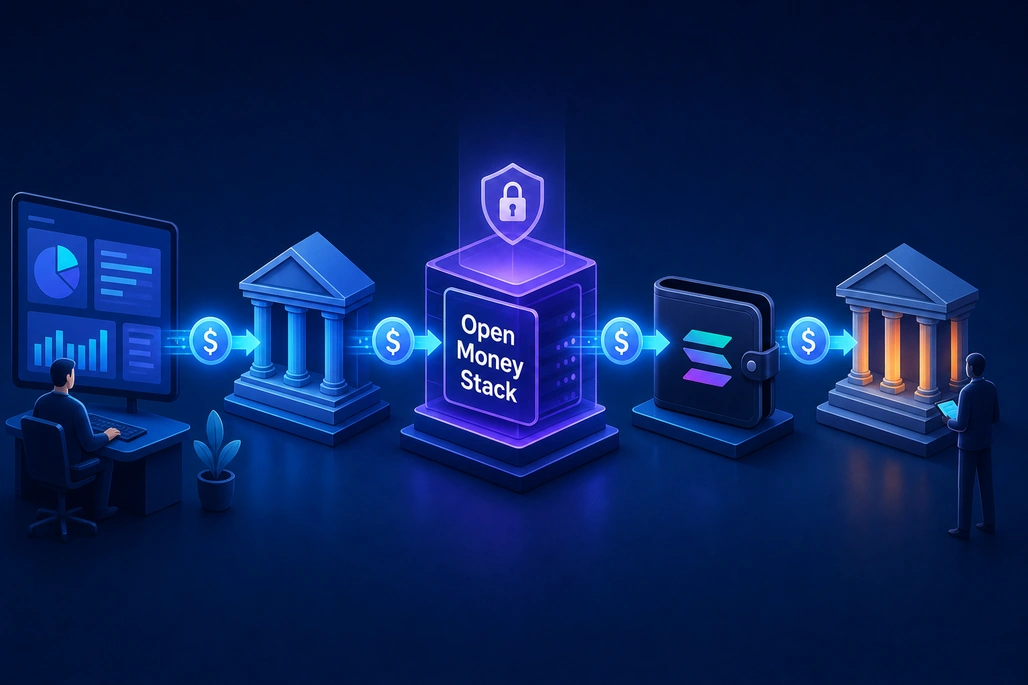
Polygon Open Money Stack Adds Solana: A Beginner’s Guide to the Payment Flow
Learn how Polygon Open Money Stack connects Solana apps to bank pay-ins, stablecoin wallets, cross-chain routing, and payouts through one API.
Anchor Framework for Solana Development
Learn how the Anchor framework simplifies Solana smart contract development. Reduce boilerplate, manage accounts, serialize data, and use a TypeScript client to build and test programs efficiently on Solana.
Transaction Lifecycle in Solana
Solana transactions move quickly through creation, signing, validation, leader processing, and finalization. Its proof-of-history and parallel processing ensure fast, low-cost, and secure blockchain operations.
Solana Tokenomics – A Complete Guide
Solana is a high-speed blockchain with low fees, powered by its native token SOL. Used for transactions, staking, and governance, SOL’s tokenomics balance rewards, inflation, and burns to fuel network growth.
Solana vs Other Blockchains: A Detailed Comparison
Solana stands out in the blockchain world for its speed, scalability, and low fees. This article compares Solana with Ethereum, Cardano, Binance Smart Chain, and Polkadot to reveal strengths and weaknesses.
How to Build and Deploy Your Own Solana dApp
Learn how to build and deploy your own decentralized application (dApp) on the Solana blockchain. This guide covers everything from setting up your development environment to coding smart contracts and deploying your application.
Byzantine Fault Tolerance and Its Role in Solana
Byzantine Fault Tolerance (BFT) is crucial in distributed systems, ensuring reliable function despite faulty or malicious components. Solana, a high-performance blockchain, uses Proof of History (PoH) and Tower BFT to achieve high transaction throughput, low latency, and robust security.
Mastering Solana: Your Roadmap to Development Proficiency
In this article, we will see the roadmap that a beginner should follow to learn Solana. Navigating Solana's development requires a structured approach. This roadmap outlines essential steps, from installation to advanced topics, for mastering Solana's ecosystem and building decentralized applications.
Retrying Transactions in Solana
Retrying Transactions in Solana can enhance reliability in blockchain operations. Explore strategies for handling network congestion, node failures, and smart contract interactions.
Transaction Confirmation and Expiration in Solana
Explore Solana's high-performance blockchain, designed for decentralized applications and cryptocurrencies. Learn about its rapid transaction confirmation, the role of validators, and mechanisms behind transaction expiration. Optimize your use of Solana for secure, efficient transaction processing.
Optimization Techniques and Best Practices in Solana
This content delves into optimization techniques and best practices for the Solana blockchain. It covers strategies to enhance performance, scalability, and efficiency in transactions and smart contracts.
Blockchain Efficiency with Solana Address Lookup Tables
Explore Address Lookup Tables (ALTs) in Solana, enhancing blockchain efficiency by optimizing address management in transactions. Learn how ALTs streamline processes, reduce transaction size, and improve network performance, with a focus on scalability and cost efficiency.
Understanding Versioned Transactions in Solana
Discover how Solana blockchain leverages versioned transactions for enhanced scalability, ensuring seamless upgrades while maintaining backward compatibility. Explore the benefits for developers, offering flexibility and setting a new standard in blockchain technology.
Maximizing Efficiency: State Compression Solutions in Solana
In this article, we will Explore cutting-edge strategies in the Solana blockchain with our comprehensive guide on state compression solutions. Learn how to optimize data storage, enhance transaction throughput, and boost efficiency.
How to Integrate Solana Blockchain into C#?
Learn how to integrate Solana blockchain with C# using Solnet library. Setup development environment, install dependencies, customize homepage, create services, controllers, and views for functionalities like account creation, balance check, airdrop request, and transaction history.
Navigate NFTs Minting, Access & Exploring with CLI Tools SPL
Explore NFTs seamlessly through CLI tools and SPL, from minting to accessing and delving into their metadata. Navigate the world of digital assets with efficiency and ease, leveraging blockchain technology for ownership verification and exploration.
Berkeley Packet Filter (BPF) in Solana
Berkeley Packet Filter (BPF) in Solana facilitates efficient, programmable blockchain operations. It enables smart contract execution, network optimization, and dApp development, enhancing Solana's flexibility and scalability.
Solana On-Chain Interaction with Clients RPC API and web3.js
In this article we will explore that how we can interact with the on chain program on the Solana. On-chain programs on Solana automate transactions and support applications like DeFi, gaming, and governance, enhancing efficiency. Tools like Solana CLI, SDKs, and RPC API facilitate blockchain interactions.
How to Upload Files on IPFS using Solana?
Discover how to leverage the power of Solana's blockchain platform to upload files onto IPFS, the InterPlanetary File System, enabling decentralized storage. Utilize Solana's SDK and smart contracts for seamless integration with IPFS, ensuring secure and efficient file storage on a distributed network.
Decentralized Storage Services on Solana
In the digital age, decentralized storage offers enhanced security, privacy, and reliability over traditional solutions. Platforms like Solana provide the foundation for these advanced, distributed storage services.
Develop and Deploy Programs Using Solana Playground
Solana Playground is a web-based IDE for building, testing, and deploying Solana blockchain smart contracts. It offers a user-friendly interface, real-time collaboration, and preconfigured environments for streamlined development.
Exploring Tokens: Standards and Types in Solana
In this article, we will explore the Tokens in the Solana ecosystem. Tokens are essential in Solana's ecosystem, facilitating value exchange and decentralized applications (dApps). They represent various assets, from cryptocurrencies to NFTs, and power functions like value transfer, utility, and incentivization.