Loading
Angular OSM concept
Learn how to integrate OpenStreetMap with Angular using Leaflet, including installation, CSS setup, map initialization, markers, popups, clustering, and routing.
How to Change the Angular Version in an Existing Project
Upgrade or downgrade your Angular project with ease! This guide covers `ng update`, manual edits, and downgrading, ensuring a smooth version change. Includes best practices!
Angular Data Binding Explained with Real-World Examples
Master Angular data binding! Learn how to connect your component logic to the UI with interpolation, property, event, and two-way binding.
What is exhaustMap in angular with example
Learn how to use `exhaustMap` in Angular with RxJS to prevent duplicate API calls, like form submissions or login requests. This operator ignores emissions until the current inner Observable completes. Includes practical examples and a comparison with other RxJS operators.
Mastering Angular Components: Basics to Advanced
Unlock Angular component mastery! Learn architecture, lifecycle hooks, data binding, and communication for building scalable, maintainable web apps. Become a pro!
The Evolution of Angular: From Legacy AngularJS to Modern Angular 17+
Explore Angular's evolution from AngularJS to Angular 17+. Discover architectural changes, Ivy, signals, standalone components, and version-wise highlights. Interview Q&A.
Angular + WebAssembly or Angular + Blazor Interop: When and How
Explore Angular integration with WebAssembly & Blazor for enhanced web app performance. Learn when to use each for optimal .NET & Angular synergy. Boost speed and reuse code!
Handling Token Expiry Using Angular Interceptors
Learn how to handle token expiry in Angular using HTTP interceptors. This guide shows how to catch 401 errors, trigger a logout, and redirect users, ensuring a seamless user experience and secure sessions.
Using @let in Angular Templates – Cleaner and Smarter Way to Handle Variables
Learn how to use the new @let syntax in Angular templates for writing clean and readable code. This step-by-step guide with simple examples shows how @let improves your template logic using ngIf and ngFor.
Function-Based Interceptor in Angular
Angular's interceptors are a powerful way to manage and manipulate HTTP requests and responses globally. While most interceptors are class-based, you can achieve similar functionality using function-based interceptors for cleaner, reusable logic.
Understanding React vs. Angular
This guide delves into their core features, performance, component-based architecture, ecosystem, and developer experience, helping you choose the right tool for your project.
Learn Component Routing in Angular
Component routing in Angular involves configuring navigation within an Angular application using the RouterModule. It allows you to define routes to specific components, manage navigation, and handle dynamic routes.
Improving Angular Performance Using @defer Directive
In this blog, we'll explore how to boost the performance of your Angular applications using the @defer directive. The `@defer` directive in Angular enhances performance by loading template parts conditionally, improving load times and user experience. It delays rendering until conditions are met, optimizing resource use and responsiveness.
Spread and Rest Operators in Angular
Spread and Rest operators in Angular simplify working with arrays and objects. The spread operator (...) expands elements of arrays or objects, useful for combining data. The rest operator (...) collects multiple elements into an array, aiding in parameter handling and destructuring.
Angular Standalone Components
Explore Angular Standalone Components, a powerful feature for developing modular and reusable UI elements. Learn how these components enhance your Angular application by promoting better isolation, simplifying code management, and improving scalability.
Differences Between Angular 1.x & Angular v2
Angular 1.x uses JavaScript while Angular v2+ adopts TypeScript. v2 introduces a component-based architecture, improved performance, and better dependency injection. Understanding these differences aids in choosing the right version for your project's needs.
Difference Between Angular, React and Vue.js
Angular, React, and Vue.js are leading frontend frameworks with unique features. Angular offers a full-fledged solution with strong structure, React emphasizes flexibility and performance, while Vue.js provides simplicity and ease of integration.
Secure Routing: Mastering Angular Auth Guards
Authentication and authorization are vital aspects of web application security, ensuring that only authenticated users can access certain routes or resources. Angular provides a powerful feature called Auth Guards to enforce access control and protect routes based on the user's authentication status. In this comprehensive guide, we'll delve deep into Angular Auth Guards, covering various types, advanced techniques, and best practices for secure routing.
Angular v16: Data Exchange Between Parent & Child Components
Explore the power of Angular v16 in enabling smooth data exchange between parent and child components. Learn how to effortlessly pass data from the parent component to the child component using Input Decorator and vice versa using EventEmitter and Output Decorator.
Data Grid in Angular Material: Filtering, Sorting, and Pagination
Efficient Data Grid Management with Angular Material: Filtering, Sorting, and Pagination.
Explain about Augury Tools
Augury, developed by Rangle.io, is a browser extension enhancing Angular development. It offers visualizations in Chrome and Firefox DevTools, aiding component hierarchy, state inspection, dependency injection, router navigation, performance profiling, and NgRx support.
Angular 17 New Features
Discover the latest enhancements and innovations in Angular 17 with our comprehensive overview. From improved performance optimizations to advanced tooling updates.
Simplifying Angular Development with the Facade Pattern
Angular, as a robust framework, provides developers with the tools to build complex and feature-rich applications. However, as applications grow, managing different parts of the system can become challenging. This is where design patterns, such as the Facade Pattern, come into play.
Encrypt - Encrypt Payload Using Angular 11 And ASP.NET Core
Encryption and Decryption of whole payload and parameter query string so no one can see the actual data, so our data will be more secure from hackers.
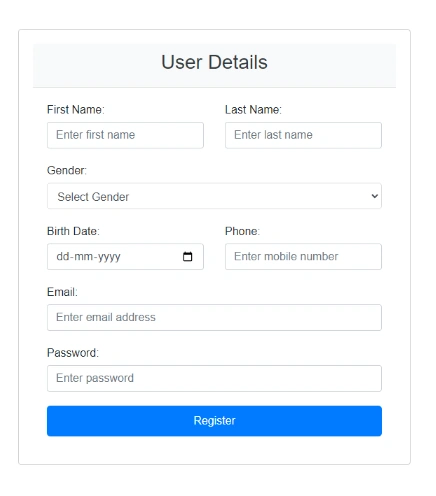
Angular Reactive form With Validation
Create a reactive form using FormBuilder, groups, and arrays. Reactive forms is an Angular technique for creating forms in a reactive style.