Query objects, databases, and XML with expressive operators. Learn deferred execution, projections, grouping, joins, performance tips, and idiomatic LINQ patterns that make data code concise and powerful.
1,228 posts662 contributors
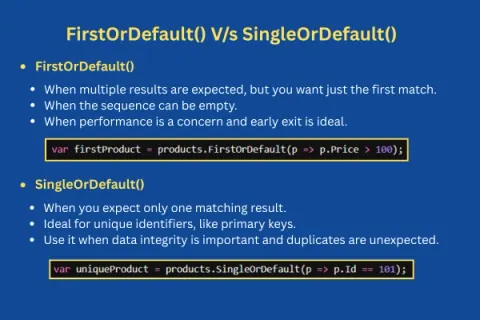
Learn the behavioral, performance, and error-handling differences between LINQ's FirstOrDefault and SingleOrDefault methods, and when to use each in C#.
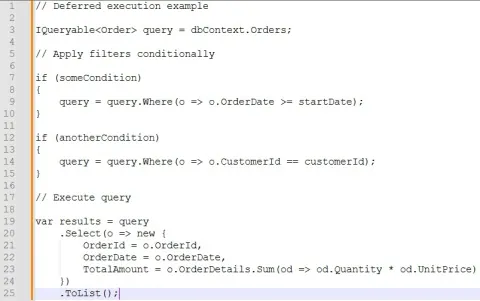
This article explains the difference between deferred and immediate execution, outlines the execution order, and shares best practices to write efficient and optimized LINQ queries for real-world applications.
Learn LINQ in C# with 101 essential operations for beginners. Simple examples of filtering, sorting, and joining data to make your code better and faster. Perfect for new C# developers.
PLINQ (Parallel LINQ) is a powerful feature in .NET that enables parallel processing of queries to improve performance on multi-core processors.
Discover the latest LINQ features in .NET 9 that enhance query performance, simplify data manipulation, and introduce new methods for better efficiency.
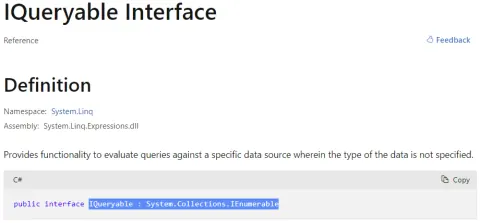
This article will discuss The Lazy loading related topic: Difference between IEnumerable and IQueryable
Quantifier operations in LINQ simplify logical evaluations of collections using methods like `Any`, `All`, and `Contains`. They enhance readability, reduce boilerplate, and support efficient data validation and filtering.
If Linq uses a "for or while" loop internally for the where clause, Why should we not use it directly?
i want to receive Sections within MasterDataAttId_All bu this code returns all sections if any section id contains MasterDataAttId_All. How to receive Sections that it's id equals any MasterDataAttId_All's id var result = MasterData.Where(md => md.sections.Any(x => MasterDataAttId_All.Contains(x.SectionId))).ToList()
In this article, I will showcase the new methods: Index, CountBy, and AggregateBy. These powerful additions in .NET 9 bring significant enhancements to LINQ, aimed at improving your coding experience and simplifying data manipulation tasks.
.NET 9 introduces the CountBy method, a powerful addition to LINQ that enhances querying capabilities. This feature allows developers to count elements based on specified conditions efficiently.
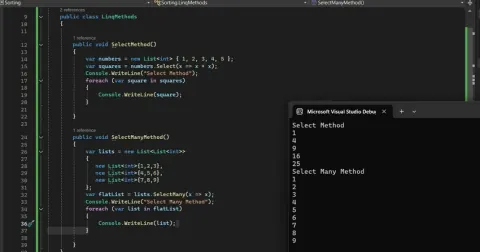
Learn key differences, practical use cases, and examples that demonstrate how these methods simplify data manipulation, making it easier to work with nested and complex data structures in C#.
Discover essential LINQ best practices for writing efficient, readable, and maintainable code in C#. Learn tips on query and method syntax, performance optimization, and effective use of lambda expressions and extension methods to enhance your .NET applications and streamline data querying.
LINQ (Language Integrated Query) is a powerful feature in .NET that allows developers to query collections in a concise and readable manner. While methods like Where, Select, OrderBy, and GroupBy are widely used and appreciated, there are several other LINQ methods that are often underappreciated but can be incredibly useful. In this blog post, we'll explore the top 10 underappreciated LINQ methods with examples to help you harness their full potential.
When working with collections in C# .NET, FirstOrDefault and Find serve similar purposes of retrieving elements based on conditions. FirstOrDefault is versatile for any IEnumerable<T>, while Find is optimized for List<T>, offering potentially better performance in list operations.
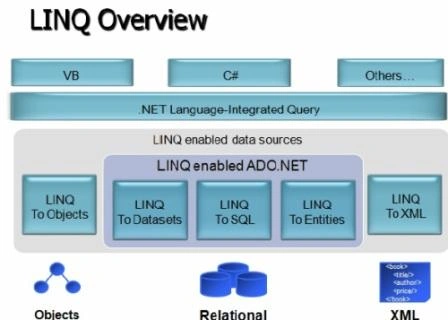
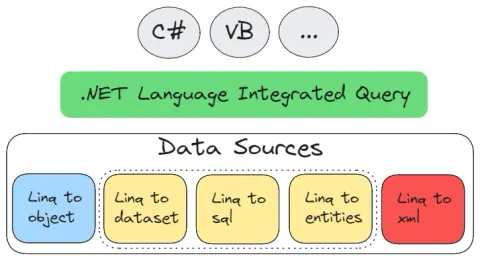
LINQ (Language-Integrated Query) in .NET offers a unified, declarative way to query diverse data sources like objects, databases, XML, and more. It simplifies data manipulation with methods like Where, Select, and GroupBy, supporting both query and method syntax.
Learn how LINQ TakeWhile and SkipWhile use predicates to return or skip sequence elements in C#, including examples of combining both methods.
Learn how to optimize LINQ queries in C# web APIs using early filtering, selective projections, IQueryable, and deferred execution to reduce data processing and database round-trips.
This technique allows runtime composition of query predicates using logical conditions such as AND, OR, and NOT. By leveraging Expression Trees and lambda expressions, developers can programmatically build flexible queries for filtering data in applications, enhancing adaptability and performance.
LINQ (Language Integrated Query) provides powerful querying capabilities in C# to manipulate data collections. Among its arsenal of operators, Single, SingleOrDefault, First, and FirstOrDefault are frequently used to retrieve elements from sequences.
Using LINQ to SQL, insert data into databases effortlessly. Utilize LINQ query expressions, entity classes, and DataContext to map objects to database tables. Ensure proper error handling and concurrency control for robust data management.
SingleOrDefault() returns a single element from a sequence or a default value if no element exists. FirstOrDefault() retrieves the first element or a default if the sequence is empty. Both are LINQ methods for data querying, offering flexibility in handling single results from collections.
Learn how C# LINQ expressions use query syntax to filter and select data from IEnumerable sequences, compared with foreach-based iteration.
LINQ, a cornerstone of C#, empowers developers to query data across various sources efficiently. This guide delves into the nuanced differences between First() and FirstOrDefault(), aiding in crafting resilient and optimized code.