Loading
Benefits of Using XML Instead of Parameters in .NET Core Web API
Using XML in .NET Core Web API simplifies data management by encapsulating complex data structures into a single format. This reduces method complexity, minimizes errors, and enhances interoperability with legacy systems.
Deserialize XML with Array Node In C#
In this blog, I will explain how to deserialize an XML file with an array and single nodes.
How To Use Xpath Syntax To Select XML Nodes
In this blog, you will learn how and when to use different syntaxes of XPath for selecting nodes using expression and steps.
How To Compare Two Dates In XSLT (Transform) By Using C# Code
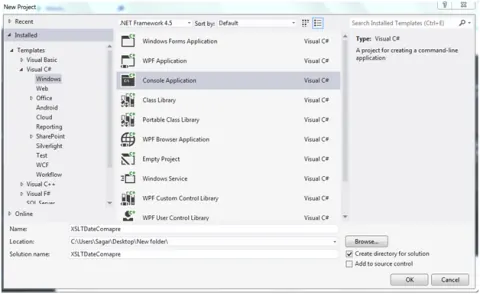
This blog gives us an overall idea of how to compare two dates in XSLT.
How XML Attribute Overrides Help Serialize Objects With Camel Case
This article shows how to apply a pattern to Xml serialization and deserialization (in this example camel casing) without having to use a ton of attributes.
Deserializing XML Into A List Or Array Of Objects
Deserialization of arrays (or lists) tends to require the creation of empty classes in C#. Is that necessary?
Read And Write Dynamic T Object Into XML File
In this blog, you will learn how to read and write Dynamic T object into XML File.
How To Convert JSON Into XML Or XML Into JSON
In this blog, you will lear, how to convert JSON into XML or XML into JSON.
Generate Menus Using XML
In this blog you will learn how to generate menus using XML.
XML as a Parameter in SQL Query
This blog is to show how to handle XML parameter in a SQL Query.
Export An Excel Using Closed XML
In this blog you will learn how to export an excel using Closed XML.
Editing Log4NET Configuration Programatically
This article and associated project demonstrate how to use XDocument to edit log4netconfig files.
Fix: XML Parsing Error due to use of &, < and > characters
This blog talks about issue when using &, < and > in xml file and ways to fix them.
WIX- Windows Installer & XML- to Publish an Automated Website
In this blog you will learn WIX- Windows Installer & XML- to Publish an Automated Website.
Excel Export using XML Spreadsheet
This blog helps you to export data to excel using XML spreadsheet.
Querying XML Data With Namespace In C#
This blog describes how to write LINQ to XML when XML data contains namespace.
Convert an Image to Base64 String and Base64 String to Image
In this blog we will learn about that how to convert an Image to Base64 string and Base64 String to Image.