Loading
Topic
adapter
9 posts about adapter by 6 contributors.
Know adapter? Share what you know with developers who are learning it.
+ Follow adapterBe the first to follow this
- Articles
- 9
- Contributors
- 6
Articles about adapter
- Article · C#
Design Patterns with C# Examples
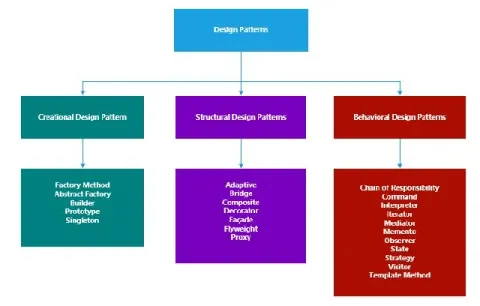
This article explains design patterns, providing standard solutions for software design problems. It covers Creational, Structural, and Behavioral patterns with C# examples, including Singleton, Factory Method, Adapter, Composite, Observer, and Strategy patterns, enhancing code flexibility and maintainability.
- Article · C#
Adapter Design Pattern In C#
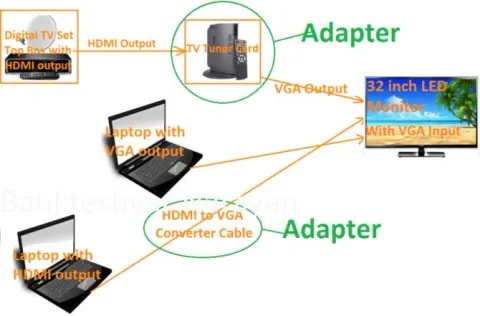
The Adapter Design Pattern is a structural design pattern that allows objects with incompatible interfaces to work together. It acts as a bridge between two incompatible interfaces, making them compatible without changing their source code. This pattern is commonly used when integrating new features or third-party components into an existing system.
- Article · .NET
Design Patterns In .NET
So basically, what are design patterns? We can define design patterns as proven techniques to achieve certain tasks. They give us a basic template to design our application using templates that have proven to meet the requirements of performance, maintainability, extensibility, scalability and security. Object oriented programming is the backbone of software development these days and this holds for C# development as well. Design Patterns: Elements of Reusable Object-Oriented Software (1994) is a software engineering book which describes software design patterns. The book was written by Erich Gamma, Richard Helm, Ralph Johnson, and John Vlissides, with a foreword by Grady Booch. It describes 23 classic software design patterns and is regarded as an important source for object-oriented design theory and practice. The authors are often referred to as the Gang of Four (GoF). This book includes examples in C++ and Smalltalk. These design patterns have been divided into three categories and in this article, I will provide two samples from each category in C#.
- Article · Bot Framework
Creating Microsoft Bot Framework In Python 😍
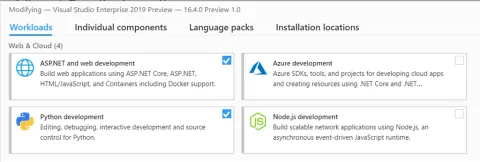
In this article I am going to explain the step by step execution of how to create a Bot Framework application in Python language using Visual Studio 2019.
- Article · Design Patterns & Practices
Wrapper Patterns in C#, Part IV: The Adapter Pattern
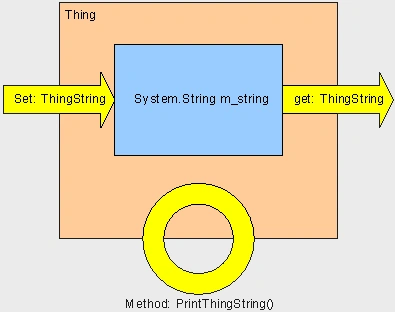
In this series of four articles, we will travel down the C# rabbit hole and see how it is all possible with some wrapper patterns: Proxy, Decorator, and Adapter.
- Article · Design Patterns & Practices
Wrapper Patterns in C#, Part II: The Proxy Pattern
Did you ever wish for a superhuman power to be impervious to bullets or travel outside your body? How about the superpower to be able to breathe underwater or fly? Or how about a changing the way you look so you can disguise yourself as anyone, or anything? In this series of four articles, we will travel down the C# wrapper rabbit hole and see how it is all possible with some patterns: Proxy, Decorator, and Adapter.
- Article · Design Patterns & Practices
Wrapper Patterns in C#: Part I
Did you ever wish for a superhuman power to be impervious to bullets or travel outside your body? How about the superpower to be able to breathe underwater or fly? Or how about a changing the way you look so you can disguise yourself as anyone, or anything? In this series of four articles, we will travel down the C# wrapper rabbit hole and see how it is all possible with some patterns: Proxy, Decorator, and Adapter.
- Article · Design Patterns & Practices
Structural Design Pattern for .NET
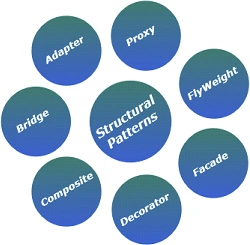
Structural design patterns are patterns that describe how objects and classes can be combined and form a large structure and that ease design by identifying a simple way to realize relationships between entities.
- Article · Design Patterns & Practices
Wrapper Patterns in C#, Part III: The Decorator Pattern
Did you ever wish for a superhuman power to be impervious to bullets or travel outside your body? How about the superpower to be able to breathe underwater or fly? Or how about a changing the way you look so you can disguise yourself as anyone, or anything? In this series of four articles, we will travel down the C# rabbit hole and see how it is all possible with some wrapper patterns: Proxy, Decorator, and Adapter.