bulk operations
6 posts about bulk operations by 6 contributors.
Know bulk operations? Share what you know with developers who are learning it.
- Articles
- 6
- Contributors
- 6
Articles about bulk operations
- Article · Entity Framework
EF Core 10 Performance Tuning: Tracking, Query Filters, Compiled Queries, and Bulk Operations
Boost EF Core 10 performance with AsNoTracking, query filters, compiled queries, and bulk operations. Optimize your data access layer.
- Article · Entity Framework
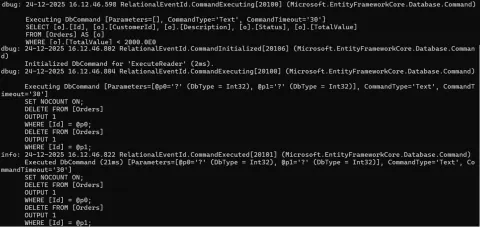
ExecuteUpdate & ExecuteDelete in EF Core: A Deep Dive
Unlock EF Core's power with ExecuteUpdate & ExecuteDelete! Boost performance using set-based bulk operations for efficient data modifications. Learn EF Core 10 enhancements!
- Article · ADO.NET
SQLClient Raw Performance Part 7: Mastering Data Streaming & Bulk Operations in ASP.NET Core - FreeLearning365.com
Learn memory-efficient SQL Server data processing with SqlClient, including SqlDataReader streaming, SqlBulkCopy, table-valued parameters, and asynchronous ETL patterns.
- Article · Entity Framework
EF Core Bulk Operations
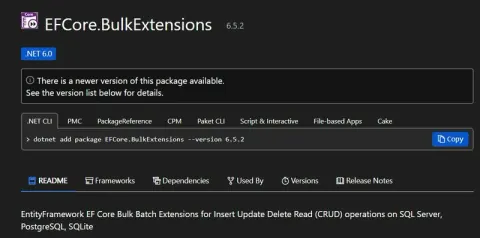
Optimize EF Core performance when dealing with large datasets! This article explores various bulk operation techniques, from built-in options like ExecuteUpdate/Delete to powerful third-party libraries like EFCore.BulkExtensions and Z.EntityFramework.Extensions. Learn when to use each approach, including raw SQL for maximum control, and boost your application's efficiency. Discover the best solution for your needs, whether dealing with thousands or millions of rows.
- Article · Azure
Bulk and Transactional Batch Operations with the Azure Cosmos DB .NET
Azure Cosmos DB provides Bulk and Transactional Batch Operations for efficient data management. Bulk Operations support high-throughput processing across multiple partition keys, while Transactional Batches ensure atomicity within a single partition.
- Article · SQL Server
Table-Valued Parameters in SQL Server
Table-Valued Parameters in SQL Server enable passing multiple rows of data to stored procedures, enhancing performance for bulk operations. Utilizing user-defined table types, they streamline data manipulation tasks and allow parameterized queries, optimizing database development and improving overall performance.