Loading
Topic
CleanCode
6 posts about CleanCode by 6 contributors.
Know CleanCode? Share what you know with developers who are learning it.
+ Follow CleanCodeBe the first to follow this
- Articles
- 6
- Contributors
- 6
Articles about CleanCode
- Article · C#
C# 14- Beyond Methods: Exploring Advanced Extension Member Scenarios
Unlock the power of C# 14 extension members beyond basic methods! Discover advanced techniques for cleaner APIs, fluent design, and improved code readability. Elevate your C# skills!
- Article · Coding Best Practices
Return First: A Clean-Code Mindset
Clean Code Principles in .NET : Introduce how Return First fits into modern clean code practices and why it matters for .NET developers. Reducing Complexity with Guard Clauses : Explain how guard clauses simplify methods, reduce nesting, and improve readability. Real-World .NET Examples : Provide practical before after code samples from controllers, services, and validation flows to demonstrate the impact. Improving Maintainability and Debugging : Show how early returns make debugging easier and help ensure consistent business rules. When Return-First Should NOT Be Used : Clarify edge cases where early-return might not be ideal important for a balanced, senior level approach.
- Article · Design Patterns & Practices
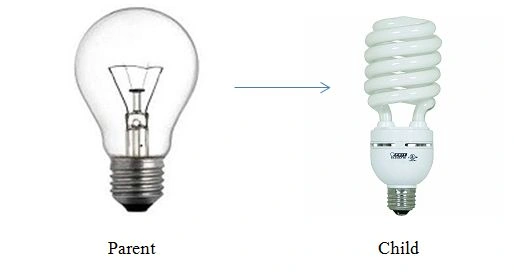
Liskov Substitution Principle (LSP)
Understand the Liskov Substitution Principle (LSP), a key SOLID principle that ensures subclasses can replace base classes without errors, promoting reliable inheritance, clean abstraction, and maintainable object-oriented design.
- Article · .NET Core
Open-Closed Principle (OCP) in .NET 6 Core
As a beginner developer, you're likely on a quest to create clean, maintainable, and scalable code. One of the guiding principles in this journey is the "Open-Closed Principle" from the SOLID principles. In this article, we'll break down the Open-Closed Principle (OCP) and explain it in a beginner-friendly way using a simple .NET 6 Core example.
- Article · Software Architecture/Engineering
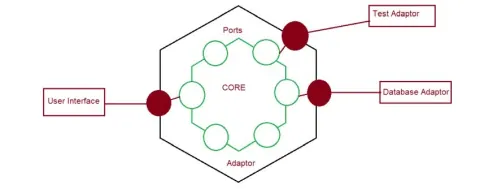
Ports And Adapter Architecture
Ports and adapter is a very old and clean architecture to write modular and decoupled code. It was formally known as Hexagonal due to its diagram. Which shows as a hexagonal.
- Article · .NET Core
How To Organize Your ASP.NET Core Startup File
In this article, you will learn how to organize and clean up your Startup.cs.