concrete classes
8 posts about concrete classes by 5 contributors.
Know concrete classes? Share what you know with developers who are learning it.
- Articles
- 8
- Contributors
- 5
Articles about concrete classes
- Article · Design Patterns & Practices
Must Know Design Pattern Interview Questions
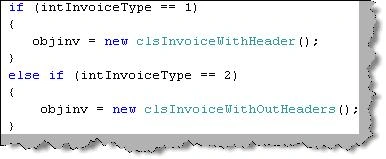
This article covers most popular design pattern interview questions and answers including factory design pattern, abstract factory design pattern, prototype pattern and more.
- Article · Design Patterns & Practices
Bridge Patterns in C#
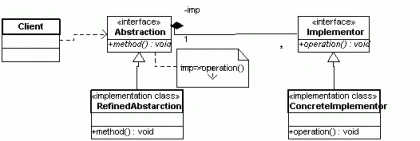
Bridge Pattern is commonly known as Handle/Body idiom in C++ community. This pattern is used for decoupling an abstraction from its implementation so that the two can vary independently.
- Article · Design Patterns & Practices
Abstract Factory Patterns in C#
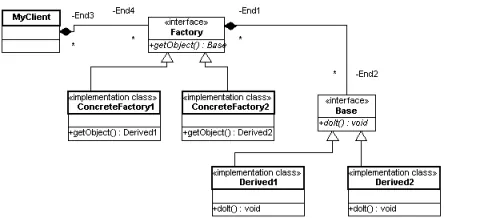
The ABSTRACT FACTORY PATTERN comes under the classification of Creational Patterns. The Abstract Factory provides an interface to create and return one of several families of related objects.
- Article · VB.NET Articles
Abstract classes in VB.NET
In this article we will describe the functionality of abstract classes,
- Article · Design & Architecture
Creational Pattern - Abstract Factory in VB.NET
An abstract factory provides an interface for creating families of related objects without specifying their concrete classes. Sometimes one wants to construct an instance of one of a suite of classes, deciding between the classes at the time of instantiation.
- Article · Design & Architecture
Abstract Factory Patterns in C#
The ABSTRACT FACTORY PATTERN comes under the classification of Creational Patterns. The Abstract Factory provides an interface to create and return one of several families of related objects.
- Article · Design & Architecture
Bridge Patterns in C#
Bridge Pattern is commonly known as Handle/Body idiom in C++ community. This pattern is used for decoupling an abstraction from its implementation so that the two can vary independently.
- Article · Design & Architecture
Introduction to Model View Control (MVC) Pattern using C#
The benefits of using the Model-View-Control (MVC) pattern in our development projects is that we can completely decouple our business and presentation application layers. Furthermore, we will have a completely independent object to control the presentation layer.