5 posts about Cryptography in .NET by 2 contributors.
Know Cryptography in .NET? Share what you know with developers who are learning it.
Learn cryptography fundamentals in .NET, including plaintext and ciphertext, symmetric and asymmetric encryption, keys, block cipher modes, initialization vectors, and padding.
Microsoft .NET has pre-built solutions to all of these in each application domain, viz., ASP. NET, Web Services, Serviced Component etc. It enables building secured application by simple configuration as in ASP.NET to full fledged programmable security as in code access security and Cryptography.
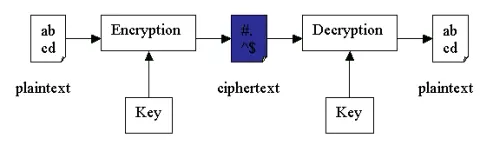
Part-I of this article covered cryptography in the context of encryption. This part continues from where part-I left. It assumes that the reader understands the purpose of encryption, knows about the two types of encryption namely asymmetric encryption and symmetric encryption and the fundamental differences between them. It also assumes that the reader understands encryption-decryption classes in System.Security.Cryptography namespace and the stream based encryption model in. NET framework class library (FCL).
This article gives a brief overview of Cryptography and the Cryptography support provided by the .NET Framework. I begin by introducing Cryptography and then proceed to examine the various types of it. In particular, I review and analyze the various cryptography algorithms and objects supported by .NET. I conclude after proposing and briefly discussing the algorithmic technique that would work best for you.
For any Distributed Framework or Infrastructure to be successful today it has to have an extensive support for developing secured solutions. Microsoft .NET is developed from bottom up with security in mind. It has an eclectic security infrastructure.
DevSocialUpcoming · 3rd editionAI Agents ConferenceNov 23–27, 2026Live onlineMembers only16days leftRegisterPublish an article in this category and earn +1,000 SHARP when it is approved.
Write an article
