5 posts about C# Stack by 5 contributors.
Know C# Stack? Share what you know with developers who are learning it.
Unlock performance gains in your C# applications! Discover why Stack<T> often outperforms List<T> when implementing LIFO (Last-In, First-Out) data structures. This tip explores the underlying reasons for the efficiency difference, focusing on memory allocation and access patterns. Learn when and how to leverage Stack<T> for optimized code and improved application responsiveness. Avoid common pitfalls and write cleaner, faster C#!

Learn how to work with stacks in C#. The Stack class in C# provides a collection of objects that follows the Last-In-First-Out (LIFO) principle. Key operations include Push, Pop, and Peek. Understanding stacks is essential for tasks requiring reverse-order processing and can enhance your programming skills in C#.
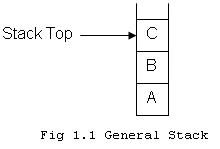
A stack is a data structure that represents a LIFO collection. Learn how to implement Stack in C# using the Stack class.
Queue and stack are two common implementations when creating linked lists. A queue uses first-in-first-out algorithm. The stack uses last-in-first-out algorithm. Both are generic collections in C# and .NET. In the code examples of this article, we will learn about and how to work with Queue and Stack collection classes of .NET in C#.
Using Stack class within your C# application is a handy tool when dealing with the last-in-first-out scenario. You’ll probably be using this on some special occasions within your application and because of that, we (including me) tend to forget this special collection. For that reason, I decided to create an article about the Stack class using C# for our future reference.
DevSocialUpcoming · 3rd editionAI Agents ConferenceNov 23–27, 2026Live onlineMembers only16days leftRegisterPublish an article in this category and earn +1,000 SHARP when it is approved.
Write an article