13 posts about Database Transactions by 9 contributors.
Know Database Transactions? Share what you know with developers who are learning it.
Learn how to use Django's async ORM safely and handle database transactions in async views by moving atomic operations into synchronous functions.

Learn how to implement the transactional outbox pattern in .NET to keep database changes and broker messages consistent, including background processing, retries, and duplicate delivery.
Learn how database transactions and Entity Framework Core prevent partial batch updates, handle rollbacks, and maintain data consistency in SQL Server.
Learn how to safely parallelize C# batch processing by giving each thread its own database connection and transaction, while controlling workload distribution and concurrency.
Why a simple two-step database saves, sharing one connection and transaction, is a genuine instance of the Unit of Work pattern - even without a dedicated class or explicit naming
Why a correct database transaction doesn't guarantee accurate UI communication — and why showing a success message before a multi-step save fully commits can mislead anyone reconciling data later.
Master SQL transactions! Learn how to use BEGIN, COMMIT, and ROLLBACK to ensure data consistency and reliability. Understand ACID properties and best practices.
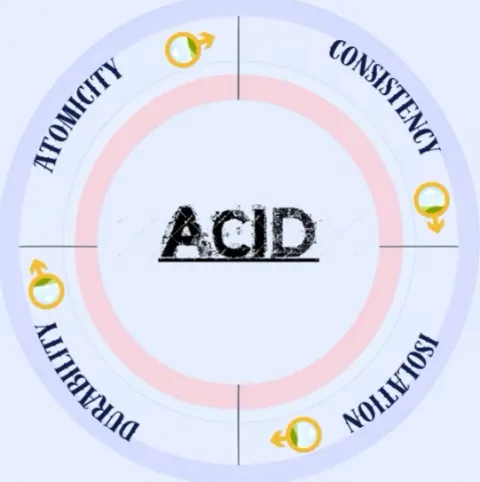
Explore ACID properties (Atomicity, Consistency, Isolation, Durability) in DBMS with a real-world banking example. Learn how they ensure reliable database transactions.
Learn to handle SQL Server errors with TRY...CATCH, transactions, rollback logic, error logging, THROW, and retries for transient failures.
This article covers the basics of SQL transactions, including BEGIN, COMMIT, and ROLLBACK commands, ACID properties, isolation levels, and error-handling techniques for effective database management.
In database management, transactions are essential to ensure data integrity and consistency. A transaction is a sequence of operations performed as a single logical unit of work
Explore the Unit of Work pattern in C#, essential for modern application development. Discover how it facilitates efficient database operations, manages transactions with Entity Framework, and enhances the scalability and maintainability of your data access layer.
A Transaction Scope or Nested Transaction in database management refers to managing atomic, consistent, isolated, and durable operations. It involves handling multiple database actions as a single unit, ensuring data integrity and reliability.
DevSocialUpcoming · 3rd editionAI Agents ConferenceNov 23–27, 2026Live onlineMembers only17days leftRegisterPublish an article in this category and earn +1,000 SHARP when it is approved.
Write an article