Loading
Topic
exploratory testing
5 posts about exploratory testing by 4 contributors.
Know exploratory testing? Share what you know with developers who are learning it.
+ Follow exploratory testingBe the first to follow this
- Articles
- 5
- Contributors
- 4
Everything about exploratory testing
- Article · Software Testing
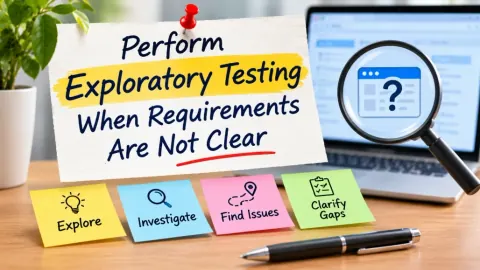
How to Perform Exploratory Testing When Requirements Are Not Clear
Learn a structured approach to exploratory testing when requirements are incomplete, including gathering context, investigating user workflows, identifying risks, and documenting findings.
- Article · Software Testing
Building Agentic QA Pipelines with Browser Automation and .NET
Learn how to build agentic QA pipelines with Playwright for .NET and AI agents, including browser automation, agent memory, tool control, execution limits, and testing best practices.
- Article · Software Testing
Exploratory Test Charter Examples and How to Write Them
This article explains how to write clear, concise charters that focus your testing efforts, improve coverage, and enhance collaboration. Learn to define the mission, scope, risks, and expected outcomes for successful exploratory testing sessions. Includes real-world examples for e-commerce, mobile banking, and online learning platforms to help you find more bugs and release reliable software, no matter where you are testing.
- Article · Software Testing
Exploratory Testing: How to Do It and When
Uncover hidden bugs and usability issues with exploratory testing! This hands-on approach empowers testers to think like real users, going beyond scripted tests to find unexpected problems. Learn how to implement it effectively, when to use it, and why it's crucial for global applications like travel websites and e-commerce platforms, ensuring a smooth user experience worldwide.
- Article · Software Testing
Exploratory Testing in Software
Exploratory testing is a dynamic and adaptive approach in software quality assurance. Testers use creativity, intuition, and domain knowledge to uncover defects and vulnerabilities that scripted testing may miss. It offers flexibility, real-time learning, and adaptability. Exploratory testing is valuable during initial testing, for complex systems, and in usability testing.