FirstOrDefault
8 posts about FirstOrDefault by 8 contributors.
Know FirstOrDefault? Share what you know with developers who are learning it.
- Articles
- 8
- Contributors
- 8
Articles about FirstOrDefault
- Article · LINQ
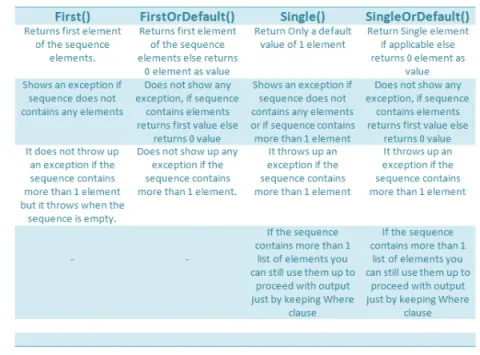
Difference Between First() and FirstOrDefault() in LINQ?
Understand the crucial difference between First() and FirstOrDefault() in LINQ for C#. Learn when to use each method for robust, exception-safe .NET applications. Avoid common mistakes!
- Article · Entity Framework
EF Core Code That Works Locally but Fails in Production (part 2)
Avoid EF Core production disasters! Learn how to fix common logic and tracking mistakes like improper Any(), First(), and missing AsNoTracking() for optimal performance.
- Article · LINQ
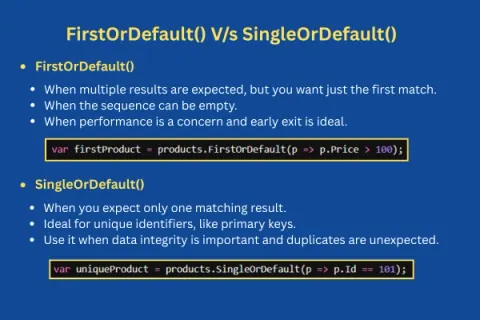
FirstOrDefault vs. SingleOrDefault in LINQ: Key Differences and Use Cases
Learn the behavioral, performance, and error-handling differences between LINQ's FirstOrDefault and SingleOrDefault methods, and when to use each in C#.
- Article · .NET
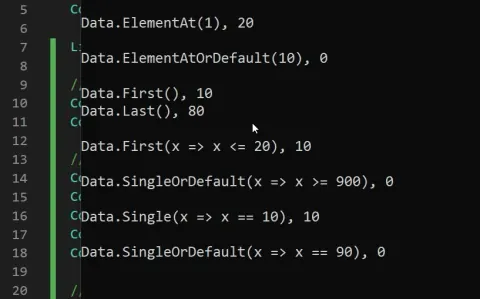
Single, SingleOrDefault, First, and FirstOrDefault in Linq .NET C#
LINQ's element operators like Single, SingleOrDefault, First, FirstOrDefault, Last, and LastOrDefault provide specific functionalities for retrieving elements from collections in C#. Here's how to use them effectively.
- Article · LINQ
LINQ in C#: Knowing When to Use First() vs FirstOrDefault()
LINQ, a cornerstone of C#, empowers developers to query data across various sources efficiently. This guide delves into the nuanced differences between First() and FirstOrDefault(), aiding in crafting resilient and optimized code.
- Article · LINQ
LINQ Fundamentals - First() Vs FirstOrDefault()
Learn how LINQ First() and FirstOrDefault() return matching elements and how they behave when no matching element exists.
- Article · LINQ
Play With First ()/FirstOrDefault () or Single ()/SingleOrDefault () in LINQ
Today, in this article let’s play around with one of the interesting and most useful concepts in LINQ.
- Article · LINQ
Selecting Single Items With LINQ to SQL
LINQ to SQL offers six primary approaches to selecting a single item. This article describes the differences between them and when each should be applied.