Loading
Topic
Let
8 posts about Let by 8 contributors.
Know Let? Share what you know with developers who are learning it.
+ Follow LetBe the first to follow this
- Articles
- 8
- Contributors
- 8
Articles about Let
- Article · JavaScript
Deep Dive into JavaScript Hoisting
A comprehensive guide explaining JavaScript hoisting—how variable and function declarations are lifted during the compilation phase—covering var, let, const behaviors, and best practices to avoid pitfalls.
- Article · JavaScript
Exploring let, var, and const in JavaScript Declarations
In JavaScript, choosing between var, let, and const is crucial for code behavior and maintainability. var is function-scoped and can be redeclared, while let and const are block-scoped. let allows reassignment, and const prevents it.
- Article · JavaScript
Var and Let and Const in JavaScript
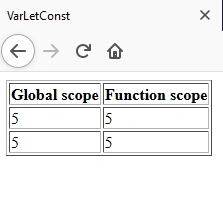
All these keywords are used frequently in application development and used to store the values. Nevertheless, at the high level, these have few common features and few differences. let us see the difference between all with practical examples.
- Article · JavaScript
Difference Between let, var, and const in JavaScript with Example
In this article, I will demonstrate how to use Var, let, and const with examples. The Var, Let, and const keywords are used to declare variables in JavaScript. Choosing the right variable while writing code makes it more efficient and robust.
- Article · JavaScript
What Is the Difference Between var, let, and const in JavaScript?
In JavaScript, var, let, and const declare variables with differences in scope, hoisting, and reassignment. Prefer let and const for better scoping, predictability, and avoidance of common bugs.
- Article · JavaScript
Concept Of Hoisting And TDZ(Temporal Dead Zone)
In this article, I'm going to Explain, how Hoisting and TDZ work in js
- Article · JavaScript
Comparison Between ECMAScript 5 And ECMAScript 6 Versions Of JavaScript
In this article, we are going to discuss briefly the differences between ECMAScript 5 and ECMAScript 6 versions of JavaScript, as well as all the new features introduced in each of these versions. We will discuss the limitations of ES5 and what solutions were offered by ES6 version to overcome those limitations and further improve the JavaScript language .
- Article · LINQ
Let Keyword Using LINQ
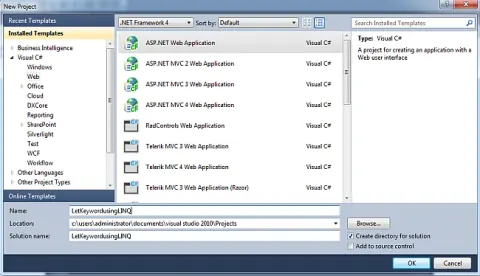
This article demonstrates an interesting and very useful concept in LINQ.