MySQL Tutorials
35 posts about MySQL Tutorials by 1 contributor.
Know MySQL Tutorials? Share what you know with developers who are learning it.
- Articles
- 35
- Contributors
- 1
Everything about MySQL Tutorials
- Article · MySQL
Cursor in MySQL
In this article, we are going to describe the MySQL cursor and how to declare, open, fetch, and close it. In MySQL, a cursor is a database object that provides a way to retrieve and manipulate multiple rows of data in a result set. It allows you to process a set of rows returned by a query one at a time, similar to how you might handle data in a programming language loop. Cursors are particularly useful when you need to perform row-by-row processing or when you want to control the retrieval of data explicitly.
- Article · MySQL
Working with Union in MySQL
In MySQL, the UNION operator is used to combine the results of two or more SELECT queries into a single result set. The UNION operator allows you to stack the rows returned by each query on top of each other, effectively merging the results. It is essential to note that the number and data types of columns in all the queries involved in the UNION operation must match, or at least be compatible.
- Article · MySQL
Difference between Delete, Truncate and Drop Statements in MySQL
Learn the differences between MySQL DELETE, TRUNCATE, and DROP statements, including their syntax, effects on table data and structure, and key behaviors.
- Article · MySQL
How to Handle Null Values in MYSQL?
Here we will learn how to handle null values and null values functions in MySQL.Handling null values in MySQL is an important aspect of database management, as null represents the absence of a value in a particular field. Dealing with null values properly can ensure data integrity and smooth operations. Here are some common methods to handle null values in MySQL:
- Article · MySQL
MySQL Key Constraints
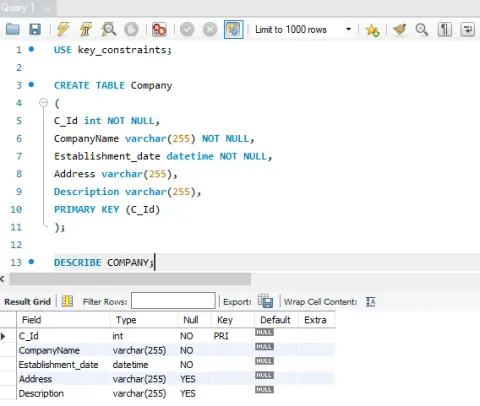
In this article we will learn about constraints on different keys.
- Article · MySQL
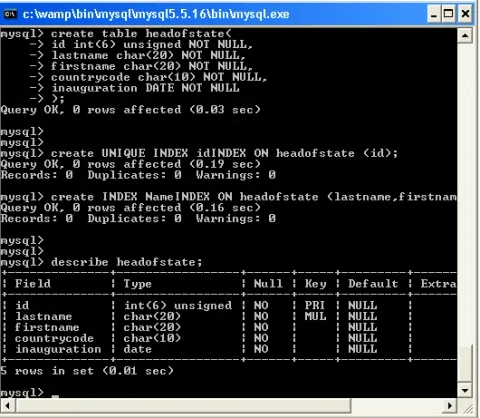
Work with INDEX in MySQL
In MySQL, index is a data structure .It improves the functionality of the table operations.
- Article · MySQL
DDL, DML and DCL in MySQL
In this article, we will discuss the working process of DDL, DML, and DCL in MySQL.These are some of the most commonly used SQL commands that allow you to perform various operations on the data stored in a database. Understanding and using these commands effectively is essential for working with relational databases and managing data efficiently.
- Article · MySQL
MySQL CASE Expression
In this article you will learn the use case with the select command in MySQL server
- Article · MySQL
Working With The Encryption Password Function In MySQL
In this article we will explain the password encryption function and how to return a password string from a plain text password in a string.
- Article · MySQL
Working With a Sub String Index in MySQL
Learn how to use MySQL's SUBSTRING_INDEX function to extract values before or after delimiters and retrieve specific segments from strings.
- Article · MySQL
ORDER BY In MySQL
In this article we learn the ORDER BY clause in MySQL.In MySQL, the ORDER BY clause is used in conjunction with the SELECT statement to sort the result set based on one or more columns. It allows you to specify the order in which rows should appear in the query result. The ORDER BY clause is a powerful feature that provides control over the presentation of data. Here's a description of how the ORDER BY clause works.
- Article · MySQL
How to Handle Duplicate Records in MySQL?
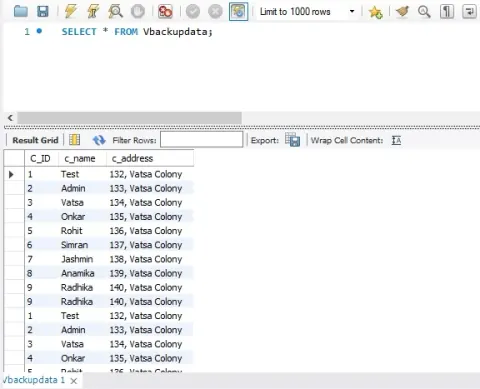
In this article we will learn how to handle duplicate records in a MySQL server.Handling duplicate records in MySQL involves identifying and dealing with rows that have identical or very similar data in one or more columns. Duplicate records can occur due to various reasons, such as data entry errors, multiple data imports, or software bugs. Here are some common approaches to handling duplicate records in MySQL.
- Article · MySQL
Having and Alias Clause in MySQL
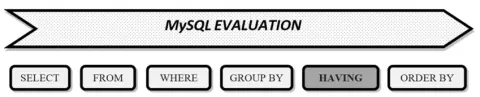
In MySQL, the HAVING and AS (Alias) clauses are powerful features used in conjunction with the SELECT statement to filter and rename data retrieved from a table. Let's look at each clause individually.
- Article · MySQL
Modifying and Updating Tables in MySQL
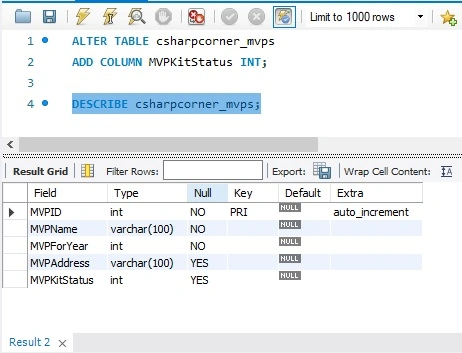
This article explains how to modify and update a table in MySQL.In MySQL, modifying and updating tables are essential operations that allow you to change the structure and content of your database tables. Here's a brief description of these operations.
- Article · MySQL
Working with DateTime in MySQL
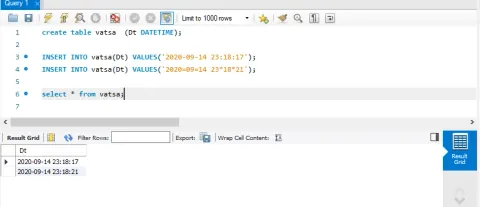
In this article we will learn about timestamp formatting in MySQL.
- Article · MySQL
Working With MySQL to Visual Studio 2010
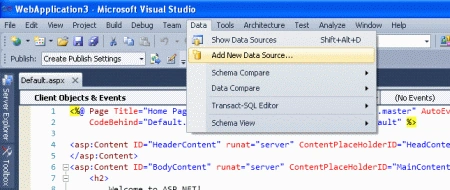
To work with MySQL in Visual Studio 2010, you can use the MySQL Connector/NET, which is a fully-managed ADO.NET data provider for MySQL. This connector enables you to interact with MySQL databases in your Visual Studio projects, allowing you to perform various database operations seamlessly. Here's a step-by-step guide to setting up and working with MySQL in Visual Studio 2010
- Article · MySQL
Character Sets And Collations in MySQL
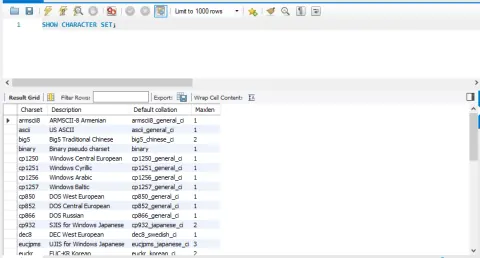
Here you will learn about character sets and collations in MySQL.
- Article · MySQL
MySQL Operators And Comparison Functions
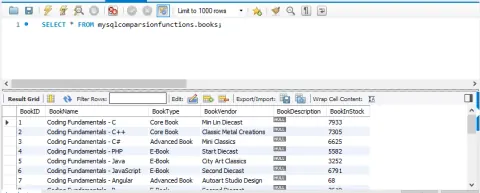
Here we will show how to work with the Operators and Comparison Functions in MySQL
- Article · MySQL
Variables & Operators in MySQL
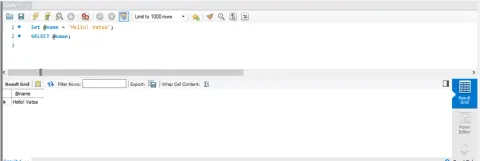
In this article we will learn how variables & operators are used in MySQL.
- Article · MySQL
Aggregate Functions in MySQL
In this article, we will learn how the aggregate function is used in MySQL.
- Article · MySQL
GROUP BY in MySQL
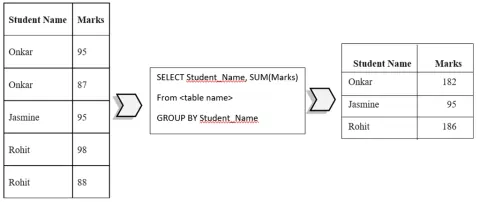
In this article you will see how to use the Group By statement in MySQL.