Loading
Topic
Object Initialization
9 posts about Object Initialization by 8 contributors.
Know Object Initialization? Share what you know with developers who are learning it.
+ Follow Object InitializationBe the first to follow this
- Articles
- 9
- Contributors
- 8
Everything about Object Initialization
- Article · C#
Required Members Feature in C#: Ensuring Safer and More Reliable Object Initialization
Ensure safer object initialization in C# with Required Members! Prevent invalid states, improve code safety, and enhance readability. A must-know for .NET devs.
- Article · C#
Understanding Constructor Overloading in C# WebForms
Master C# constructor overloading in WebForms! Learn to initialize objects flexibly with different parameters. Real-time example included for practical use.
- Article · C#
Understanding Constructor Overloading in C# WebForms
Master C# constructor overloading in WebForms! Learn to initialize objects flexibly with different parameters. Real-time examples & practical use cases included.
- Article · C, C++, MFC
Chapter 10: Classes and Objects: Construction and Destruction
Explore object lifecycle management in C++! This chapter dives into constructors, special functions that initialize objects upon creation, covering default and parameterized constructors with practical examples. Learn about destructors, crucial for releasing resources like dynamically allocated memory to prevent memory leaks. Finally, understand the 'this' pointer and its role in differentiating member variables and enabling method chaining for cleaner code.
- Article · C#
Primary Constructors in C# 12
Primary constructors in C# 12 simplify class and struct initialization by allowing parameters to be declared directly in the class signature. This new feature reduces boilerplate code, making object creation cleaner and more concise. Great for writing modern, readable C# code.
- Article · .NET
How Does Your "Code Smell"
"Code smell" refers to indicators in code that suggest potential problems. Common examples include poor exception handling, magic numbers, and inefficient string operations. Other issues involve neglecting compiler warnings, unnecessary object initialization, and lack of comments.
- Article · .NET Core
Understanding Constructors in .NET Core
"Explore the fundamentals of constructors in .NET Core, focusing on their role in object initialization and class setup. Learn about constructor overloading, chaining, and best practices in C#.
- Article · C#
String Interpolation: A New Feature of C# 6.0
The provided C# 6.0 code demonstrates the use of string interpolation, auto-implemented properties, and object initialization syntax. It showcases the nameof operator to retrieve variable names statically.
- Article · C#
C# 9.0 - Introduction To Init-Only Property
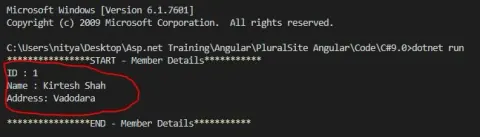
C# 9.0 introduced a new feature called Init-Only Properties, enhancing the language's capabilities for defining immutable types. Init-only properties allow you to create read-only properties that can only be set during object initialization. This feature simplifies the creation of immutable objects, providing a concise and expressive syntax for initializing properties at the time of object creation and ensuring their immutability afterwards.