Loading
Topic
risk assessment
8 posts about risk assessment by 7 contributors.
Know risk assessment? Share what you know with developers who are learning it.
+ Follow risk assessmentBe the first to follow this
- Articles
- 8
- Contributors
- 7
Everything about risk assessment
- Article · Software Testing
Building AI-Powered Software Inventory Intelligence Platforms
Transform software inventories into intelligent platforms with AI. Gain visibility into dependencies, risks, and operational impact.
- Article · AI
Building AI-Powered Change Impact Analysis Tools for Software Teams
Build AI-powered change impact analysis tools for software teams using .NET & Azure. Enhance risk visibility and accelerate deployments.
- Article · Software Testing
AI-Powered Release Management: Using Intelligence to Improve Software Delivery
Unlock faster, more reliable software delivery with AI-powered release management. Reduce risk, boost confidence, and optimize your CI/CD.
- Article · Prompt Engineering
What Is Critique Red Team Prompting
Uncover hidden risks and strengthen your plans with Critique Red Team Prompting. Use AI to challenge ideas, expose flaws, and make informed decisions. Avoid costly failures!
- Article · Python
How to Find the Variance of Array Elements in Python
Learn how to calculate variance in Python using the statistics module for financial risk assessment. This guide explains sample variance, its importance in banking for fraud detection and credit scoring, and provides a production-ready implementation with best practices. Discover how to analyze spending patterns and identify volatile behavior using variance, ensuring robust and reliable risk management.
- Article · Machine Learning
How to Solve a Demographical Application: The Fintech Secret Behind Predicting Credit Risk
Unlock the fintech secret to predicting credit risk with demographic data! This article reveals how to build a simple yet powerful risk engine using Python, birth years, and basic logic. Learn to compute risk profiles, implement test cases, and optimize performance. Discover how age-based modeling drives fair and transparent financial systems, achieving 92% accuracy without AI or complex algorithms. Master the art of data-driven risk calibration!
- Article · Software Testing
Risk-Based Testing: How to Prioritize Tests
Maximize software testing efficiency with Risk-Based Testing (RBT). Prioritize critical features based on likelihood and impact of failure. Learn how to identify risks, assess their levels, and allocate resources effectively. Improve product quality, meet deadlines, and make informed decisions by focusing on high-risk areas first. Test smarter, not harder, and deliver reliable software!
- Article · Software Testing
Automated Threat Modeling: Integrating Security Design into Agile Development
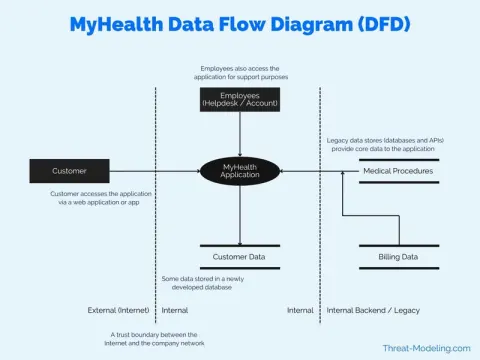
Threat modeling is a structured approach to identifying and mitigating potential security risks in a system. It involves analyzing the architecture, data flows, and components of an application to uncover vulnerabilities and design flaws before they can be exploited. The goal is to proactively address security concerns during the design and development phases.