Loading
Topic
Service Layer
10 posts about Service Layer by 8 contributors.
Know Service Layer? Share what you know with developers who are learning it.
+ Follow Service LayerBe the first to follow this
- Articles
- 10
- Contributors
- 8
Everything about Service Layer
- Article · .NET Core
Build an ASP.NET Core Web API with Dapper and SQL Server Stored Procedures
Learn how to build an ASP.NET Core Web API with Dapper and SQL Server Stored Procedures using a layered CRUD architecture with Repository, Service, and Dependency Injection.
- Article · ASP.NET Core
Mastering Dependency Injection in ASP.NET Core – Complete Beginner to Advanced Guide
Learn dependency injection in ASP.NET Core, including the IoC container, constructor, property and method injection, service lifetimes, and dependency inversion. See how DI improves testing and maintainability.
- Article · Software Architecture/Engineering
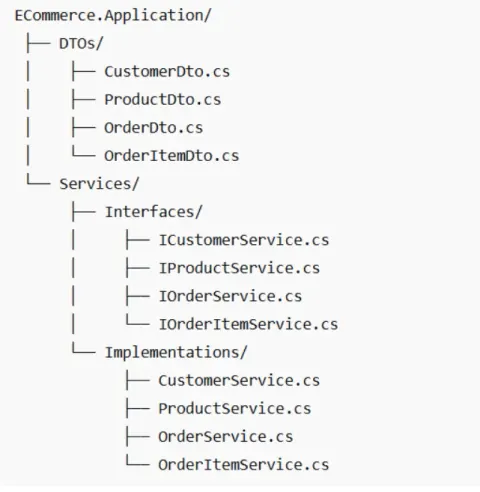
🧱 Lesson 2D -Implementing Application Services (Service Layer and DTOs)
Learn to implement the Application Layer in .NET, connecting domain logic to the API. Explore DTOs, services, and repository interfaces for a robust e-commerce app.
- Article · .NET Core
🍁Mastering SOLID Principles in Real-World .NET Projects
Learn SOLID principles in C# with real-world .NET examples. Master SRP, OCP, LSP, ISP, and DIP to write clean, testable, and scalable code using interfaces, patterns, and best practices for enterprise apps.
- Article · C#
A C# 13 Tip for building Data Transfer Objects (DTOs) Using Records
C# records, introduced in C# 9 and improved in C# 13, offer immutable data models ideal for DTOs. They provide value semantics, concise syntax, automatic method generation, and enhanced data integrity for clean, maintainable code.
- Article · .NET Core
Dependency Injection & EF Migrations in ASP.NET MVC with Autofac
This article demonstrates how to implement Dependency Injection (DI) using Autofac in an ASP.NET MVC application and integrate Entity Framework for database operations, including migrations.
- Article · Java
How to Create a Dynamic Delete Modal in Java
This article guides you in creating a dynamic delete modal in Java. You'll learn how to design a modal popup that adjusts its content based on the item to be deleted, pass item data using JavaScript and AJAX, and handle the deletion process in Java, ensuring a smooth and efficient user experience.
- Article · .NET Core
Building a Robust ASP.NET Core Web API with Singleton Design Pattern and Three-Tier Architecture
This example provides a basic structure for a Three-Tier Architecture in an ASP.NET Core Web API, implementing a Singleton Design Pattern for the Data Access Layer. Remember to adjust the code based on your specific requirements and consider using dependency injection for better testability and maintainability.