Loading
Topic
State Design Pattern
3 posts about State Design Pattern by 3 contributors.
Know State Design Pattern? Share what you know with developers who are learning it.
+ Follow State Design PatternBe the first to follow this
- Articles
- 3
- Contributors
- 3
Everything about State Design Pattern
- Article · .NET Core
Implementing State Design Pattern in ASP.NET Core Web API with 3-Tier Architecture
In this ASP.NET Core Web API project utilizing a 3-Tier Architecture with the State Design Pattern, we've created a News management system that encapsulates the state of news items, allowing for a clear and structured way to handle state transitions. The architecture consists of three distinct layers: Presentation, Business Logic, and Data Access. The Business Logic layer is where the State Design Pattern is applied, with different states such as Draft, Published, and Archived, each represented by concrete state classes. The NewsService class is responsible for managing these states and their transitions. Controllers in the Presentation layer handle HTTP requests and delegate the state-related operations to the NewsService, enabling CRUD functionality for news items. By setting the appropriate state and invoking state-specific methods, such as Publish and Archive, we control the state transitions. While this example focuses on the pattern's core implementation, in a real-world scenario, you would integrate a data access layer to persist and retrieve news items from a database, making it a robust and maintainable system.
- Article · Design Patterns & Practices
Understanding State Design Pattern By Implementing Finite State Machine In Super Mario Game
In object oriented programming State Pattern is one of the way to implement Finite State Machines. This pattern falls under Behavioral Design Patterns.
- Article · Design Patterns & Practices
State Design Pattern
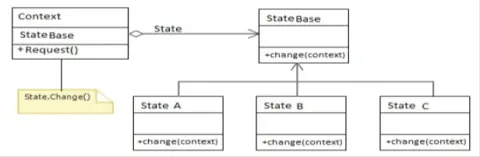
The State Pattern (also referred to as State Design Pattern) is one of the behavioral patterns. It defines a manner for controlling communication among classes or entities.