Loading
Ajay Kumar's contributions

Building Flexible And Future-Proof C# Applications With Examples
This article explores the Open Closed Principle (OCP), one of the SOLID principles of object-oriented design, and how it can help developers build flexible and future-proof C# applications. By adhering to the OCP, you can create software that is easy to extend and maintain without modifying existing code. We'll delve into the theory behind OCP and provide practical C# examples to illustrate its application.

Building .NET Solutions with Nuke Build
Explore the power of Nuke Build, an open-source, cross-platform build automation tool for .NET. Learn how to create build scripts in C# for efficient, flexible, and extensible workflows.
Exploring Different API Versioning Strategies in .NET 7
In this article, we delve into API versioning, a vital component of web API development. It enables you to enhance APIs without disrupting existing client applications, a pivotal aspect of maintaining API stability. Microsoft's .NET 7 introduces improved techniques for API versioning, and here, we explore how to manage API versions in code, investigating various versioning approaches through practical demonstrations.
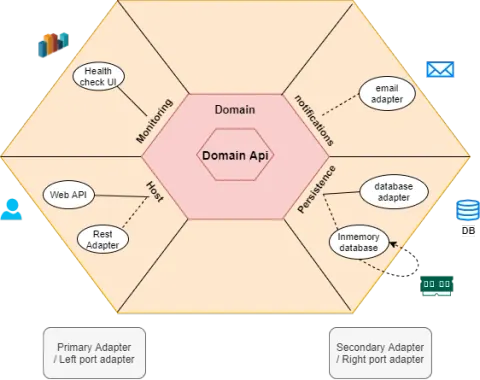
Hexagonal Architecture in .NET (C#) API Development
In this article, we delve into Hexagonal Architecture, a powerful pattern for creating flexible and maintainable software systems. We'll explore its principles and demonstrate its practical application in .NET (C#) API development.
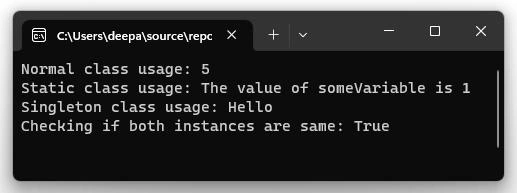
Static and Singleton Classes in C#
Object-Oriented Programming (OOP) in C# is a way to organize code neatly. There are two types of classes: static and singleton. Static classes have functions that you can use without creating an object. They're great for simple tasks, but can cause issues if used too much. Singleton classes ensure there's only one instance of a class. They're useful for managing shared resources. Both have pros and cons. Static classes are simple and fast, but may create problems with too much shared data. Singleton classes are good for controlling resources but are more complex. Choose the one that fits your project's needs.
A Deep Dive into .NET Logging: Serilog, log4net, and NLog
In the .NET ecosystem, three prominent logging frameworks stand out: Serilog, log4net, and NLog. In this article, we'll delve into each of these frameworks, discussing their features and capabilities through detailed examples.
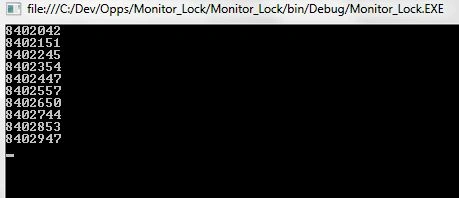
Lock and Monitor in C#
Explore the power of C# multi-threading and learn to manage concurrency with lock and Monitor. Prevent synchronization issues in concurrent code effectively.

NoSQL Databases for ASP.NET Core Web APIs
Microsoft Power BI empowers developers to craft highly customizable visuals using Vega and Vega-Lite's declarative JSON syntax. Create custom visuals in Power BI with our step-by-step guide, including installation, data integration, and advanced customization options.
SignalR AutoReconnect in ASP.NET Core
Explore ASP.NET Core SignalR's AutoReconnect feature, simplifying real-time communication. Learn how it ensures seamless connectivity, even in the face of network disruptions, with code examples.
Setting Up Server-Side Google Tag Manager (GTM) with Docker
Learn how to set up Server-Side Google Tag Manager (GTM) using Docker for advanced tracking and data processing. Gain flexibility and control over your analytics toolbox effortlessly.
Running Python Code Inside .NET with IronPython
Learn how to integrate Python seamlessly with .NET applications using IronPython. This open-source implementation of Python is designed to run on the .NET framework, offering access to Python's libraries and modules within the .NET ecosystem.
Webhooks in .NET
Explore webhooks in modern web applications. Learn what webhooks are, their benefits, and how to implement them in .NET with practical examples. Keep your systems in sync effortlessly.
Simplified .NET Application Development using Dapr
Learn how Dapr simplifies distributed .NET applications with state management, service invocation, and pub/sub messaging. Examples show DaprClient usage in ASP.NET Core microservices.
Building Robust ASP.NET Core Web APIs with CQRS and MediatR
In this article, we'll delve into ASP.NET Core, a powerful framework for building web applications and APIs. We'll explore how to design APIs that are both scalable and maintainable using the Command Query Responsibility Segregation (CQRS) pattern and MediatR library.
Swagger API Filtering in ASP.NET Core
Discover how to selectively expose APIs in Swagger for ASP.NET Core applications. Learn to control API visibility for improved documentation and security using the [ApiExplorerSettings] attribute.

Routing in ASP.NET Core
In this article, we delve into ASP.NET Core routing, a fundamental component of web applications. Routing determines how incoming requests are matched to specific actions and controllers, playing a pivotal role in efficient HTTP request handling. We explore the key concepts of ASP.NET Core routing, such as route templates, route values, constraints, and route parameters. Additionally, we provide practical examples to illustrate the implementation of routing in ASP.NET Core.
Microservices and Multi-Tenancy in ASP.NET Core
Explore the world of microservices in software development with ASP.NET Core. Learn how to decompose applications into independently deployable services, configure API endpoints, and implement multi-tenancy for serving diverse customer needs. This blog provides practical steps and code examples to help you build scalable and tenant-aware systems, enhancing your software architecture's flexibility and efficiency.
Field vs Property in C#
Learn the differences between fields and properties in C#, including direct data storage, controlled access, encapsulation, getters, setters, and validation logic.
Feature Flags in .NET Core
Feature flags enable you to control the release of features in your .NET Core application, allowing you to manage and test changes with ease. In this blog post, we'll explore the world of feature flags in .NET Core, why they matter, and how to implement them effectively.
RabbitMQ Implementation for ASP.NET Core
Learn how to implement RabbitMQ in an ASP.NET Core application, covering prerequisites, establishing connections, sending and receiving messages, and building reliable, scalable message-driven applications.
Polly and Bulkhead Pattern in .NET
Explore the Bulkhead Pattern in software development, inspired by ship compartments, for isolating components to enhance reliability using Polly in .NET applications. Includes practical implementation steps.
Creating Custom Metadata in C# Attributes
C# attributes are metadata markers, enhancing code with additional information. They can be applied to classes, methods, and more. Custom attributes empower developers to create metadata tailored to their needs, accessed via reflection. This article explores the world of custom attributes in C#, including their creation, application, and benefits.

ASP.NET MVC Model Binders with Examples
Explore ASP.NET MVC Model Binders, integral to web app development. They map user data to action parameters, simplifying input handling. Learn with practical examples and custom binding for complex scenarios.
How to Write Your Own Discord Bot on .NET
Learn how to create a Discord bot with .NET 6. Discover the steps to set up a bot, connect it to a server, and make it respond to commands like a pro.