Loading
Ajay Kumar's contributions

Optimizing Resource Management in .NET HttpClient with Cancellation Tokens
The .NET HttpClient class is a powerful tool for making HTTP requests, but it may lead to resource issues if not managed properly. Cancellation tokens in C# provide a mechanism to interrupt ongoing operations, such as HTTP requests, preventing resource monopolization and improving application responsiveness. The provided example demonstrates using cancellation tokens with HttpClient to set a timeout for requests, ensuring that unresponsive requests are canceled and resources are efficiently managed.

Bulkhead Pattern for Robust Software Systems in C#
The Bulkhead Pattern in software architecture, inspired by ship bulkheads, involves segregating resources to contain failures and enhance system stability. In C#, it can be implemented for scenarios like thread pool isolation. The provided example uses SemaphoreSlim to limit concurrent service calls, preventing widespread issues if an external service fails.
Inserting 1 Million Dummy Product Data into SQL Server Using Bogus Package
When working with databases, populating them with substantial amounts of data for testing or demonstration purposes is crucial. The Bogus package in C# provides a convenient way to generate fake data, making it an excellent choice for creating large sets of dummy records. This guide will walk you through inserting 1 million dummy product records into a SQL Server database using Bogus.
Optimizing Database Access in .NET
Optimizing database access in .NET involves picking the best tools, improving queries, managing connections efficiently, using caching, and monitoring performance. By doing this, you ensure your .NET apps run smoothly and respond quickly, enhancing the user experience.
ToList() and ToArray() in .NET
In .NET development, we have two methods, 'ToList()' and 'ToArray()', for converting collections. 'ToList()' creates dynamic lists that can change in size, giving flexibility. 'ToArray()' makes fixed-size arrays, which are faster and have strong type safety. Use 'ToList()' when you need a dynamic collection, and 'ToArray' when the size is known. 'ToList()' is flexible, 'ToArray' is faster. 'ToList()' is less type-safe, and 'ToArray' ensures all elements are the same type. Choose the right method based on your app's needs for performance and flexibility. Understanding these methods helps optimize your code for better results.
Interface Segregation Principle in Object-Oriented Design
This article explains about Interface Segregation Principle (ISP), and its application in C# is clear and well-illustrated through the example of a shape drawing application. Breaking down a generic IShape interface into more specific interfaces like IDrawableShape, IResizableShape, and IRotatableShape aligns well with the principles of ISP, leading to a more modular and maintainable codebase.
Object Mapping in .NET with AutoMapper
This article on AutoMapper provides a comprehensive overview and introduction to the topic, making it easily accessible for readers who are unfamiliar with the concept. The step-by-step approach in explaining the setup and usage of AutoMapper is particularly helpful for beginners.
Dependency Inversion Principle in C#
This blog effectively explains the Dependency Inversion Principle (DIP) in the context of C# programming, providing a clear understanding of its significance and benefits. The use of real-world examples to illustrate the traditional and Dependency Inversion Principle-based approaches enhances the comprehension of the concept.
What is Type Conversion in C#?
This article on type conversion in C# is comprehensive and informative. It effectively covers the fundamental concepts of type conversion, including implicit and explicit conversions, common conversion methods, exception handling, and custom type conversion. The examples provided throughout the article enhance the understanding of each concept and make it easier for readers to grasp the intricacies of type conversion in C#.

Unit Testing with xUnit
In this article, we will learn how to implement and configure the xUnit in our ASP.NET Core project.
Data Validation in ASP.NET Core with FluentValidation
FluentValidation in ASP.NET Core Data Validation is a title that encapsulates the concept of using the FluentValidation library within the ASP.NET Core framework for effective data validation. In this context, "FluentValidation" refers to a third-party library that simplifies and streamlines the validation process, allowing developers to define validation rules in a fluent, expressive manner. This title suggests that the article or content will explore how to leverage FluentValidation for robust and structured data validation in ASP.NET Core applications. It highlights the importance of ensuring data integrity and user input validation, which are fundamental aspects of building secure and reliable web applications.
.NET Task Parallel Library vs System.Threading.Channels
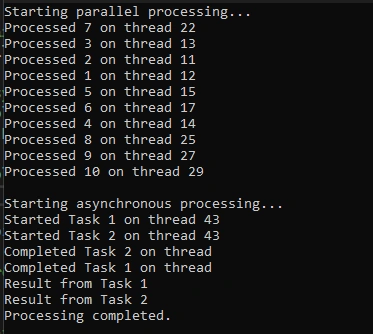
Concurrency in modern software development is vital for applications to efficiently manage multiple tasks simultaneously. In the .NET ecosystem, developers have two powerful tools for concurrency: the Task Parallel Library (TPL) and System.Threading.Channels. This article provides a practical comparison of these tools, illustrating their usage and advantages.

RestSharp vs Refit Library
RestSharp vs Refit Library: A Comparison for Calling REST API Endpoints in C# and ASP.NET Core. In this article, we delve into RestSharp and Refit, two C# libraries streamlining RESTful API consumption. We explore their distinct features through code examples, highlighting ease of use, type safety, flexibility, and performance considerations. By weighing their strengths and use cases, we provide insights to aid your selection between the two for efficient API integration in your C# and ASP.NET Core projects.
Integrating Redis Cache In .NET Core 6
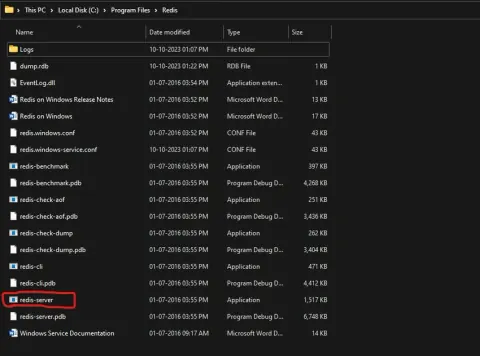
Integrating Redis Cache in .NET Core 6 provides efficient data storage and retrieval capabilities for applications. This step-by-step guide with examples demonstrates how to seamlessly incorporate Redis Cache into your .NET Core 6 applications. Learn how to set up a Redis server, configure .NET Core projects to use Redis as a caching mechanism, and utilize various caching features. This tutorial covers essential concepts, including caching strategies, key expiration, and distributed caching, enabling you to optimize your application's performance and scalability.
Demystifying API Gateway, Reverse Proxy, and Load Balancer
In this article, we will delve into these concepts, demystify their functionality, and provide practical coding examples to illustrate their usage.
What is Action, Non-Action Methods and Types of Action Results
In ASP.NET Core, actions are the methods within a controller that handle HTTP requests and produce HTTP responses. These actions can return different types of action results, which determine how the response is formatted and sent back to the client. The term "non-action methods" likely refers to methods within a controller that are not intended to directly handle HTTP requests as actions do.
Understanding Task.WaitAll and Task.WhenAll in C#
C# offers powerful tools for managing asynchronous operations, two of which are Task.WaitAll and Task.WhenAll. In this article, we'll delve into the concepts behind these methods and explore practical examples to illustrate their usage.
Exploring Performance with BenchmarkDotNet in .NET
In this article, we will explore the features of BenchmarkDotNet and demonstrate how to use it to benchmark your .NET code.
Create Encrypted AES Files and Decrypt AES Encrypted Files in C#
How to Create Encrypted AES Files and Decrypt AES Encrypted Files in C#
Elevate Your .NET 7 API: Exception Handling and Logging Mastery
This article explores the best practices for exception handling and logging in .NET 7 APIs, enabling developers to create resilient applications that gracefully handle errors and provide valuable insights for debugging and improvement.
AddTransient and AddScoped for Repository Registration in ASP.NET Core
This comprehensive guide aims to elucidate the differences between AddTransient and AddScoped to help developers make informed decisions when registering repositories in ASP.NET Core applications.
Generics in C#: Enhancing Code Reusability and Type Safety
In this article, we will explore the concept of generics in C# with detailed examples, showcasing how they enhance code flexibility and maintainability.
Encapsulation in C#: Understanding and Implementing Data Protection
In this article, we'll explore the significance of encapsulation in C# and demonstrate its implementation with practical examples.
Integrating Dynamics 365 CRM with .NET Using Entity Framework Core
In this article, we will explore how to seamlessly integrate Dynamics 365 CRM with .NET using Entity Framework Core, backed up with practical examples.