Loading
Ajay Narkhedkar's contributions
- Article · .NET
Availability in System Design: What Happens When Something Goes Down?
Learn what availability means in System Design and how systems can continue serving users when individual components fail. This practical guide explains Single Points of Failure, redundancy, load balancing, health checks, and failover using simple real-world architecture examples.
- Article · .NET
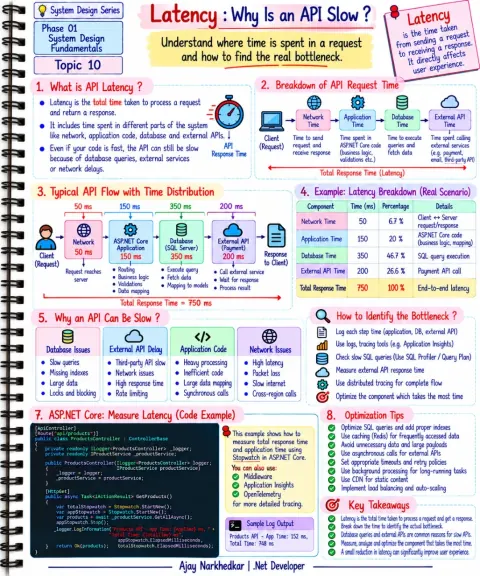
Latency in System Design: Why Is Your API Slow?
Learn how to understand and troubleshoot API latency from a System Design perspective. This practical guide explains how network time, ASP.NET Core processing, database queries, and external API calls contribute to total response time, with a real latency breakdown and a simple ASP.NET Core timing example.
- Article · .NET
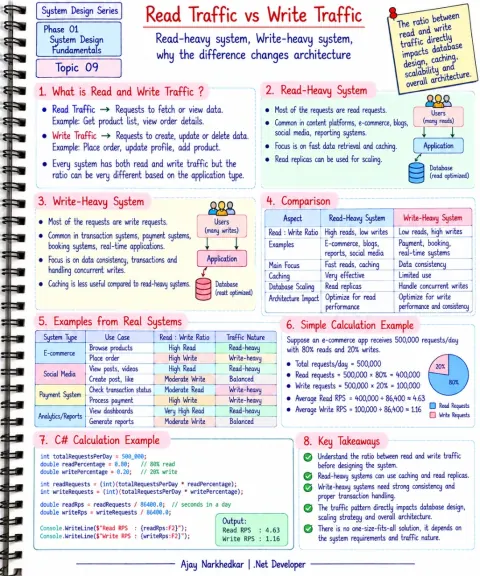
Read Traffic vs Write Traffic: Why It Changes Your System Design
Understand how read-heavy and write-heavy workloads affect System Design. This practical guide explains read and write traffic, caching, read replicas, database performance, transactions, concurrency, and how a simple read/write traffic calculation can influence architecture decisions in .NET applications.
- Article · .NET
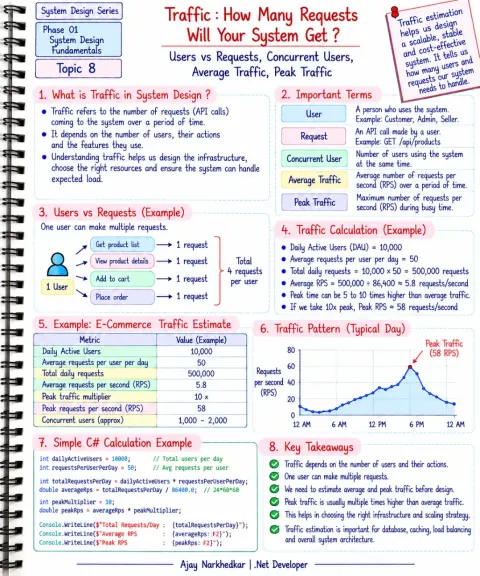
Traffic in System Design: How Many Requests Will Your System Get?
Learn how to estimate application traffic before designing a scalable system. This practical guide explains the difference between users, requests, concurrent users, average traffic, and peak traffic, with an e-commerce example and a simple C# calculation for estimating requests per second.
- Article · .NET
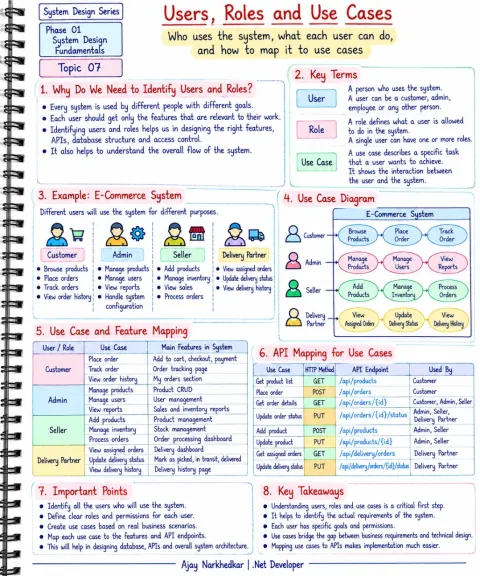
Users, Roles, and Use Cases: The Starting Point of a Real System Design
Learn how to identify users, roles, permissions, and use cases before designing APIs and architecture. This practical guide uses an e-commerce system to show how business requirements can be mapped from users and roles to use cases, features, and ASP.NET Core APIs.
- Article · .NET
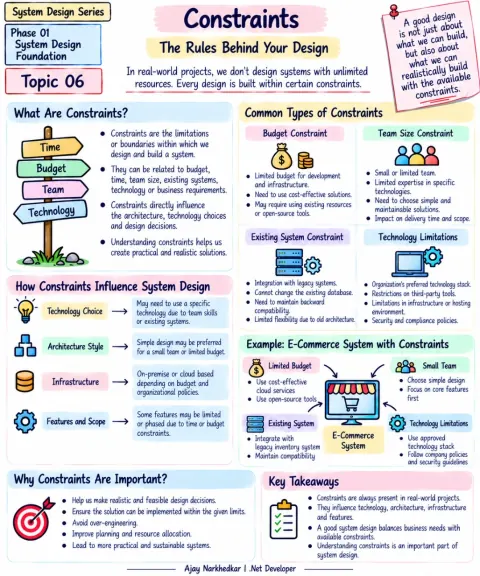
Constraints in System Design: The Rules That Shape Your Architecture
Learn how real-world constraints such as budget, team size, existing systems, technology limitations, and delivery timelines influence System Design. This practical guide explains how .NET developers can balance business requirements with real-world limitations to create simpler, maintainable, and realistic software architectures.
- Article · .NET
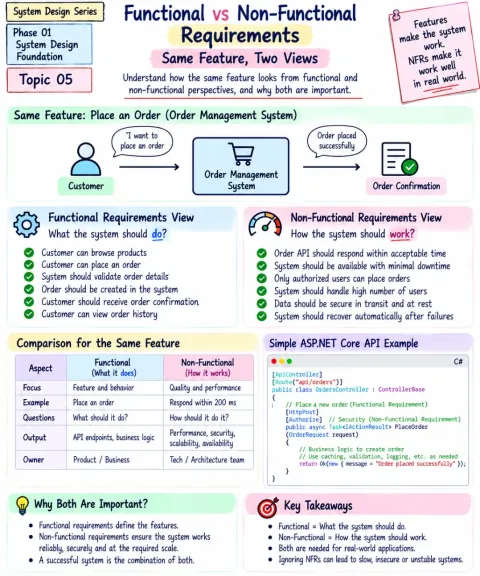
Functional vs Non-Functional Requirements: One Feature, Two Different Views
Understand the difference between Functional and Non-Functional Requirements using a practical Order Management System example. Learn how the same feature can be viewed from two perspectives and how performance, security, availability, and scalability requirements influence ASP.NET Core system design.
- Article · .NET
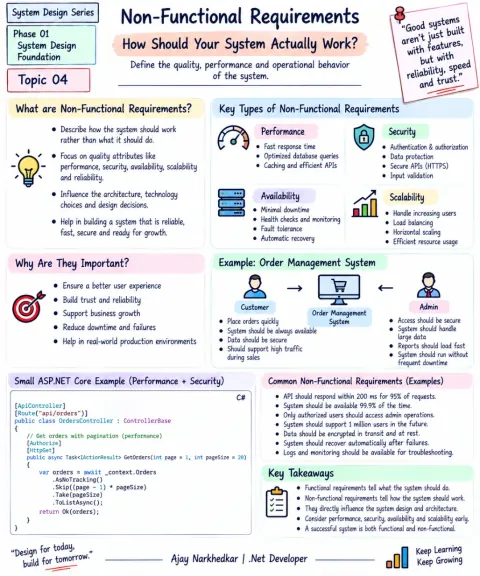
Non-Functional Requirements: How Should Your System Actually Work?
Understand Non-Functional Requirements from a practical .NET developer's perspective. Learn how performance, availability, security, and scalability requirements influence ASP.NET Core APIs, database design, architecture, and real-world System Design decisions.
- Article · .NET
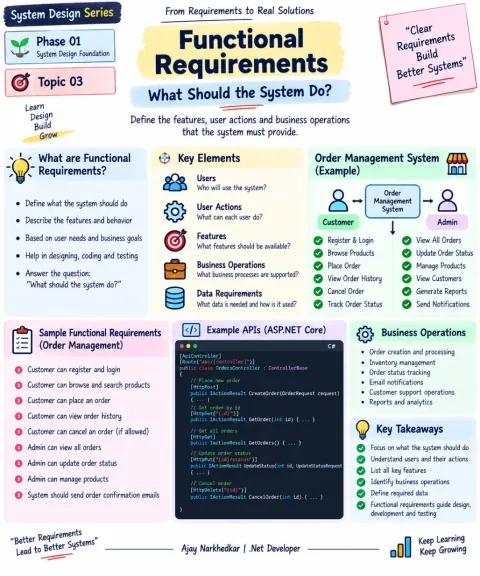
Functional Requirements: The Most Important Step Before You Start Coding
Learn what Functional Requirements really mean and how .NET developers can convert business requirements into users, actions, features, business operations, and APIs. This practical guide uses an Order Management System to explain how requirements become the foundation of effective System Design.
- Article · .NET
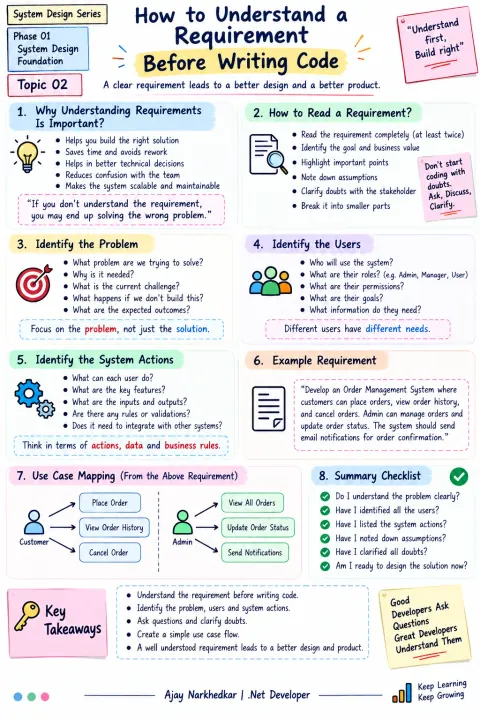
How to Understand a Requirement Before Writing Code
Learn how .NET developers can understand and break down software requirements before writing code. This practical guide explains how to identify the problem, users, system actions, use cases, business rules, data, and functional and non-functional requirements using a real-world Order Management System example.
- Article · .NET
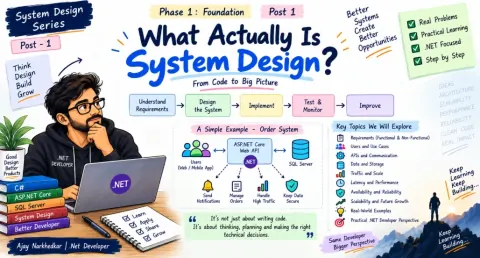
What Actually is System Design?
Learn what System Design really means from a .NET developer's perspective. Understand how requirements, APIs, data, traffic, performance, availability, and scalability come together to build reliable real-world applications.
- Article · C#
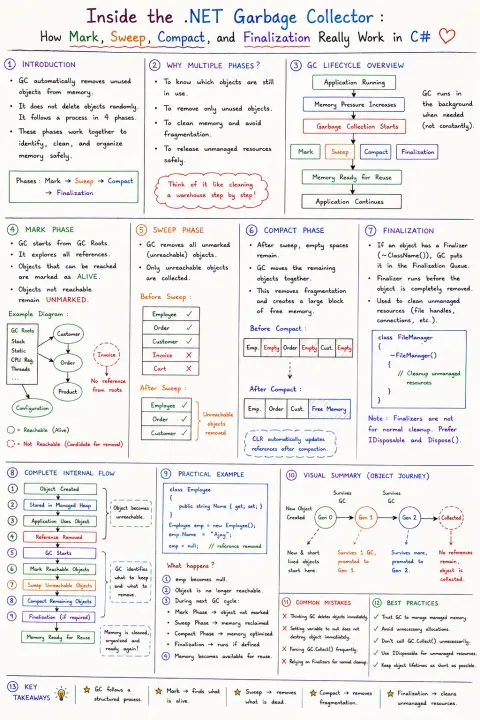
Inside the .NET Garbage Collector: How Mark, Sweep, Compact, and Finalization Really Work in C#
Understand the .NET GC's Mark, Sweep, Compact, and Finalization phases. Learn how it efficiently reclaims memory and keeps your C# apps running smoothly.
- Article · C#
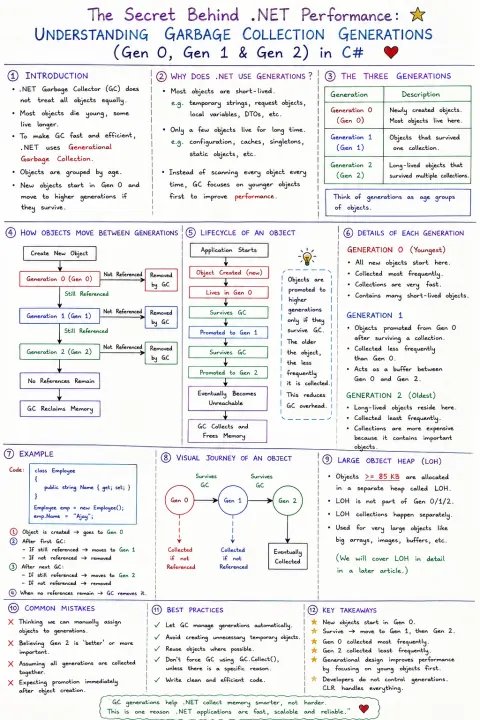
The Secret Behind .NET Performance: Understanding Garbage Collection Generations (Gen 0, Gen 1 & Gen 2) in C#
Unlock .NET performance secrets! Understand Garbage Collection generations (Gen 0, Gen 1, Gen 2) and how they optimize memory management in C#.
- Article · .NET
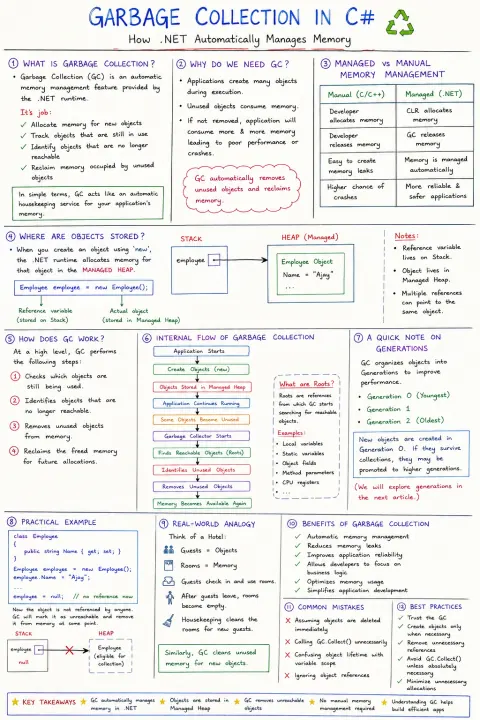
Garbage Collection in C#: How .NET Automatically Manages Memory
Learn how .NET's Garbage Collection automatically manages C# memory, preventing leaks and improving app reliability by reclaiming unused objects.
- Article · C#
Value Types vs Reference Types in C#: The Concept Every .NET Developer Must Master
Master C# Value vs. Reference Types: Understand data storage, copying, and memory management for efficient .NET development.
- Article · ASP.NET Core
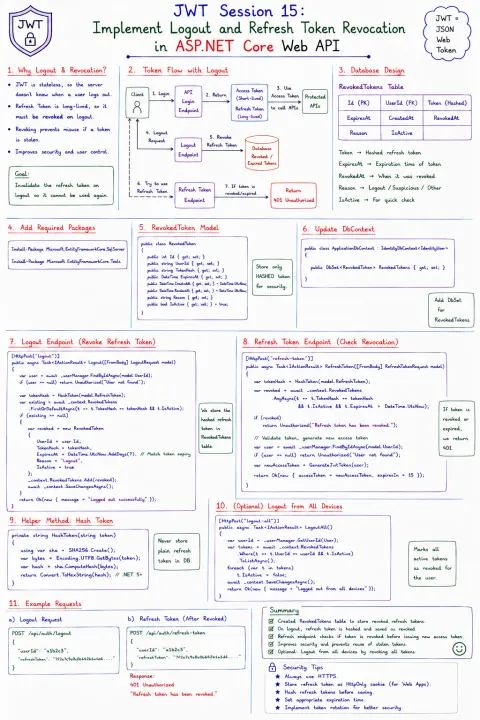
JWT Session 15: Implement Logout and Refresh Token Revocation in ASP.NET Core Web API
Secure your JWT-based ASP.NET Core API by implementing robust logout and refresh token revocation to prevent session hijacking and unauthorized access.
- Article · .NET Core
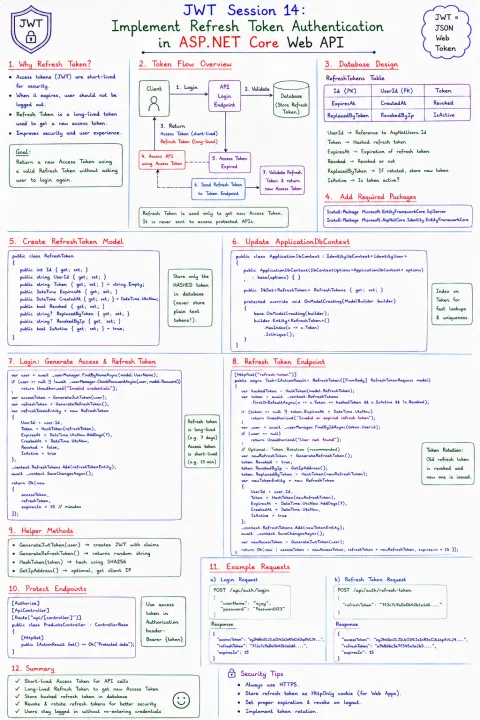
JWT Session 14: Implement Refresh Token Authentication in ASP.NET Core Web API
Enhance ASP.NET Core Web API security with JWT refresh tokens. Learn to implement long-lived refresh tokens for seamless user authentication and improved UX.
- Article · ASP.NET Core
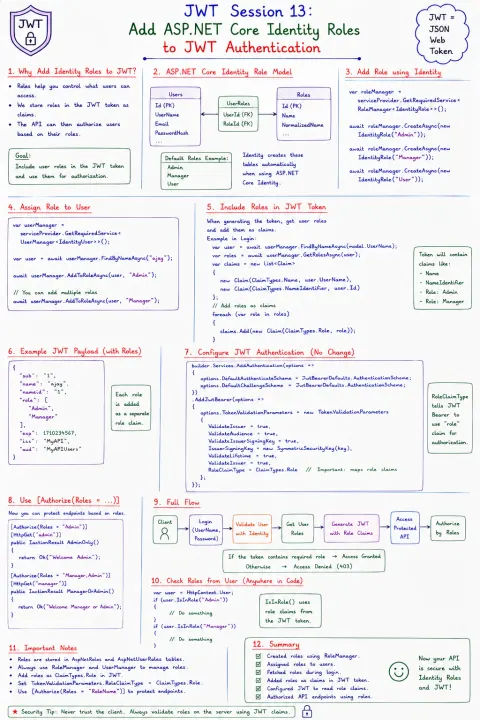
JWT Session 13: Add ASP.NET Core Identity Roles to JWT Authentication
Integrate ASP.NET Core Identity roles into JWTs for seamless role-based authorization. Learn how to add role claims to your tokens.
- Article · .NET Core
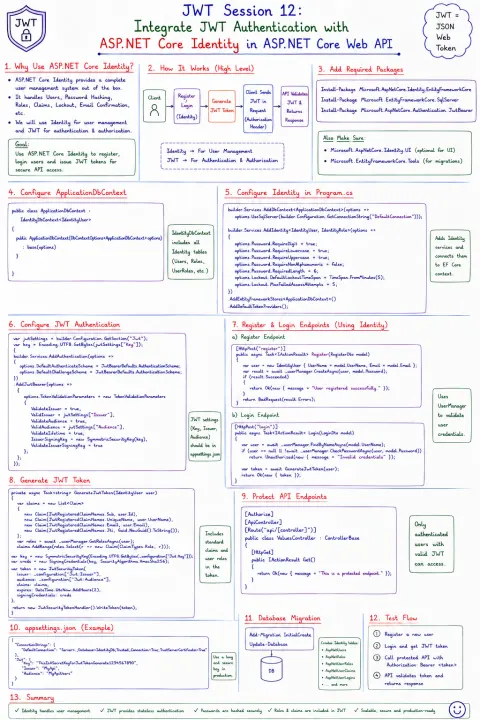
JWT Session 12: Integrate JWT Authentication with ASP.NET Core Identity in ASP.NET Core Web API
Integrate ASP.NET Core Identity with JWT for secure user authentication, replacing manual password handling with robust, built-in features.
- Article · ASP.NET Core
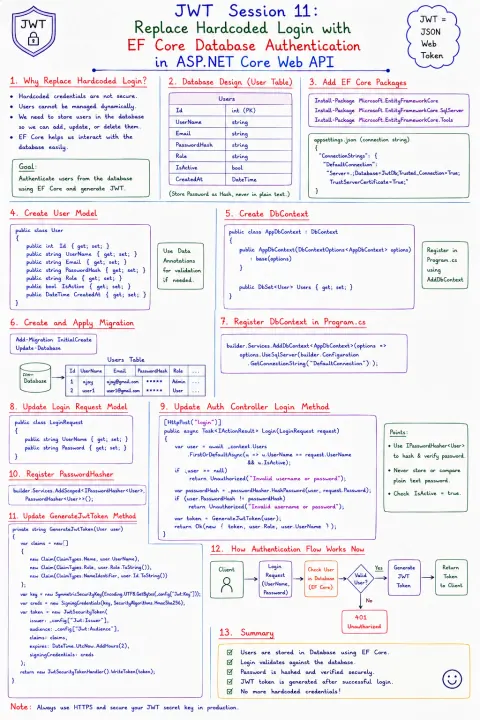
JWT Session 11: Replace Hardcoded Login with EF Core Database Authentication in ASP.NET Core Web API
Replace hardcoded login with EF Core database authentication in ASP.NET Core Web API for secure user management and JWT generation.
- Article · .NET Core
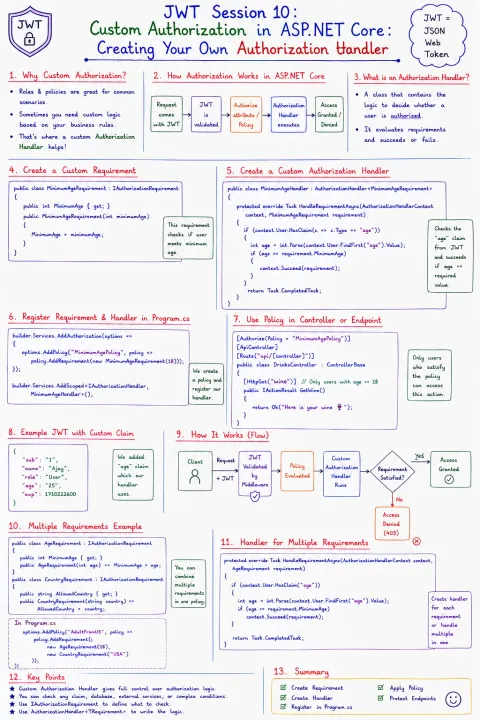
JWT Session 10: Custom Authorization in ASP.NET Core: Creating Your Own Authorization Handler
Master custom authorization in ASP.NET Core. Implement complex business rules beyond roles/claims with custom handlers for enhanced security.
- Article · ASP.NET Core
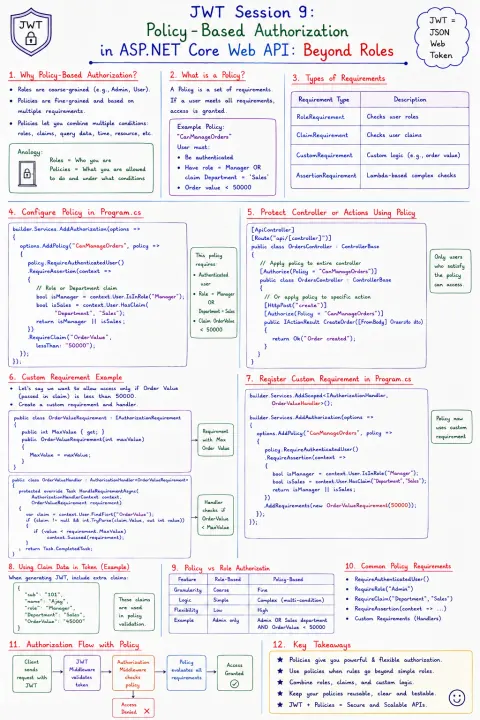
JWT Session 9: Policy-Based Authorization in ASP.NET Core Web API: Beyond Roles
Master ASP.NET Core Policy-Based Authorization for complex business rules beyond roles. Learn to configure and apply policies for enhanced API security.
- Article · ASP.NET Core
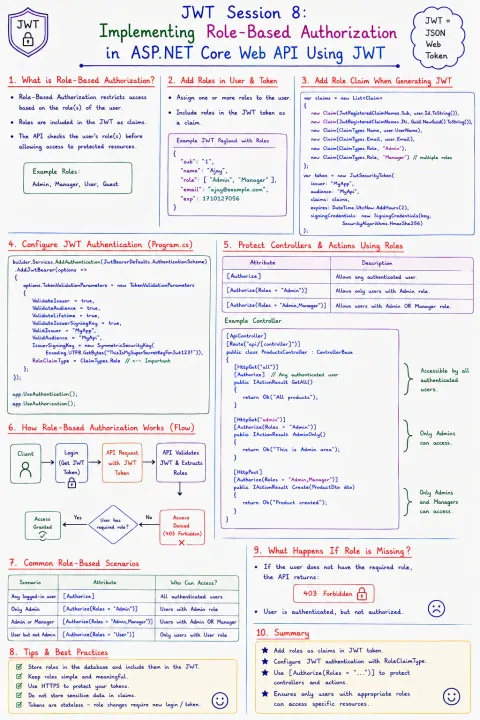
JWT Session 8: Implementing Role-Based Authorization in ASP.NET Core Web API Using JWT
Learn how to implement role-based authorization in ASP.NET Core Web API using JWT. Secure your endpoints by assigning and verifying user roles.
- Article · .NET Core
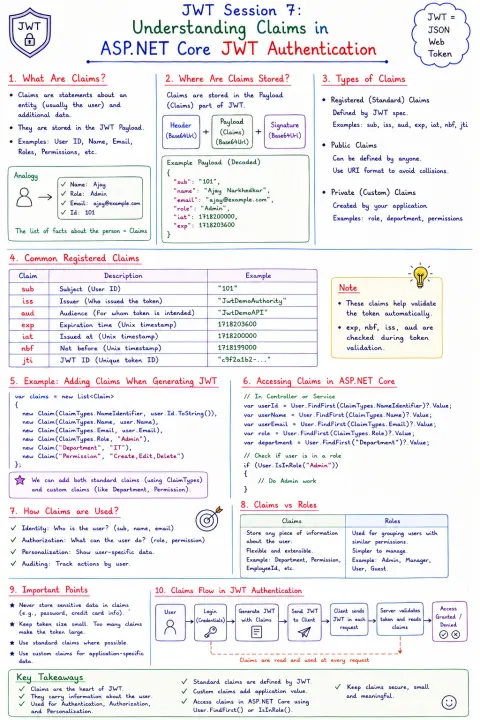
JWT Session 7: Understanding Claims in ASP.NET Core JWT Authentication
Understand JWT claims in ASP.NET Core. Learn how claims identify users, how they're created, and accessed in controllers for efficient authentication.
- Article · .NET Core
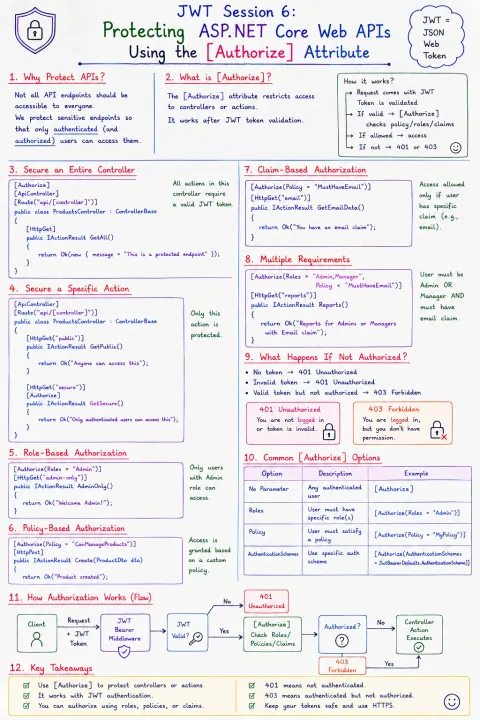
JWT Session 6: Protecting ASP.NET Core Web APIs Using the [Authorize] Attribute
Secure your ASP.NET Core Web APIs with the [Authorize] attribute. Learn to protect endpoints, differentiate public/private access, and prevent unauthorized data access.