Loading
Jignesh Trivedi's contributions

Sp_MSforeachtable Procedure in SQL Server
This article explain the sp_MSforeachtable procedure in SQL server.

ref vs out in C#
Explore the distinction between 'ref' and 'out' keywords in C#. Learn how 'ref' passes arguments by reference for both input and output, while 'out' is used solely for output parameters, aiding in flexible parameter passing and variable modification within methods.
Create Dynamic PIVOT Queries in SQL Server
This article shows how to create a dynamic PIVOT query in SQL Server.
Find nth Highest Value in SQL Server
This article shows how to find nth highest value from a database table.
Primary Key Vs Unique Key in SQL server
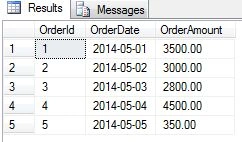
This blog is help us to what is difference between primary key and Unique key in SQL Server

Rendering Layouts Based on a Condition in ASP.Net MVC
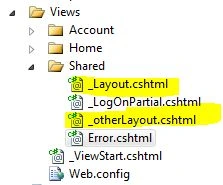
This article explains how to change a layout page at runtime or based on a condition in our MVC application.
Undocumented Physical Row Locator Function in SQL Server 2008
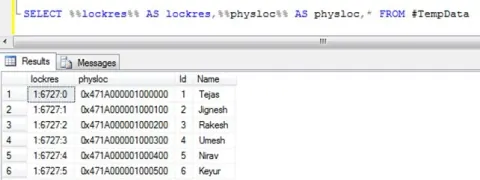
This article describes an undocumented physical row locator function in SQL Server 2008.
Delete Duplicate Data in SQL Server
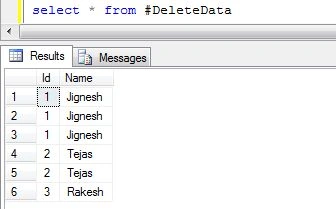
This article provides five ways to remove duplicate data (rows) from a SQL Server table.
TempData Vs Session in MVC
This blog is help us to learn difference between TempData and Session in MVC.
All About the TempData in MVC
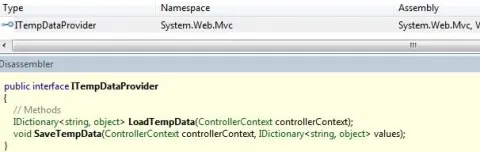
TempData is a temporary data storage mechanism in ASP.NET MVC, facilitating state management between HTTP requests. Stored in session variables, it aids in passing data between consecutive requests. TempData utilizes TempDataDictionary and ITempDataProvider interfaces.
Multiple Models in Single View in MVC
This article provides a workaround for multiple models in a single view in MVC.
Session State Behavior Per Action in ASP.NET MVC
This guide explains how to control session state behavior in ASP.NET MVC using the SessionState attribute and a custom ActionSessionStateAttribute. While the SessionState attribute applies to an entire controller, the custom attribute allows for different session behaviors per action method.
Controlling Session Behavior in ASP.Net MVC
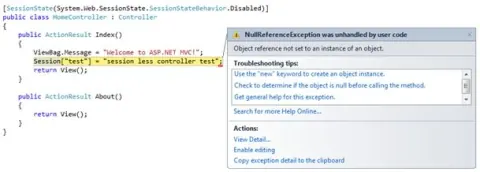
This article explains the use of the SessionState attribute to disable the session state for a controller.
Filter Overrides in ASP.Net MVC 5
ASP.NET MVC 5 has arrived with a very important feature called Filter Overrides. Using the Filter Overrides feature, we can exclude a specific action method or controller from the global filter or controller level filter.
Custom Route Constraints in ASP.Net MVC 5
This article describes Custom Route Constraints in ASP.Net MVC 5 with parameter constraints by placing a constraint name after the parameter name separated by a colon.
Attribute Routing in ASP.Net MVC 5.0
This article introduces Attribute routing in ASP.Net MVC 5.0 and offers a powerful way to define routes directly within controller actions using attributes, enhancing control over URL patterns and routing behavior.
Routing Constrains With Attribute Routing in MVC 5.0
In this article, I will demonstrate how to use Routing Constrains with Attribute Routing in MVC.
Feature, Function and Keyword Not Supported by Natively Compiled Store Procedure
This article lists the many features, functions and keywords that are not available in a natively compiled Stored Procedure.
Determine Object Dependencies in SQL Server
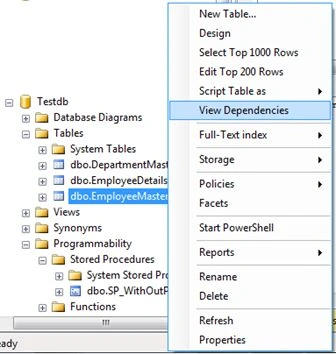
This article describes some of methods for determining object dependency information.
Implement IDENTITY Column in SQL Server Memory Optimized Table
This article shows how to create an INDENTITY (auto incremented) column with a memory optimized table.
Loading Related Entities in Entity Framework
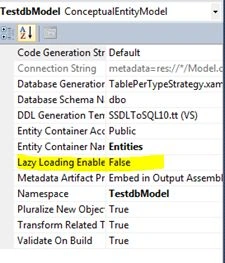
Loading Related Entities in Entity Framework refers to the process of retrieving and populating associated data between entities within the Entity Framework, a popular object-relational mapping (ORM) framework for .NET applications. This involves fetching data from a database that is related to a primary entity, such as retrieving child entities of a parent entity or navigating through associations between entities.
TRY-CATCH Block in Natively Compiled Stored Procedure in SQL Server 2014
Try-CATCH block is supported in the natively compiled stored procedures. As we know, the TRY - CATCH block is used for implementing error handling.
Natively Compiled Stored Procedures in SQL Server 2014
This article describes Natively compiled stored procedures (T-SQL procedures compiled to native code and access memory optimized tables) and their use.
Memory-Optimized Tables in SQL Server
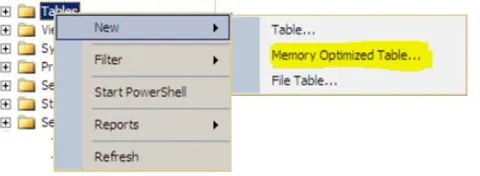
In this article, you will learn about memory-optimized tables in SQL Server.