Loading
Jignesh Trivedi's contributions
Filtered Indexes in SQL Server
SQL Server 2008 introduced Filtered Index. It is nothing but an optimized non-clustered index.
Asynchronous Triggers Using SQL Broker
In this article we learn how to use Service Broker and triggers to capture data changes.
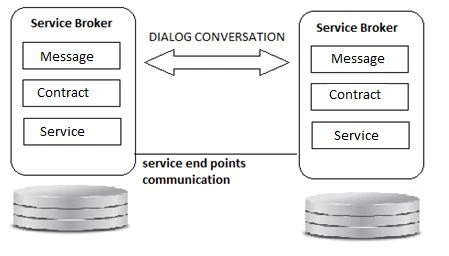
Service Broker in SQL Server
The SQL Server Service Broker helps developers to build scalable as well as secure database applications.

Let Operator in LINQ
LINQ has one operator called “Let” that allows us to create / declare variables inside the LINQ query.

What Is Common Table Expression (CTE) In SQL Server
Learn how to define and use Common Table Expressions in SQL Server, including recursive queries, repeated references, scope, and common limitations.
Table Valued CLR Function in SQL Server
In SQL Server 2005 and later versions of it, database objects such as functions, Stored Procedures, etc. can be created which are already created in CLR.
CLR Function in SQL Server
In SQL Server 2005 and later version of it, database objects like function, store Procedure, etc can be created which are already created in CLR.
Compound Operators in SQL Server
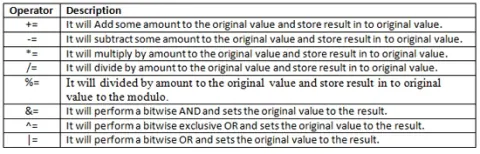
Learn how to use SQL Server compound assignment operators such as +=, -=, *=, /=, %=, &=, ^=, and |= with T-SQL examples.
Table Value Parameter Use With C#
In this article, we learn how use a Table Valued Parameter with a C# application.
Use Of Table-Valued Parameter In SQL Server
Learn what is a Table Valued Parameter in SQL Server and how to create and use table valued parameters in stored procedures and queries.

Use of MVC Custom Action Filter
Action Filters provide us the ability to create an AOP (Aspect Oriented) approach with ASP.Net MVC.
ActionResult Return Type in MVC 3.0
In this article, you will learn how action methods help us to return models to views, file streams, and also redirect to other controllers Action method in MVC 3.0.

Validation Using Data Annotation to Custom Model or Class
In this tutorial, we learn how to use the Data Annotation validators to perform validation in a .NET application.
Creating Custom Validation Attribute For Data Annotation
In .net 4.0, namespace System.ComponentModel.DataAnnotations allow you to create new attribute and with the help of this you can validate the data as per your requirement.

Channel Factory in WCF
A Channel Factory enables you to create a communication channel to the service without a proxy.

New Feature of Entity Framework 5.0 RC
In this article you will learn the new features of Entity Framework 5.0 RC.
WCF Concurrency
In this article, I will explain WCF Concurrency with ConcurrencyMode with the ConcurrencyMode enumeration.

Abstraction and Encapsulation
Abstraction simplifies complex systems by focusing on relevant features and hiding unnecessary details. It defines what an object does, not how. Encapsulation protects internal object data by restricting access and exposing only essential elements.
Singleton Design Pattern
A design pattern is a general repeatable solution to a common problem that occurs in the software industry. A design pattern is not completely a form of code, but it is a template for how to solve the problem and also can be used in many other problems.
Change Tracking in SQL Server
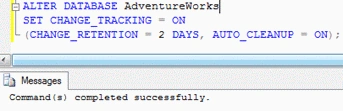
Change tracking captures rows in a table that have been changed, but do not capture the data that was changed.
Unlock the Power of Change Data Capture (CDC) in SQL Server
CDC is capture insert, update and delete activity on SQL tables.
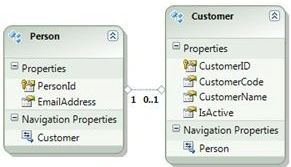
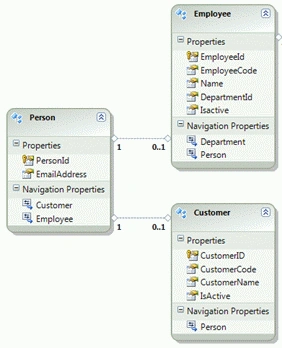
Association in Entity Framework
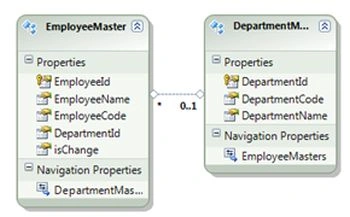
Entity Framework manages associations between entities in databases, facilitating relationships like one-to-one, one-to-many, and many-to-many. Through navigation properties and various mapping strategies, EF simplifies data modeling and querying in applications.

Model Defined Function
A model-defined function is the function that is defined in a conceptual model of EDMX. The body of the MDF (Model Define Function) is representing in Entity SQL, which allows the function to be used independently of rules or languages supported in the data source.
Entity Framework (TPT): Part II
Table-per-type inheritance uses a separate table in the database to maintain data and uses a single entity type in the Entity Framework. In other words, there is a single entity set in the Entity Framework for many database tables.
Entity Framework 4.0 TPH : Part 2
In OOP, we use inheritance to reduce unnecessary code. We can also archive inheritance in Entity Framework.