Loading
Jignesh Trivedi's contributions
Configuring Redis Session State In ASP.NET Core
This article describes the steps required to configure Redis as a storage mechanism for session state in an ASP.NET Core MVC Application.

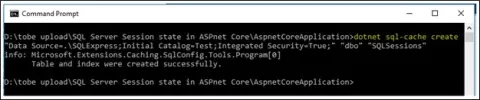
Configure SQL Server Session State In ASP.NET Core
This guide covers setting up SQL Server as a session storage provider, configuring the connection string, enabling session middleware, and ensuring session persistence for scalable web applications.
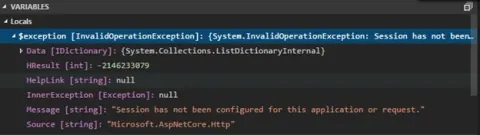
Session State In ASP.NET Core
ASP.NET Core sessions allow storing user data between requests. Sessions use a SessionId stored in a cookie, which is sent with each request. Sessions can be configured as in-memory (In-Proc) or distributed (Out-Proc) and are managed using Microsoft.AspNetCore.Session package.
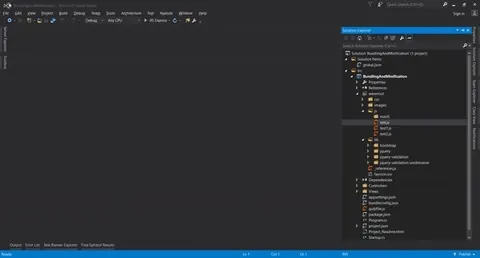
Bundling And Minification Using Visual Studio Extension In ASP.NET Core
This article explains how to perform bundling and minification using Visual Studio extension.
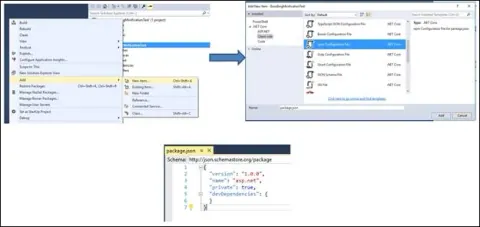
Bundling And Minification In ASP.NET Core
In this article, you will learn about bundling and minification in ASP.NET Core.
Understanding Startup Class In ASP.NET Core
In this article you will learn about Startup Class in ASP.NET Core.
Building Web API With ASP.NET Core MVC And Visual Studio Code
In this article, you will learn how to build Web API with ASP.NET Core MVC and Visual Studio code.
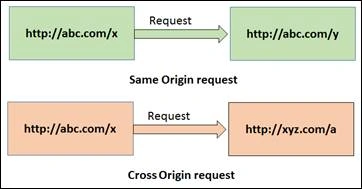
Enabling Cross-Origin Requests In ASP.NET Core
In this article, you will learn how to enable cross-origin requests in ASP.NET Core.
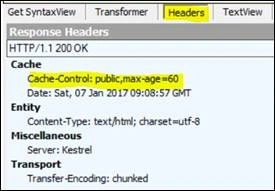
Response Caching In ASP.NET Core
Response Caching in ASP.NET Core enhances web application performance by strategically managing how responses are cached and delivered to clients and proxies. It leverages the Cache-Control header to specify caching directives such as Public, Private, No-cache, and others.
Data Logging In ASP.NET Core Using Serilog
In this article, you will learn about data logging in ASP.NET Core, using Serilog.
Working With A Distributed Cache In ASP.NET Core
In this article, you will learn how to work with a distributed cache in ASP.NET Core.
Working With Built-in Logging Framework In ASP.NET Core
In this article, you will learn about the built-in logging framework of ASP.NET Core.
In-Memory Caching In ASP.NET Core
In this article, you will learn about in-memory caching in ASP.NET Core.
Highlights Of Ahmedabad Chapter Meet, Held On December 18
In this blog, you will learn about the highlights of the Ahmedabad Chapter Meet, held on December 18.
Create Custom Pipe In Angular 2
In this article, you will learn to create a custom pipe in Angular 2.
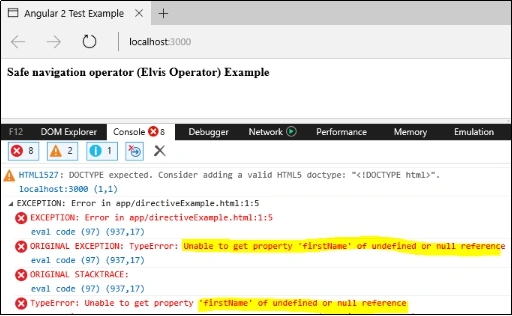
Introduction To Safe Navigation Operator In Angular 2
In this article, you will learn about the Safe Navigation Operator in Angular 2
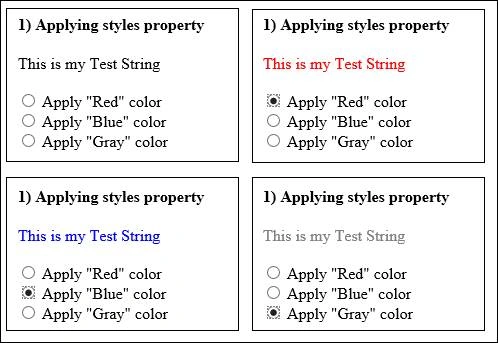
Conditionally Add Styles To HTML Element In Angular 2
In this article, you will learn how to conditionally add styles to HTML element, in Angular 2 .
Understand ngIf And ngSwitch Directives In Angular 2
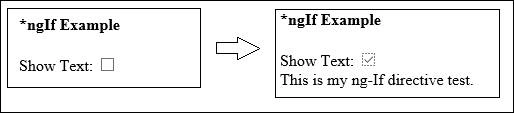
In this article, you will learn about ngIf and ngSwitch directives in Angular 2.
Performing CRUD Operations With ASP.NET MVC Core And Entity Framework Core
In this article, you will learn how to perform CRUD operations with ASP.NET MVC Core and Entity Framework Core.

Introduction To Entity Framework Core
Explore the basics of Entity Framework Core in this introduction. Learn how EF Core simplifies data access in .NET Core applications through Object-Relational Mapping (ORM).

Command Line Interface (CLI) Tools In .NET Core
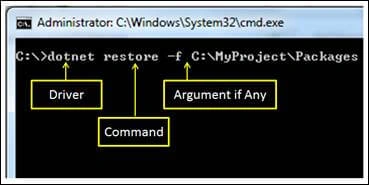
In this article, you will learn about Command Line Interface (CLI) Tools in .NET Core.
Model Binding In ASP.NET MVC Core
In this article, you will learn about Model binding in ASP.NET MVC Core.
Build Your First ASP.NET MVC Core Application With Visual Studio Code
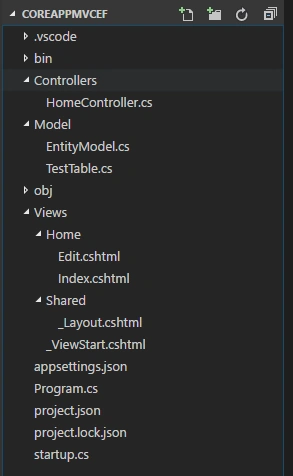
In this article, you will learn how to build Your first ASP.NET MVC Core Application with Visual Studio code.