Loading
Articles by John Godel
- C#
Using C# with AWS S3: Practical Examples with the AWS SDK for .NET
Learn how to use AWS S3 with C# using the AWS SDK for .NET. This guide covers setting up your project, uploading/downloading files, listing and deleting objects, and best practices for secure and efficient S3 operations.
- C#
How to Convert a DataTable to a List of Objects in C#
Learn how to convert a DataTable to a List<T> in C#. Explore manual, reflection-based, and LINQ methods for better performance, type safety, and cleaner code. Improve maintainability in modern C# applications.
- AI
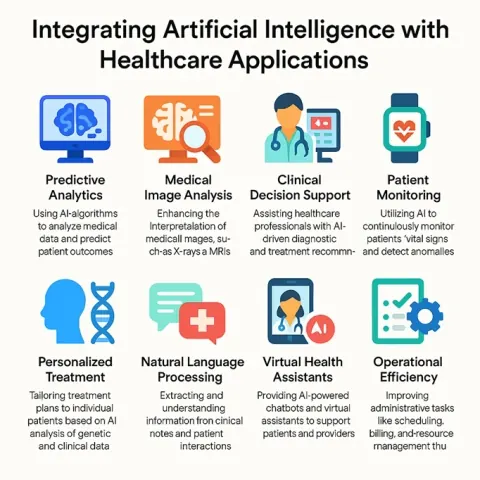
Integrating Artificial Intelligence with Healthcare Applications
AI is transforming healthcare by enhancing decision-making, automating tasks, and enabling personalized treatments. From early diagnosis to real-time monitoring, AI is improving efficiency, accuracy, and patient outcomes in clinical environments.
- AI
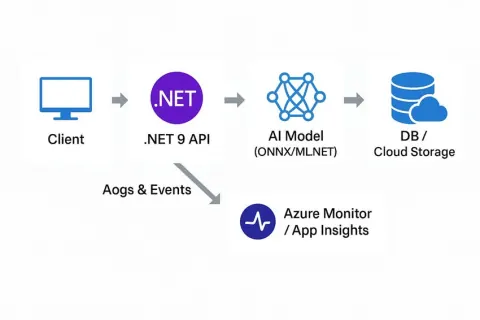
🧠 Integrating Artificial Intelligence with .NET 9 for Financial Applications
Discover how .NET 9 empowers AI-driven financial solutions—from fraud detection to algorithmic trading—by combining high performance, ML integration, and scalable cloud-native tools for modern fintech innovation.
- C#
Building a User Subscription Module in ASP.NET MVC with C# 14
Learn how to build a complete User Subscription Module in ASP.NET MVC using C# 14 features, with registration, plans, payment logic, and access control for scalable, modern subscription-based web apps.
- .NET
Leveraging Databases with .NET 9 in Financial Applications
.NET 9 enhances financial app development with improved performance, minimal APIs, and better cloud-native support. Paired with SQL Server, PostgreSQL, or MongoDB, it enables scalable, secure, and data-intensive fintech solutions.
- AI
AI-Driven Banking Automation: Code Generation and Secure Data Integration
In today’s competitive financial landscape, banks are driven by a dual imperative: deliver superior customer service and comply with stringent regulatory standards.
- C#
SQL Server CLR Integration and SSIS Automation with C#
Learn how to enhance SQL Server functionality using CLR integration and automate SSIS packages with C#.
- AI
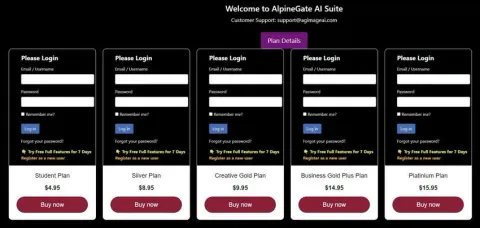
AGImageAI Suite by AlpineGate: Flexible AI Power for Creators, Students, and Professionals
AGImageAI Suite by AlpineGate is a smart, affordable AI platform offering 45+ tools for content creation, design, and analysis—customized through flexible, tiered plans to match every user’s needs.
- C#
Advanced Database Programming with C# 14 and Microsoft SQL Server
Explore C# 14 features, ADO.NET, and Entity Framework Core patterns for SQL Server, including LINQ queries, temporal tables, performance optimization, and secure data access.
- AI
🏔️AlpineGate AI: Redefining Data Privacy in Healthcare AI by John Godel
Explores privacy-preserving healthcare AI using in-place training, confidential computing, and zero-trust architecture to protect patient data without relying on synthetic or de-identified datasets.
- .NET
Why Developers and AI Engineers Are Embracing Private Tailored SLMs
Private Tailored SLMs empower developers to deploy secure, customizable AI models locally—integrating with internal systems, safeguarding data, and enabling enterprise-grade performance without relying on public LLMs or external APIs.
- AI
Input Integrity in C# for Privacy-Safe LLM Systems
AlpineGate AI’s Principles for Zero-Exposure AI in Healthcare and Compliance-Critical Environments
- C#
Building a Versioned REST API in C# with Swagger
In this article we will learn how to build a versioned REST API using C# and ASP.NET Core with Swagger support.
- AI
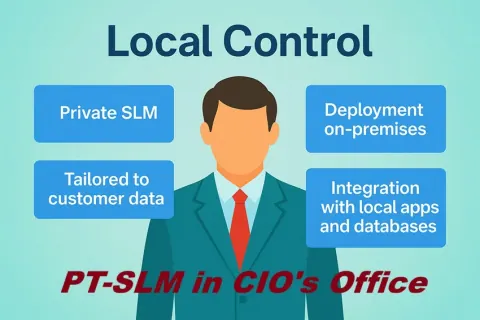
AI at the Edge of Innovation: Why CIOs Should Consider a Private Tailored SLM
As organizations accelerate their AI adoption, CIOs are uniquely positioned to lead the charge, but with leadership comes responsibility.
- C#
Abstract Factory Pattern for Notification Services in C# 14
Discover how to use the Abstract Factory Pattern in C# 14 to build a flexible, provider-agnostic notification system.
- Design Patterns & Practices
Abstract Factory Pattern for Database Access in C# 14
This article covers creating flexible, maintainable code for handling multiple databases, while leveraging modern C# features for clean architecture and scalability.
- C#
Singleton Pattern in C# 14: A Deep Dive with a Real-World Example
In software architecture, there are scenarios where only a single instance of a class should exist throughout the lifetime of an application.
- C#
🎨 Abstract Factory Pattern in C# 14
In modern C# development, particularly within enterprise applications, it’s common to deal with families of related objects.
- C#
Demystifying Records in C#: Immutable Design for Modern Applications
Unlock the power of C# Records! Learn how immutable design simplifies modern application development, boosts code safety, and enhances performance.
- AI
Private Tailored Small Language Models (PT-SLMs) in Investment Banking: Usage Scenarios and Advantages
As artificial intelligence continues to evolve, investment banks are actively integrating AI-driven solutions to gain a competitive edge, optimize operations, and manage risk more effectively.
- AI
Power of Private Tailored Small Language Models (PT-SLMs) in Commercial Banking
Private Tailored Small Language Models (PT-SLMs) empower commercial banks with secure, efficient AI solutions. They enable personalized automation, faster decision-making, and compliance-ready insights—while keeping sensitive financial data private and models lightweight.
- AI
Advantages of Private Tailored Small Language Models for Retail Banking
Private small language models offer retail banks enhanced security, faster response times, and tailored customer experiences. These models ensure data privacy, support regulatory compliance, and provide cost-effective, domain-specific AI solutions.
- AI
Soon, Your Developer Will Be an AI Agent
In the early days of AI-assisted coding, tools like GitHub Copilot felt like a supercharged autocomplete—useful, yes, but still firmly under human control. Today, something far more radical is taking shape: AI agents that don’t just assist developers, they replace them.
- AI
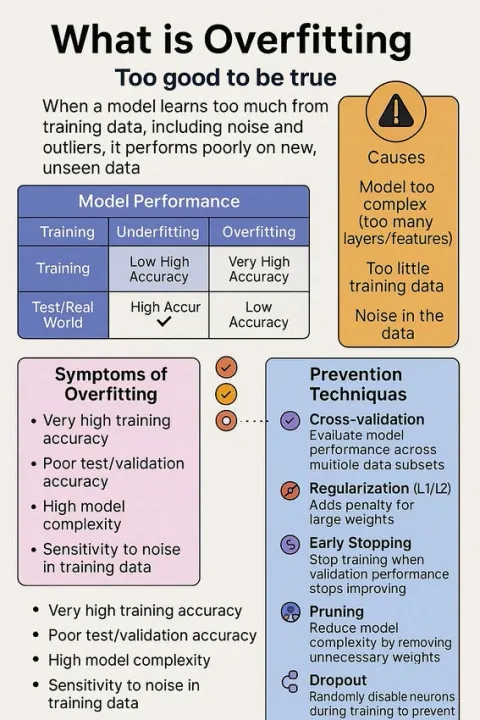
AI’s Fatal Flaw: The Dark Side of Overfitting
This article explores how overfitting compromises accuracy, leads to poor generalization, and reveals the darker implications for decision-making in critical AI systems.