Loading
Mahesh Chand's contributions
- Article · Cyber Security
Is Multisig Safer Than One Hardware Wallet?
Discover why multisig wallets, especially when combined with hardware wallets, offer superior security compared to single hardware wallets for team funds and DAOs.
- Article · Cryptocurrency
Can You Change Multisig Signers Later?
Learn how to change multisig signers after wallet creation. Discover why this flexibility is crucial for team evolution, security upgrades, and long-term treasury management.
- Article · Cryptocurrency
Why Don’t I See Ledger or Trezor Buttons Directly in Safe?
Confused about missing Ledger/Trezor buttons in Safe? This explains why Safe uses standard connections instead of direct integrations for hardware wallets, ensuring stability and security.
- Article · Cryptocurrency
Can You Mix Hardware Wallets and Software Wallets in One Multisig?
Discover how to combine hardware and software wallets in a multisig setup for optimal security and usability. Learn best practices for signer mix and approval thresholds to protect your crypto assets effectively. Balance convenience and control with a well-designed multisig strategy.
- Article · Cyber Security
Is a Hardware Wallet Required for Multisig Security?
Explore the crucial role of hardware wallets in multisig security. Learn why they're essential for protecting significant crypto assets from key compromise. A must-read for DAO's!
- Article · Cryptocurrency
Can a Multisig Work If One Signer Refuses to Sign?
Learn how a multisig wallet functions when a signer refuses to sign. Understand quorum, thresholds, and how to design for resilience against disagreements.
- Article · Cryptocurrency
Can a Multisig Work If One Signer Refuses to Sign?
Learn how a multisig wallet functions when a signer refuses to sign. Understand approval thresholds, signer removal, and avoiding common pitfalls for secure treasury management.
- Article · Cryptocurrency
What Happens If One Signer Loses Their Hardware Wallet in a Multisig?
Losing a hardware wallet in a multisig doesn't mean losing funds! Learn how multisig wallets are designed for key loss and how to ensure fund recoverability.
- Article · Cryptocurrency
Can One Hardware Wallet Sign Multiple Multisig Wallets?
Unlock the power of hardware wallets! Learn how one device can securely sign for multiple multisig wallets without compromising security. Streamline treasury management!
- Article · Cryptocurrency
Does My Hardware Wallet Become a Multisig Wallet?
Confused about hardware wallets and multisig? This article clarifies that your Ledger/Trezor doesn't *become* a multisig. It's a key, not the vault! Learn the crucial difference.
- Article · Blockchain
Do You Need to Move Funds Into a Multisig Wallet?
Confused about moving funds to a multisig wallet? This article clarifies why it's essential for multisig security and explains the crucial distinction between your hardware wallet and the multisig vault.
- Article · Redis
Redis Naming Conventions For Developers
Master Redis key naming for scalability & stability! This guide covers best practices, conventions, and common mistakes to avoid outages and ensure smooth operations.
- Article · Cryptocurrency
Can I use my existing hardware wallet in a multisig
Learn how to use existing Ledger, Trezor, or MetaMask wallets as signers in a Safe multisig, including transaction approvals, thresholds, and signer recovery.
- Article · Cryptocurrency
Can You Make an Existing Wallet a Multisig Wallet?
Discover why you can't convert a regular crypto wallet (like MetaMask) into a multisig. Learn the secure way to migrate to multisig for enhanced security and control.
- Article · Blockchain
How to Create a Multisig Wallet Using Safe: Step by Step Tutorial
This article explains how to securely operate a Safe multisig wallet by keeping hardware wallet owners on a separate network. It covers real world security practices for isolating signer devices, networks, browsers, and roles to reduce attack surface and prevent single point failures in Web3 treasury and DAO wallet management.
- Article · Cryptography
Are Multisig Wallets Legally and Regulatorily Compliant?
Explore the legal and regulatory compliance of multisig wallets. Learn how they enhance governance, improve auditability, and align with financial controls for crypto.
- Article · Cryptocurrency
Can One Signer Block or Delay Transactions in a Multisig Wallet?
How do multisig wallets work with hardware wallets like Ledger and Trezor? Learn how hardware wallets integrate with multisig, why teams use them together, and best practices for secure treasuries.
- Article · Cryptocurrency
How Do Multisig Wallets Work With Hardware Wallets?
How do multisig wallets work with hardware wallets like Ledger and Trezor? Learn how hardware wallets integrate with multisig, why teams use them together, and best practices for secure treasuries.
- Article · Cryptocurrency
Are Multisig Wallets Safe for Long Term Storage of Large Funds?
Explore the safety of multisig wallets for long-term crypto storage. Learn how they protect large funds for DAOs and treasuries, and the key considerations for secure implementation.
- Article · Cryptography
Which Multisig Wallet Is Best for DAOs and Crypto Treasuries?
Which multisig wallet is best for DAOs and crypto treasuries? A practical comparison of multisig wallets, why Safe dominates, and what teams should actually look for.
- Article · Blockchain
Can a Multisig Wallet Be Hacked?
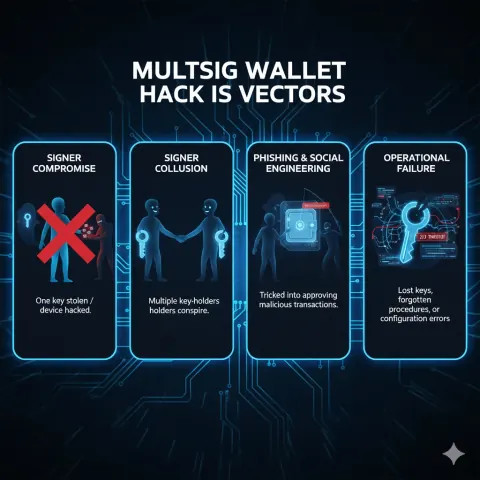
Can a multisig wallet be hacked? Learn how multisig wallets can be attacked, what risks still exist, what multisig actually protects against, and how teams reduce real-world threats.
- Article · Blockchain
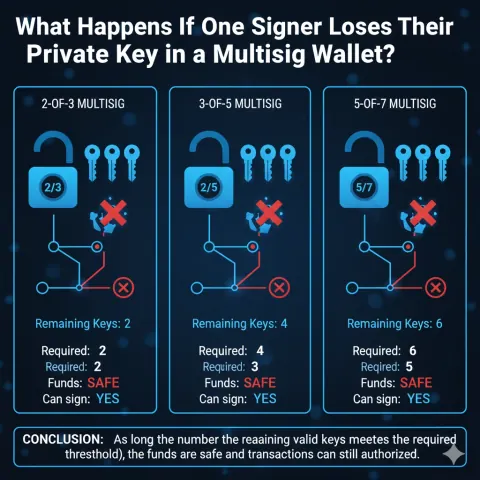
What Happens If One Signer Loses Their Private Key in a Multisig Wallet?
How many signatures should a multisig wallet have? Learn how to choose between 2-of-3, 3-of-5, and 5-of-7 multisig setups based on security, governance, and real-world operations.
- Article · Blockchain
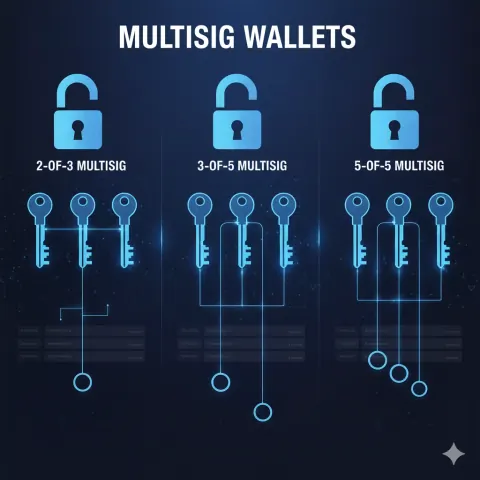
How Many Signatures Should a Multisig Wallet Have? Choosing 2-of-3, 3-of-5, or 5-of-7
Understand multisig wallet configurations: 2-of-3, 3-of-5, and 5-of-7. Learn to balance security, decentralization, and operational speed for optimal treasury management.
- Article · Blockchain
How to Check If a Wallet Is a Multisig
How to check if a crypto wallet is a multisig wallet. Learn how to verify multisig wallets on Ethereum, Bitcoin, and other blockchains using public explorers and on-chain data.
- Article · Blockchain
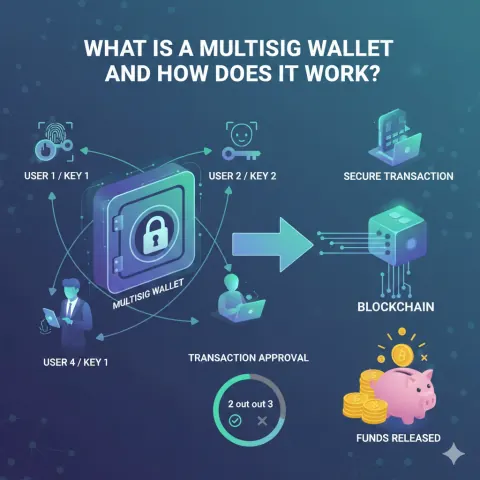
What Is a Multisig Wallet and How Does It Work?
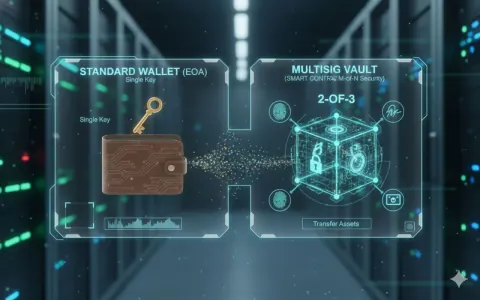
What is a multisig wallet and how does it work? Learn in simple terms how multiple private keys approve crypto transactions and why multisig wallets are safer than single wallets.