Loading
Mariem Moalla's contributions
- Article · C#
Union Types in C# 15
Learn how C# 15 union types model a closed set of message types, enable exhaustive pattern matching, and differ from interfaces.
- Article · Threading
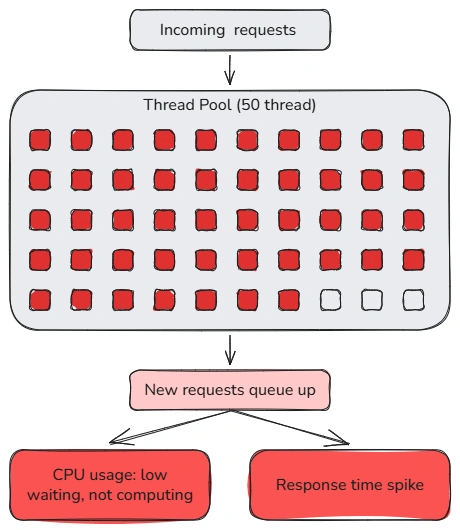
ThreadPool Starvation in .NET: How Blocking Code Freezes Your API
Learn how blocking calls cause .NET ThreadPool starvation in ASP.NET Core APIs, and how async/await, timeouts, and cancellation prevent request timeouts.
- Article · .NET
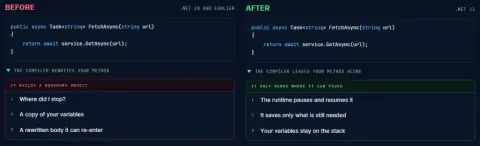
Runtime Async in .NET 11: What Actually Changed
Explains .NET 11 runtime async, how it differs from compiler-generated async state machines, and its potential effects on allocations, performance, and debugging.
- Article · Threading
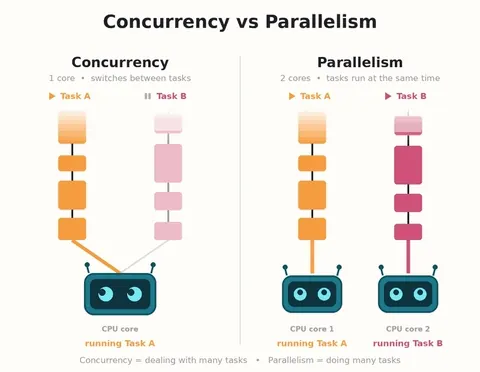
Concurrency vs Parallelism
Learn the difference between concurrency and parallelism in C#, when to use async/await for I/O-bound work, and when to use Parallel or PLINQ for CPU-bound work.
- Article · Threading
lock vs Monitor vs SemaphoreSlim in C#: Which Thread Synchronization Primitive Should You Use?
Compare lock, Monitor, and SemaphoreSlim in C# to choose the right tool for mutual exclusion, thread signaling, async code, and limiting concurrency.
- Article · Design Patterns & Practices
Thread-Safe Singleton in C#
Learn why a naive C# singleton can fail under concurrent access and how to implement thread-safe initialization with locks, Lazy, or dependency injection.
- Article · Threading
Why .Result and .Wait() Can Hang Applications
Learn why blocking on Task.Result or Task.Wait can cause deadlocks and thread-pool starvation in .NET applications, and how async/await avoids these hangs.
- Article · C#
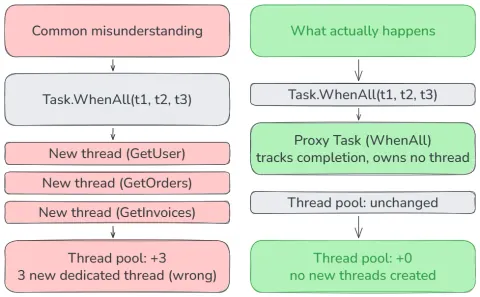
Task.WhenAll() vs Sequential Awaits: Stop Wasting Latency on Independent Async Calls
When can independent asynchronous operations run concurrently, and how can Task.WhenAll() reduce total latency?
- Article · C#
const vs readonly vs static readonly in C#
Understand C# const, readonly, and static readonly, including compile-time substitution, runtime initialization, instance behavior, and library versioning pitfalls.
- Article · C#
Sealed Classes in C#: When Should You Use Them?
Learn why and when to use the sealed keyword in C#, including preventing inheritance, sealing overridden methods, protecting invariants, security, and JIT optimizations.
- Article · .NET
var vs object vs dynamic in C#
Understand the differences between var, object, and dynamic in C#, including compile-time typing, runtime binding, boxing, performance, and practical use cases.
- Article · C#
Value Types vs Reference Types in C#: Storage, Assignment, and When to Use Each
A simple clear easy to understand explanation of the difference between reference and value types
- Article · C#
The Evolution of the switch Statement in C#
Explore the evolution of C# switch statements and pattern matching, from traditional value-based cases to modern type, property, relational, logical, and list patterns, including switch expressions.
- Article · Web API
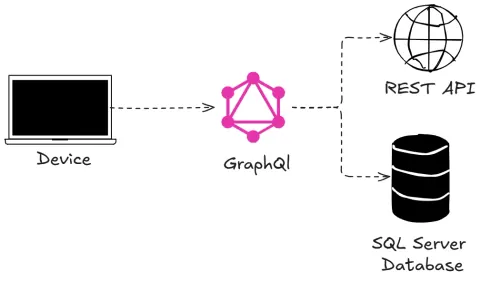
GraphQL for Beginners
Learn GraphQL for beginners by comparing it with REST and gRPC, understanding queries, mutations, subscriptions, schemas, over-fetching, under-fetching, N+1 queries, and practical API use cases.
- Article · ASP.NET Core
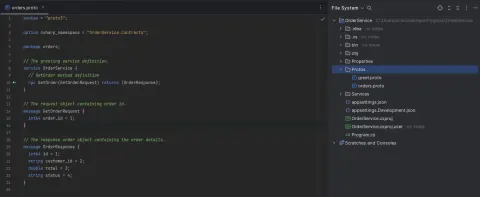
How to Build a gRPC Service in .NET from Scratch
Learn how to build a gRPC service in .NET from scratch using Protocol Buffers, ASP.NET Core, dependency injection, repositories, generated clients, HTTP/2, and shared contracts for microservices.
- Blog · .NET
How to Recover a Deleted File in Git After Pushing
Learn how to restore a deleted file in Git using git restore, previous commits, and parent commits without reverting the entire commit or branch.
- Article · Web API
gRPC vs REST
Learn what gRPC is, how RPC, Protobuf, and HTTP/2 work together, when to choose gRPC over REST, and how to use the different gRPC communication patterns in .NET.
- Article · Entity Framework
The Silent Performance Killer: Understanding the N+1 Query Problem in EF Core
Learn how to identify and fix the N+1 query problem in Entity Framework Core using Include, projection, relationship queries, and efficient LINQ patterns to improve database performance.
- Article · Azure
Azure App Service vs Azure Functions: When should you choose each?
Compare Azure App Service and Azure Functions for .NET applications, including hosting models, APIs, event-driven workloads, scaling, cold starts, serverless architecture, and when to use each service.
- Article · Software Architecture/Engineering
Decorator vs Proxy Design Pattern : What’s the Difference?
Understand the difference between Decorator and Proxy design patterns in C#, including their intent, object wrapping, access control, behavior extension, caching, authorization, logging, and practical implementation examples.
- Article · C#
Adding Parameters to C# Methods Without Breaking Existing Code
Learn how to add parameters to C# methods without breaking existing code using extension methods for seamless API evolution.
- Article · Networking
Load Balancer vs Reverse Proxy vs API Gateway
Understand the distinct roles of Load Balancers, Reverse Proxies, and API Gateways in distributed systems and cloud architecture.
- Article · ASP.NET Core
CSP Nonces vs Hashes: Lessons I Learned Securing an ASP.NET Core Application
Master CSP nonces vs hashes for ASP.NET Core security. Learn when to use each to prevent XSS and secure your application effectively.
- Article · ASP.NET Core
Content Security Policy in ASP.NET Core
Learn how to implement Content Security Policy (CSP) in ASP.NET Core to prevent XSS attacks by controlling resource loading.
- Article · Cyber Security
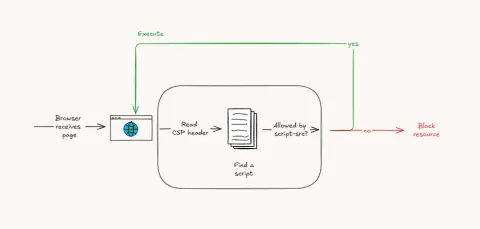
Why Every Website Needs a Content Security Policy (CSP)
Learn how Content Security Policy (CSP) restricts browser resource loading and script execution to reduce the impact of XSS attacks.