Loading
Sardar Mudassar Ali Khan's contributions
- Article · .NET Core
Implementing Model Binding, Handling Binding Failures, and Utilizing a Custom Model Binder in ASP.NET
In ASP.NET, model binding simplifies the process of mapping incoming HTTP request data to the parameters of controller actions or methods. This process ensures that the data provided by the user is appropriately converted and validated before being used by the application. However, there are cases when the default model binding behavior may not be sufficient. In such scenarios, custom model binders can be created to handle specific data types or complex binding logic.
- Article · .NET Core
Creating Effective Pagination and Filtering Middleware for ASP.NET Core Web API
By incorporating pagination and filtering with custom middleware, you've enhanced your ASP.NET Core Web API's performance and user experience. This methodology enables you to respond more efficiently to client requests, particularly when dealing with large amounts of data. By providing a streamlined API that delivers the right data in a user-friendly manner, you're well-prepared to offer a high-quality experience to your API users.
- Article · .NET Core
Effective API Versioning with Custom Middleware
API versioning with custom middleware, enables clients to access different versions of your API based on the version specified in the request header. This allows you to manage backward compatibility while rolling out new features or changes in a controlled manner. Custom middleware provides a central point for extracting and validating version information, making your versioning logic more modular and maintainable.
- Article · .NET
ASP.NET Core API Pagination and Filtering
Implementing pagination and filtering in an API is a common practice to optimize responses and efficiently handle large datasets. Here's a step-by-step guide on how to achieve this in an ASP.NET Core Web API:
- Article · .NET Core
Boosting Workflow Efficiency with Power Automate & Caching
Caching is a crucial technique for improving the performance of ASP.NET Core Web APIs. In this example, I'll walk you through implementing response caching, distributed caching using Redis, and in-memory caching in an ASP.NET Core Web API.
- Article · .NET Core
Implementing Content Negotiation for Flexible Data Formats
Content negotiation in ASP.NET Core is crucial for serving different data formats like JSON, XML, etc., based on the client's preferences. Here's a complete example of how to implement content negotiation in an ASP.NET Core Web API:
- Article · ASP.NET Core
ASP.NET Core Web API for Abusive Comments Detection
Build an ASP.NET Core Web API that uses Google Perspective API to analyze comments and return toxicity scores for abusive-content moderation.
- Article · Angular
API Integration In Angular with Complete Example
Learn how to create an Angular service with HttpClient, fetch product data from an API, and display the results in a component template.
- Article · .NET Core
Building Custom Middleware Components for Logging, Error Handling, and Request/Response Modification
ASP.NET Core to handle cross-cutting concerns like logging, error handling, and request/response modification:
- Article · .NET Core
Global Exception Handling In Asp.net Core Web API
In the context of ASP.NET Core Web API (or any web application framework), global exception handling involves catching exceptions that occur during the processing of requests and returning appropriate error responses to the clients. Instead of allowing exceptions to propagate to the top-level and exposing technical details to the end-users, global exception handling can convert those exceptions into more informative and standardized error messages in a format such as JSON or XML.
- Article · .NET Core
Capturing Phishing Email Using Custom Middleware in ASP.Net Core Web API
To capture and detect phishing emails using custom middleware in an ASP.NET Core Web API, you can follow these general steps: Create Custom Middleware: Create a custom middleware that will intercept incoming HTTP requests and inspect the email content for potential phishing indicators. Middleware in ASP.NET Core can be used to perform custom processing on incoming requests and outgoing responses.
- Article · .NET Core
Resolving CORS Origin Using Custom Middle ware in ASP.Net Web API
In ASP.NET Core, middleware is a component or piece of software that sits in the request-response pipeline. Middleware is used to handle or modify incoming HTTP requests and outgoing HTTP responses. It provides a way to add custom logic and behaviors to the application's processing flow.
- Article · Project Management
What is Non-Functional Requirements?
A Non-Functional Requirement (NFR) is a type of requirement in software and system development that specifies criteria for the performance, behavior, and qualities of the system, rather than defining specific features or functionalities. Unlike Functional Requirements, which describe what the system should do, Non-Functional Requirements describe how the system should perform or behave.
- Article · Project Management
What are Functional Requirements?
Functional Requirements of the system are a very critical part of the system in which we defined the overall functionality of the system. Functional Requirements define the behavior of the system means what the system should do Like, and Code Compiler should complete the Machine Code.
- Article · .NET Core
Flurl API Integration Tutorial for ASP.NET Core Web API with Advanced Concepts
Flurl is a popular and easy-to-use library for working with HTTP APIs in .NET applications. It provides a fluent API for building and sending HTTP requests, as well as handling the responses in a convenient way.
- Article · .NET Core
Introduction Of Flurl API Used For Third Party API Integration
Flurl is a popular .NET library used for simplifying and improving the integration of third-party APIs into your applications. It is designed to make working with HTTP requests and RESTful APIs more fluent and expressive in C# or any other .NET language. The name "Flurl" is a combination of "fluent" and "URL," highlighting its focus on providing a fluent and intuitive API for working with URLs and HTTP requests.
- Article · Project Management
What are Essential Requirements and Accidental Requirements?
Software Requirements Engineering is the systematic process of gathering, documenting, analyzing, and managing the requirements for a software system. It is a crucial phase in the software development life cycle as it lays the foundation for the entire software development process. The primary goal of requirements engineering is to understand and define what the software system needs to accomplish, how it should behave, and what constraints and limitations it must adhere to.
- Article · .NET Core
Including And Excluding Properties from Model Binding Using the Bind Attribute
Using the 'Bind' feature in ASP.NET MVC, you can include and exclude properties from model binding. You can specify which attributes should be included or excluded during model binding using the 'Bind' feature. To include particular characteristics during model binding, utilize the 'Include' property of the 'Bind' attribute. Here is one instance.
- Article · .NET Core
Including And Excluding Properties from Model Binding Using Interfaces
You can specify distinct interfaces for various sets of characteristics and have your model implement those interfaces if you want to include or omit certain properties from model binding. After that, you can bind your model to that interface type to decide which properties are added when the model is bound.
- Article · .NET Core
Difference Between ViewBag, ViewData, & TempData
In the context of ASP.NET MVC or ASP.NET Core, ViewBag, ViewData, and TempData are mechanisms for passing data between a controller and a view
- Article · Software Architecture/Engineering
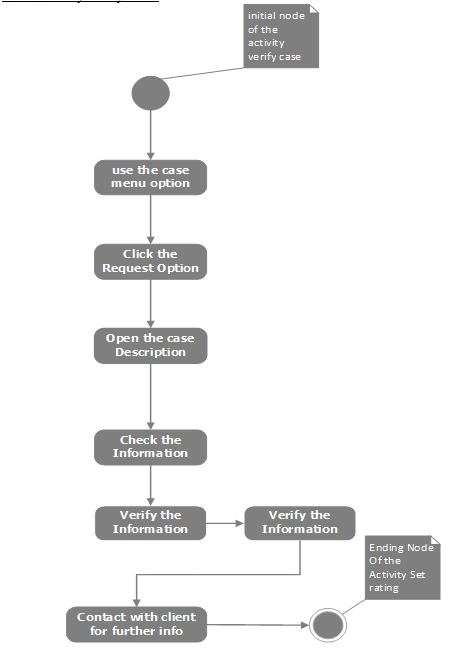
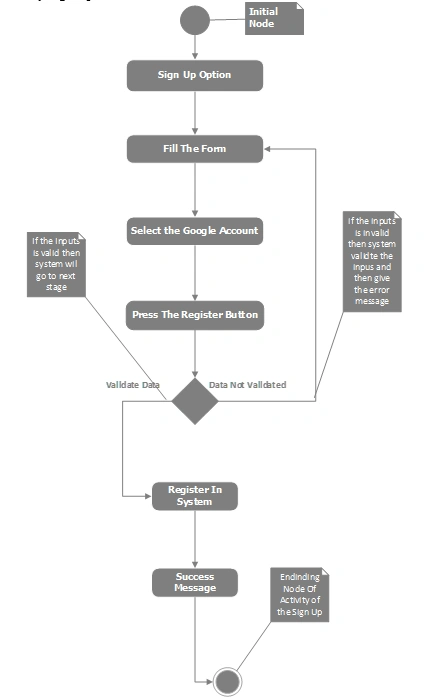
Activity Diagrams Used in Software Development
The "Unified Modeling Language" provides the foundation for the system flow diagram. This diagram illustrates how the user interacts with the system for each use case. How the system will function and how the user will be able to interact with it. Unified Modeling Language (UML) activity diagrams are a particular sort of behavioral diagram that show the flow and order of activities or processes within a system or business process. They show the numerous tasks, decisions, and actions that go into a process, emphasizing the sequence of events and the connections between distinct components. Activity diagrams are frequently used to represent intricate business processes, use cases, and software system Behaviour.
- Article · Software Architecture/Engineering
Sequence Diagram Used in Software Development
The interactions between items or components in a system are often visualized in software development using sequence diagrams, a type of UML (Unified Modelling Language) diagram. By depicting the series of messages sent between items over time, they offer a dynamic view of how the system functions. Sequence diagrams are particularly helpful for planning, describing, and expressing the data and control flow that will occur during the execution of a specific scenario or use case. Sequence diagrams are used in software development for the following reasons and important components:
- Article · Software Architecture/Engineering
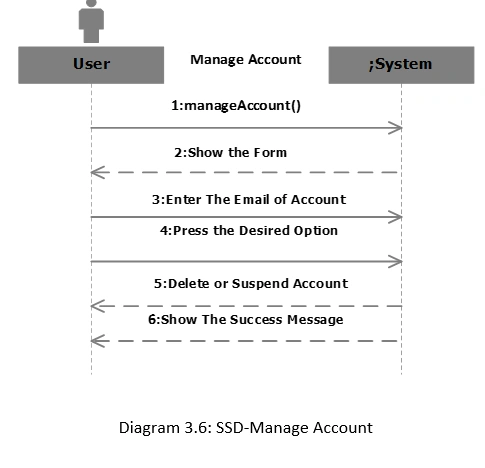
System Sequence Diagram Used in Software Development
A System Sequence Diagram (SSD) is a UML (Unified Modelling Language) diagram used in software development to depict the interactions between an external actor and the system being developed. It illustrates the sequence of messages exchanged between the actor and the system to achieve a particular functionality or use case. Here's an example of how a System Sequence Diagram may look: 18.6 System Sequence Diagram: The system sequence diagrams are based on the “Unified Modelling Language” This diagram visualizes the use case against the canaries.
- Article · Software Architecture/Engineering
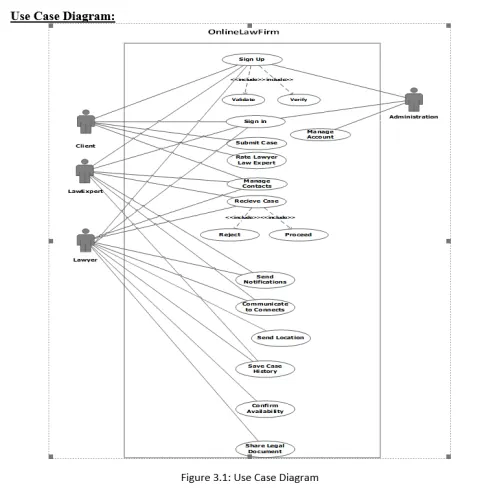
Use Case View in Software Development
Learn how the Use Case View captures functional requirements through actors, use cases, system boundaries, and UML use case diagrams.
- Article · Software Architecture/Engineering
How to use Software Model Software Process Model
In this article, we will discuss how we can use the process models and the importance of software process models why software models are important for the development of software processes, and how they can help the development team as well all stakeholders of the software product. In the software development life cycle, SDLC consists of a series of planned activities to develop the software product.