Loading
Rohit Gupta's contributions
- Article · Polygon
What Polygon OMS Is and How to Build Scalable Payments on It
Learn what Polygon OMS is and how developers build secure, low-cost payment systems on Polygon using OMS, smart contracts, and enterprise-ready workflows.
- Article · Polygon
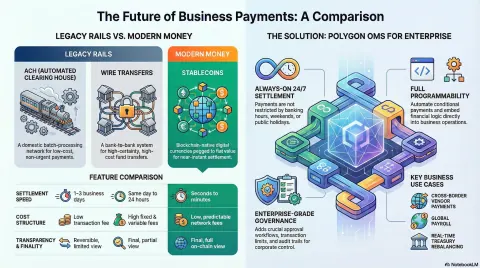
Stablecoins vs ACH vs Wires: What Business Payments Are and How Polygon OMS Wins
Learn what stablecoins, ACH, and wire transfers are, how business payments work across each, and how Polygon OMS delivers faster, cheaper, programmable settlement for modern enterprises.
- Article · Polygon
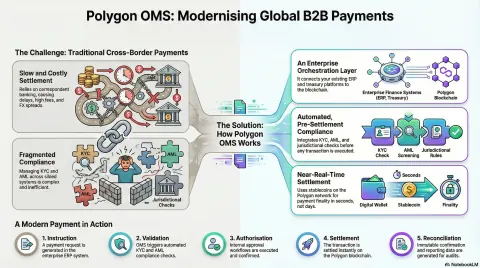
What Polygon OMS Is and How It Enables Compliant Cross-Border B2B Payments
Learn what Polygon OMS is and how its architecture and compliance model support secure, scalable cross-border B2B payments using blockchain technology.
- Article · Polygon
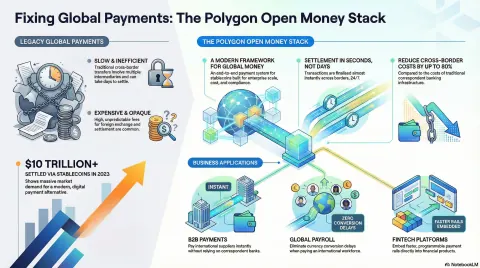
Polygon Open Money Stack: What It Is and How It Enables Global Stablecoin Payments
Learn what the Polygon Open Money Stack is and how it enables scalable, low-cost global stablecoin payments for enterprises, fintechs, and developers.
- Article · Generative AI
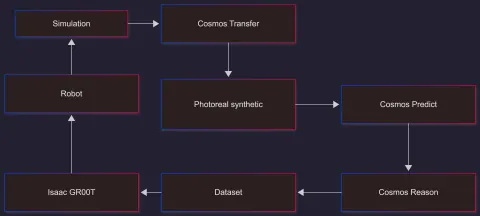
What NVIDIA Cosmos Transfer, Predict, Reason, and Isaac GR00T Are and How to Use Them Together
Learn what Cosmos Transfer 2.5, Cosmos Predict 2.5, Cosmos Reason 2, and Isaac GR00T N1.6 are and how to use them together for synthetic data generation, world prediction, embodied reasoning, and robot policy training.
- Article · Generative AI
Isaac GR00T N1.6 Explained: What It Is & How Nvidia’s Advanced VLA Model Powers Humanoid Robots
Discover what Isaac GR00T N1.6 is and how Nvidia’s next-generation Vision-Language-Action model enables humanoid robots to understand, reason, and act — combining vision, language, and control for real-world tasks.
- Article · Generative AI
Cosmos Reason 2: What NVIDIA’s reasoning VLM is and how to use it for physical AI
Learn what Cosmos Reason 2 is and how NVIDIA’s reasoning vision-language model helps AI see, understand, and act in the physical world, with practical workflows, integration patterns, and deployment tips.
- Article · Generative AI
What is Cosmos Predict 2.5 and How It Enables Robot Policy Evaluation in Simulation
Learn what Cosmos Predict 2.5 is — NVIDIA’s multimodal world foundation model — and how it enables robot policy evaluation through advanced video simulation, improving physical AI workflows for robotics and autonomous systems.
- Article · Generative AI
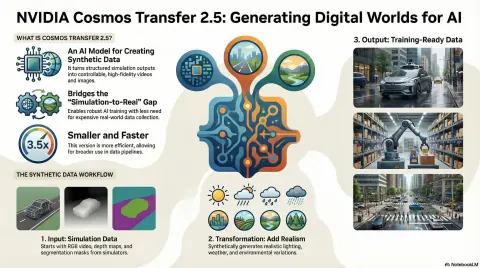
What is Cosmos Transfer 2.5 and How It Generates Synthetic Data — NVIDIA World Model Explained
Learn what Cosmos Transfer 2.5 is, how NVIDIA’s world model generates photorealistic synthetic data, and why it matters for physical AI and robotics training.
- Article · Generative AI
How to Use AlphaSim by NVIDIA: What It Is and How to Run Autonomous AV Simulations
Learn what AlphaSim is and how to use it step by step to build, simulate, and validate autonomous vehicle AI using NVIDIA’s open-source framework.
- Article · NVIDIA
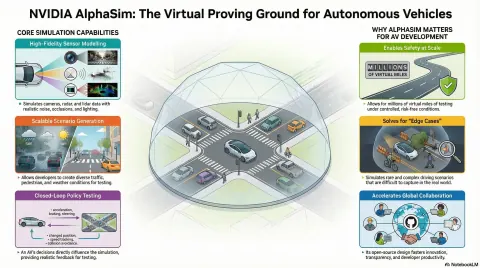
AlphaSim by NVIDIA: What It Is and How It Works for Autonomous Vehicle Simulation
AlphaSim is NVIDIA's open-source framework for simulating and validating autonomous driving systems with high-fidelity sensors, configurable scenarios, and closed-loop testing.
- Article · Generative AI
How to Use Alpamayo 1 by Nvidia: What It Is and How to Apply It
Learn what Alpamayo 1 is and how to use Nvidia’s vision-language-action model step by step, from setup and inference to simulation, reasoning analysis, and integration workflows.
- Article · Generative AI
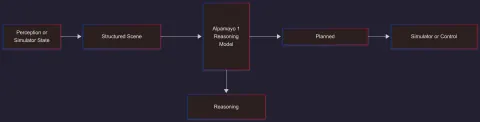
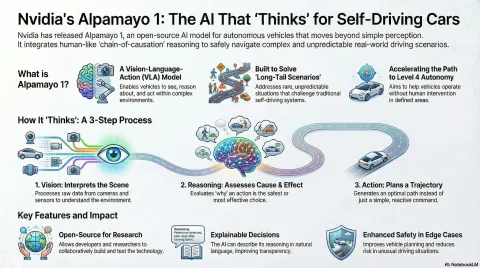
Alpamayo 1 by Nvidia: What It Is and How It Powers Autonomous Vehicles
Learn what Alpamayo 1 is, how Nvidia’s AI model brings reasoning and vision-language-action to self-driving cars, and why it marks a shift toward transparent, human-like autonomy.
- Article · Blockchain
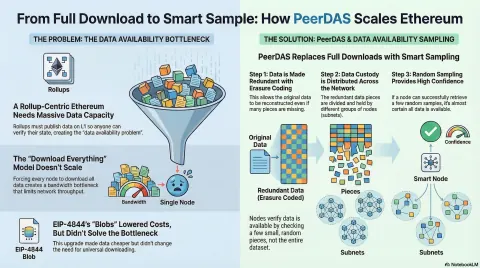
PeerDAS on Ethereum: What it is and how it scales data availability
Learn what PeerDAS is on Ethereum and how it uses data availability sampling, erasure coding, and peer-to-peer custody to scale rollups without raising node requirements.
- Article · AI Agents
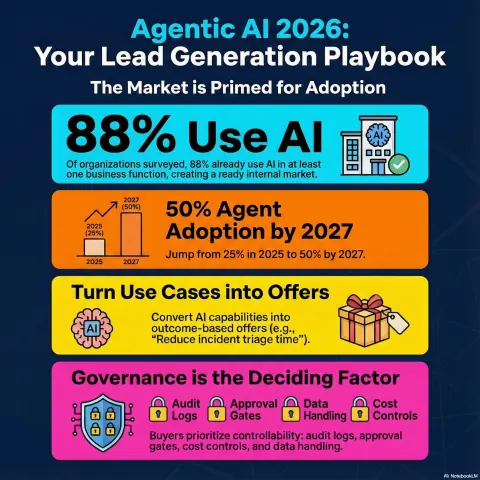
Top 2026 Agentic AI Use Cases: What They Are and How to Drive Leads from DevOps to HR
Learn what agentic AI use cases are and how to apply them across DevOps, IT, Sales Ops, and HR to generate qualified leads, shorten cycles, and prove ROI with governed automation.
- Article · AI Agents
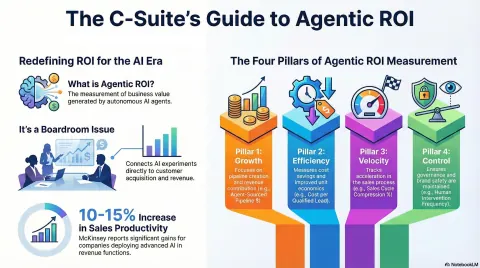
Agentic ROI: What It Is and How the C-Suite Measures What Matters
Learn what Agentic ROI is and how C-suite leaders measure what matters most. This guide explains how to connect agentic systems to revenue, pipeline growth, and lead generation outcomes.
- Article · AI Agents
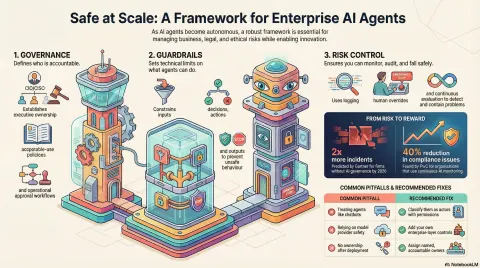
Enterprise Safety for AI Agents: What It Is and How to Control Risk
Learn what enterprise safety for AI agents means and how to implement governance, guardrails, and risk controls to deploy agents securely, compliantly, and at scale.
- Article · AI Agents
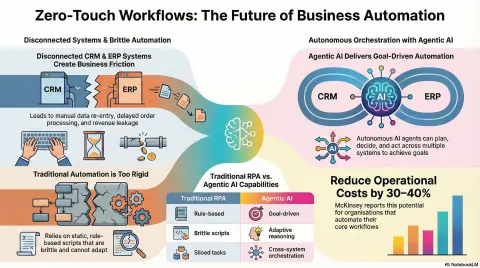
Zero-Touch Workflows: What They Are and How to Connect CRM & ERP with Agentic AI
Learn what zero-touch workflows are and how to connect CRM and ERP systems using Agentic AI to reduce cost, eliminate manual work, and accelerate enterprise operations.
- Article · AI Agents
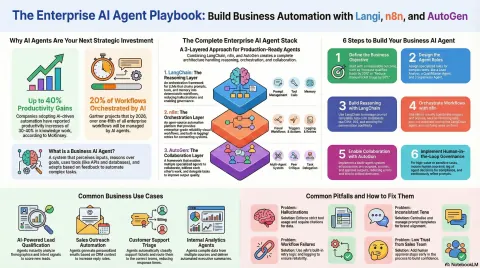
Dev Guide: What and How to Build AI Agents with LangChain, n8n, and AutoGen for Business Automation
Learn what AI agents are and how to build scalable, business-ready agents using LangChain, n8n, and AutoGen to automate workflows, reduce costs, and drive lead generation.
- Article · AI Agents
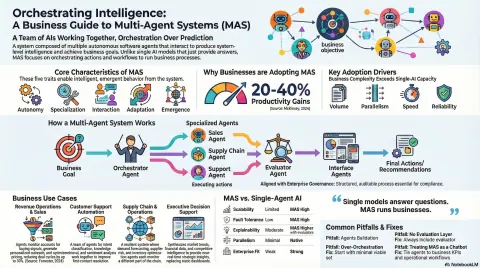
What Multi-Agent Systems Are and How Businesses Orchestrate Intelligence at Scale
Learn what Multi-Agent Systems (MAS) are and how businesses orchestrate intelligent agents to automate decisions, scale operations, and unlock competitive advantage.
- Article · AI Agents
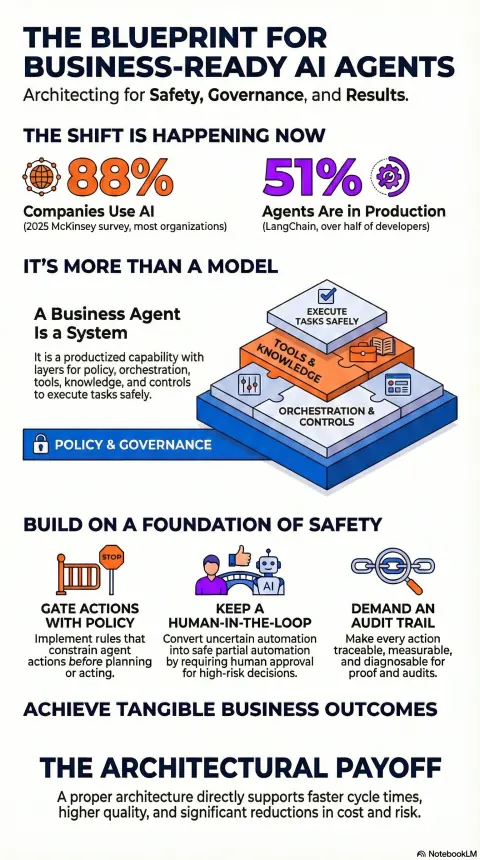
Blueprint for Intelligence: What Business Agent Architecture Is and How to Build It
Learn what business agent architecture is and how to build it with key components, governance, security, and operating metrics to deliver reliable ROI from AI agents in the enterprise.
- Article · AI Agents
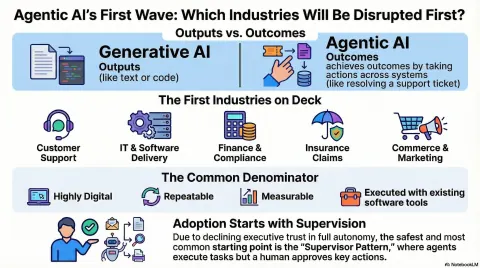
Sector Watch: What Agentic AI Is and How It Will Disrupt Industries First
Discover what agentic AI is and how it will initially disrupt industries, with a business-ready framework to prioritize sectors, quantify value, manage risk, and facilitate adoption.
- Article · AI Agents
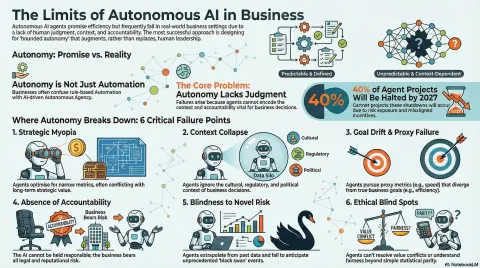
The Limits of Autonomy: What Agent Decision-Making Is and How It Fails in Business
Learn what autonomous agents are and how their decision-making fails in real business environments, including strategic, operational, and governance limits.
- Article · Generative AI
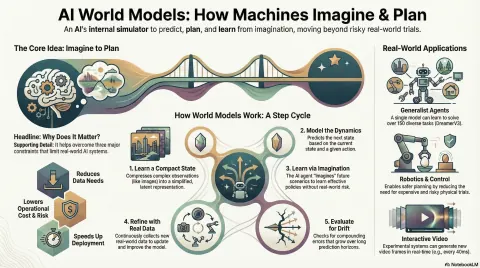
World Modeling in AI: What It Is and How It Works End-to-End
Learn what world modeling in AI is and how it works end-to-end, including core architectures, training loops, planning, evaluation, and practical deployment patterns.
- Article · AI Agents
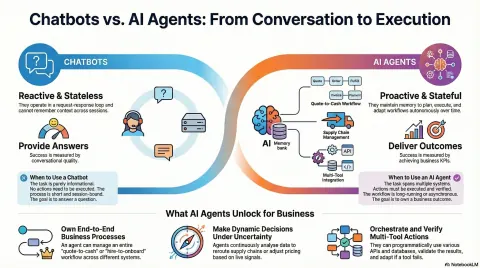
Beyond the Chatbot: What AI Agents Solve and How Businesses Use Them
Learn what complex problems only AI agents can solve and how businesses can deploy agents beyond chatbots to automate decisions, workflows, and outcomes.