Loading
Rohit Gupta's contributions
- Article · Langchain
Build and Run Local AI Models Using Ollama and LangChain
Learn how to build a private, high-performance local AI assistant using Ollama and LangChain. This guide covers installation, setup, prompt orchestration, and integration with local data.
- Article · AI
Advanced Techniques for Semantic Search Using Embeddings in Python
Learn advanced methods to implement and optimize semantic search using embeddings in Python. Covers model selection, vector databases, and hybrid retrieval systems.
- Article · Langchain
Deep Research with LangChain: How LangChain Is Revolutionizing AI Knowledge Work
Explore how LangChain’s Deep Research framework automates complex research workflows using multi-agent reasoning, retrieval, and synthesis — a game-changer for AI-driven insight generation.
- Article · Langchain
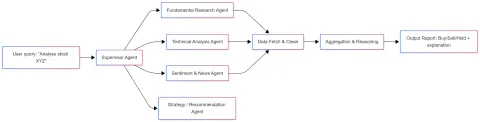
LangChain Stock Research Agent v3 | DeepAgent Multi-Agent Finance AI
Explore the “Stock Research Agent v3” from LangChain—a multi-agent, deep-research AI system built with LangGraph and LangSmith for advanced financial research. Understand architecture, capabilities, use-cases, limitations, and how you can apply it.
- Article · Langchain
Tokencrush, LangGraph, and the Real Economics of LLM Efficiency
Explore Tokencrush for LangGraph and how tools like LLMCostOptimizer.com redefine enterprise LLM efficiency through deep cost analytics, optimization, and ROI-driven AI strategy.
- Article · Prompt Engineering
Top 50 Prompt Engineering Techniques for Python Developers
Learn prompt engineering fundamentals tailored for Python developers. Includes examples, best practices, and 50 ready-to-use prompts for AI-assisted coding.
- Article · AI
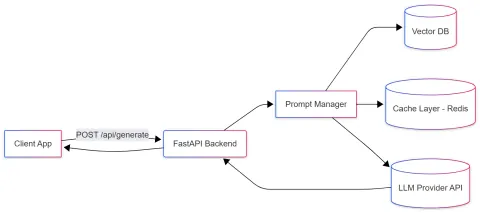
FastAPI + LLMs: Building a Scalable AI Backend
Learn how to integrate Large Language Models (LLMs) like GPT, Claude, or Mistral into a FastAPI backend. Covers architecture, prompt management, caching, and deployment.
- Article · LLMs
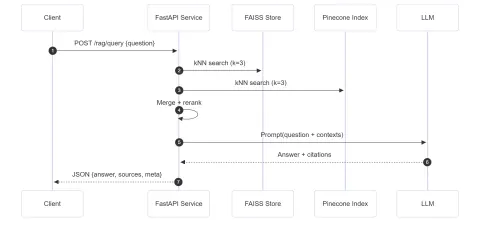
Advanced RAG in Python with FastAPI – Multi-Source Retrieval and Evaluation
Build, evaluate, and deploy a production-ready Retrieval-Augmented Generation (RAG) system in Python using FAISS, Pinecone, LangChain, and FastAPI. Includes code, Dockerfile, diagrams, and an evaluation workflow.
- Article · Langchain
Using LangChain Tools in Python for AI Workflow Automation
Learn how to use LangChain tools in Python to build advanced LLM workflows, integrate APIs, and automate reasoning pipelines with code examples and best practices.
- Article · AI
Connect Python to GPT-5 API: Step-by-Step Developer Guide
Learn how to connect Python to the GPT-5 API for text generation, embeddings, and automation. Includes setup, authentication, example code, and best practices.
- Article · AI
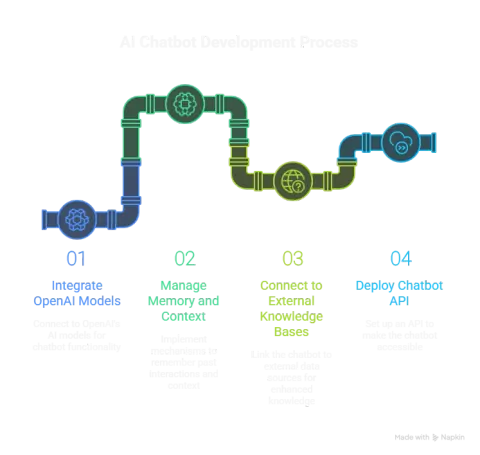
Build a Chatbot with Python and LangChain – Full Developer Guide
Learn how to build a production-ready chatbot using Python, LangChain, and OpenAI in this step-by-step developer guide. Includes architecture, code examples, and deployment best practices.
- Article · AI
AI for Python Developers: OpenAI API Setup and Best Practices in 15 Minutes
Learn how to integrate the OpenAI API in Python within 15 minutes. Includes setup, environment configuration, example scripts, and production-ready best practices.
- Article · LLMs
Automating Bank Statement Analysis with LLMs & RAG Techniques
Learn how to extract structured transaction data from bank-statement PDFs using OCR and layout analysis, then use RAG and LLMs to query spending and generate financial insights.
- Article · LLMs
MaxKB Open-Source Platform | Enterprise AI Agents & RAG Pipeline
Explore MaxKB—an open-source platform by 1Panel-dev for enterprise-grade AI agents featuring RAG pipelines, agentic workflows, model-agnostic support, multi-modal input/output, and seamless integration.
- Article · Langchain
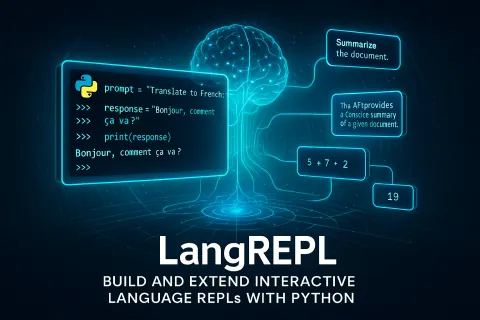
LangRepl: Build and Extend Interactive Language REPLs with Python
Learn how LangRepl enables developers to build interactive REPL environments using Python. Understand its architecture, setup, customization options, and integration workflows.
- Article · AI Agents
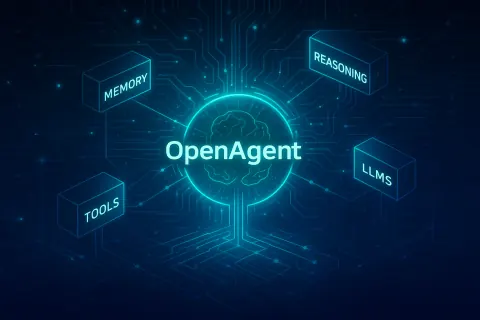
OpenAgent: The Ultimate Framework for Modular AI Agent Orchestration
Explore OpenAgent, a powerful open-source framework for building, orchestrating, and deploying multi-agent AI systems with modular tools, integrations, and workflows.
- Article · LLMs
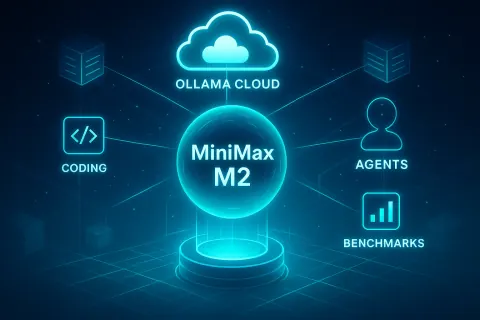
MiniMax M2 on Ollama Cloud – Benchmark Leader for Coding and Agentic Workflows
Explore MiniMax M2, Ollama’s latest open-source AI model built for coding and agentic automation. Learn its capabilities, benchmarks, integrations, and API setup.
- Article · Langchain
Doubling Down on DeepAgents – DeepAgents v0.2 Update & When to Use It
Explore the v0.2 release of DeepAgents by LangChain: new pluggable backends, enhanced memory, conversation summarisation, and a decision framework on when to use DeepAgents vs LangChain vs LangGraph.
- Article · Langchain
Build a Custom LangChain Chat Model from Scratch
Learn how to create a fully customized chat model using LangChain, OpenAI API, and Python. Includes step-by-step implementation, architecture diagram, and optimization insights.
- Article · Langchain
Chatsky conversational framework – deep integration & dialogue DSL
Explore Chatsky, the open-source Python framework for building chatbots. Learn architecture, script DSL, use-cases, limitations, deployment, and how to get started.
- Article · Langchain
Build AI Agents with LangChainJS and Azure Model Catalog (MCP Agent Example)
Learn how to create intelligent AI agents using LangChainJS and Azure’s Model Catalog with the MCP Agent sample. This detailed guide covers setup, architecture, and code examples for production-ready integrations.
- Article · LLMs
Build a Bash Terminal Agent Using NVIDIA Nemotron Nano v2 in 1 Hour
Follow a detailed, step-by-step guide to create a natural-language Bash terminal agent using the open-source NVIDIA Nemotron Nano 9B v2 model. Learn prerequisites, architecture, code snippets, safety considerations, and how to extend this system for practical workflows.
- Article · LLMs
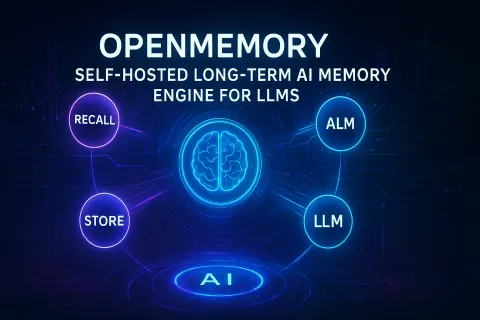
OpenMemory – Self-Hosted Long-Term AI Memory Engine for LLMs
OpenMemory is an open-source, self-hosted memory engine designed to add persistent, semantic, and contextual memory to AI agents and LLM applications. Learn architecture, setup, use-cases, limitations, and integration.
- Article · AI Agents
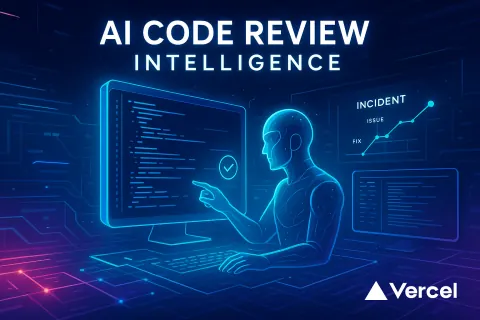
Vercel Agent: AI-Powered Code Review & Incident Investigation Tool
Learn how Vercel Agent brings AI to your development workflow—automated code reviews, production incident investigations, validated suggestions, and unified platform integration.