Loading
Articles by Sandeep Singh Shekhawat

Difference Between Response.Redirect() and Server.Transfer() Methods in ASP.Net
Compare ASP.NET Response.Redirect and Server.Transfer, including browser round trips, URL changes, server-side context, and when each method can be used.
InProc Session State Mode in ASP.Net
This article explains the InProc Session State Mode in ASP.NET. The InProc Session State Mode is the default Session State Mode. We can host multiple websites/web applications on a single IIS. Each application runs in a separate Application Domain.
Introduction to ASP.Net Session
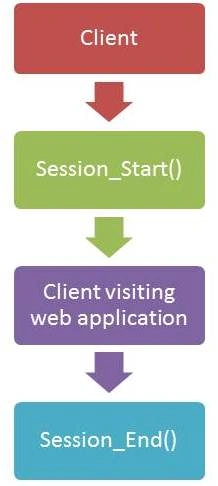
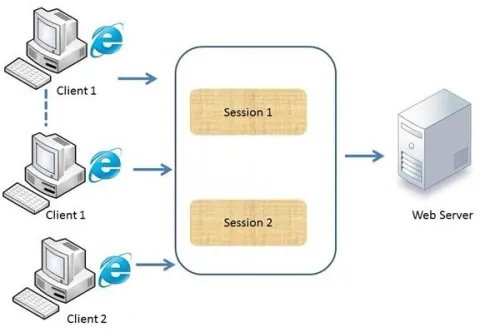
This article introduces ASP.NET session state. The ASP.NET Session State stores and retrieves values for a user. An ASP.NET Session State identifies requests from the same browser during a limited time window as a session, and provides a way to persist variable values for the duration of that session.
ASP.Net MVC Validation Using Fluent Validation
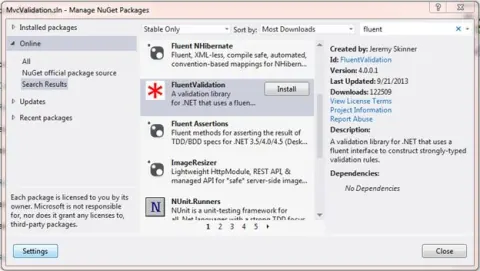
This article explains how to implement ASP.NET MVC validation using Fluent Validation.
Create HTML Helpers Extension Method to Get Id and Name in jQuery Function
This article introduces two extension methods of the HtmlHelper class, one that obtains the Id in a jQuery function and another obtains the Name in a jQuery function.
ASP.Net MVC Server-Side Validation
This article explains the basics of ASP.NET MVC server-side validation using the Data Annotation API.
ASP.Net MVC Client Side Validation
This article explains how to implement client-side validation in an ASP.NET MVC application.
Creating a DropDownList For Enums in ASP.Net MVC
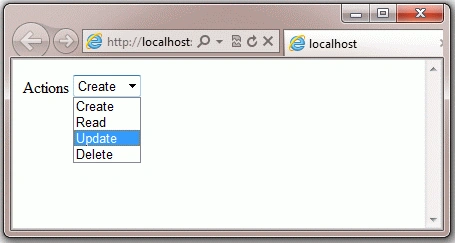
This article explains how to populate a DropDownList by enum type in ASP.NET MVC.

SingleOrDefault and FirstOrDefault Methods in LINQ to SQL
This article explains the differences between the SingleOrDefault and FirstOrDefault Methods in LINQ to SQL.
CRUD Operations Using LINQ to SQL in MVC
This article introduces basic Create, Read, Update and Delete (CRUD) operations using LINQ to SQL in MVC with a sample application.
Cascading Dropdown List With MVC, LINQ to SQL and AJAX
This article explains how to populate a child DropDownList depending on each new value as values are selected in the parent's DropDown List.
ASP.Net MVC 4 - Layout and Section in Razor
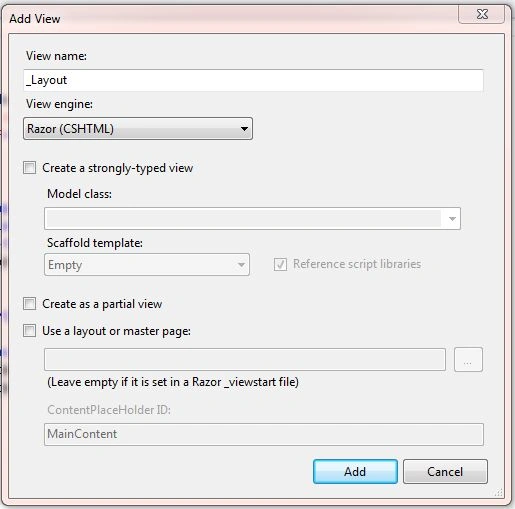
Razor has a feature called "layouts" that allow you to define a common site template, and then inherit its look and feel across all the views/pages on your web application.
Displaying Data On View From Controller
In ASP.NET MVC, data from a controller can be displayed on a view using various methods like ViewData, ViewBag, or strongly-typed models. Controllers pass data to views, leveraging Razor syntax to bind and render it dynamically.
An Example of URL Rewriting With ASP.Net
This article introduces URL rewriting using a data-driven application. This application creates various blogs and these blogs are accessed by the title of the blog.
CRUD Operations Using Entity Framework 5.0 Code First Approach in MVC
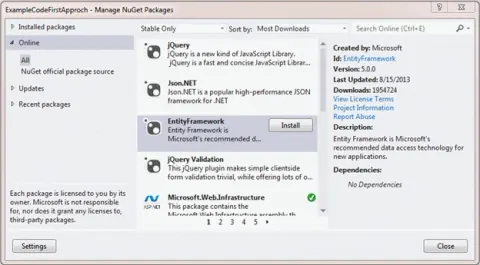
Perform CRUD operations in MVC using Entity Framework 5.0's Code First approach. Define entity classes, utilize DbContext and LINQ for data access, and generate views and controllers with scaffolding for seamless data manipulation in web applications.
Routing in MVC
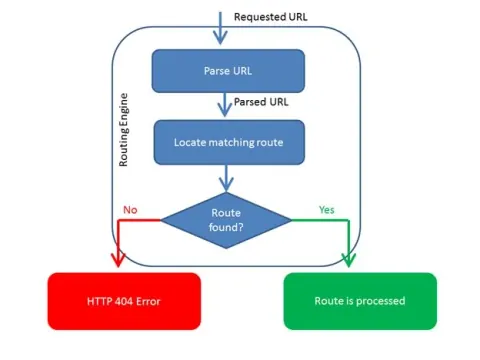
This article explains routing in ASP.Net MVC. ASP.NET MVC routing is a pattern matching system that is responsible for mapping incoming browser requests to specified MVC controller actions.
Getting Data From View to Controller in MVC
Learn four ways to pass form data from an ASP.NET MVC view to a controller action: Request, FormCollection, action parameters, and strongly typed model binding.
CRUD using the Repository Pattern in MVC
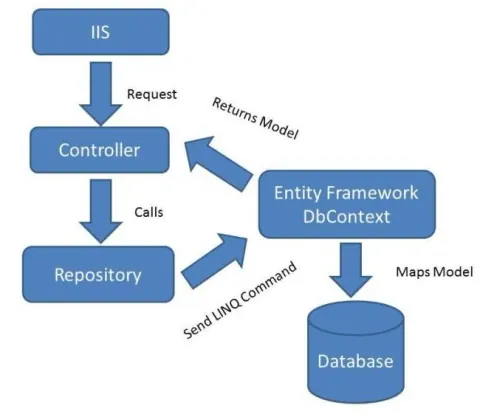
This article introduces the repository pattern in an MVC application. Repository pattern is intended to create an abstraction layer between the data access layer and the business logic layer of an application.
Install MVC 4 in Visual Studio 2010
In this article I go through step-by-step how to install MVC 4 in Visual Studio 2010.
Working With Html.BeginForm() and Ajax.BeginForm() in MVC 3
In this article, we will learn how to utilize HTML.BeginForm() and Ajax.BeginForm() in MVC 3 for efficient form handling. Explore MVC 3's form submission techniques using HTML.BeginForm() for traditional postbacks and Ajax.BeginForm() for asynchronous requests.
Getting Started with Razor View Engine in MVC 3
Learn about the Razor View Engine in MVC 3 through this beginner-level article, covering syntax basics, creating a User Registration Application, and utilizing Data Annotation Validator Attributes for validation. Understand the advantages of Razor over the ASPX View Engine.

C# Propertie Implementation, Types, Examples, and Best Practices
C# property is a member of a class that allows the class to expose some functionality without exposing the implementation details. This article explains what a property is in C#, why we need properties, and how to implement properties in C# and .NET.
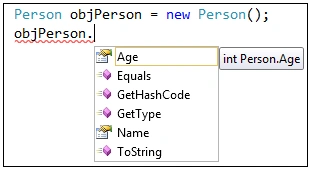
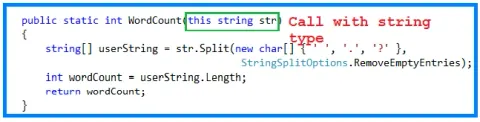
Extension Method In C#
Extension Methods are a new feature in C# 3.0. An Extension Method enables us to add methods to existing types without creating a new derived type, recompiling, or modify the original types.