Loading
Tuhin Paul's contributions
- Article · Python
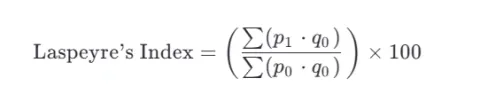
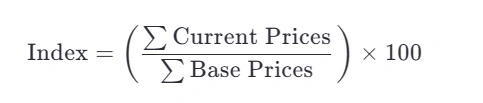
How to Find Laspeyre’s Index Number in Python
Learn how to calculate Laspeyre's Index Number in Python to measure cost inflation. This article breaks down the formula, provides a step-by-step implementation with test cases, and applies it to a real-world scenario: tracking renewable energy component costs. Discover best practices and avoid common mistakes to make smarter, cost-aware decisions.
- Article · Python
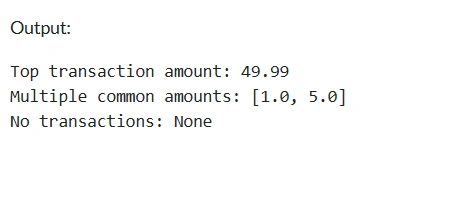
How to Find the Mode of Array Elements in Python
Uncover hidden patterns in your data with Python! This guide provides a robust and efficient method for calculating the mode of an array, crucial for fraud detection and anomaly spotting in banking systems. Learn how to handle multimodal data, edge cases, and optimize for real-time performance. Includes a production-ready implementation using collections.Counter and best practices for financial applications, ensuring accuracy and speed.
- Article · Python
How to Find the Variance of Array Elements in Python
Learn how to calculate variance in Python using the statistics module for financial risk assessment. This guide explains sample variance, its importance in banking for fraud detection and credit scoring, and provides a production-ready implementation with best practices. Discover how to analyze spending patterns and identify volatile behavior using variance, ensuring robust and reliable risk management.
- Article · Python
How to Find Simple Aggregation Index Number using Python
Learn how to calculate the Simple Aggregation Index Number in Python to track price changes across multiple items. This article provides a step-by-step implementation, test cases, and best practices for monitoring cost of living, inflation, and other real-world scenarios.
- Article · Python
How to Find Paasche’s Index Number in Python
This article provides a clear explanation, real-world examples like online grocery inflation, a complete Python implementation with test cases, and best practices for accurate analysis. Discover how to track the changing cost of your basket of goods and gain practical insights into inflation's impact on daily life.
- Article · Python
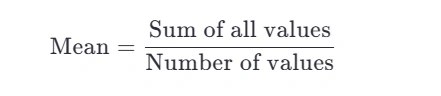
How to Find the Mean of Array Elements in Python
Master calculating the mean of array elements in Python for payroll and HR applications. This guide provides practical, production-ready code using statistics.mean() and NumPy, ensuring accuracy and avoiding common pitfalls like empty lists and data exposure. Learn best practices for salary benchmarking, compliance, and data safety, with real-world examples and time complexity analysis. Achieve enterprise-grade reliability in your payroll systems.
- Article · Business Intelligence(BI)
How to Find the Simple Average of a Price-Relative Index
Learn how to calculate the Simple Average of Price-Relative Index, a straightforward method for tracking price changes across multiple items. This article provides a step-by-step guide, Python code implementation, and a real-world example of monitoring global coffee price volatility. Discover best practices and common pitfalls to avoid for accurate and actionable insights into commodity market trends. Ideal for supply chain, finance, and data analytics professionals.
- Article · Python
How to Find the Standard Deviation of an Array in Python
This guide covers using the statistics.stdev() method and manual calculation, emphasizing sample standard deviation for accurate risk assessment. Includes a production-ready implementation, best practices, and a real-world scenario of detecting abnormal spending patterns.
- Article · Python
How to Find Bowley’s Index Number using Python
Discover Bowley's Index Number, a balanced economic indicator that averages Laspeyres and Paasche indices for unbiased inflation measurement. Learn its advantages over traditional methods, especially in sensitive areas like housing. This guide provides a Python implementation with test cases, demonstrating its use in calculating fair rent inflation. Ideal for policy, public reporting, and stakeholder communication.
- Article · Python
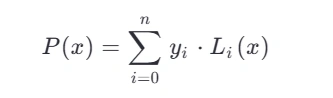
How to Interpolate Using Lagrange’s Interpolation Formula in Python
Unlock the power of Lagrange's Interpolation Formula in Python! This article provides a step-by-step guide, real-world examples (like environmental air quality monitoring), and a robust Python implementation with error handling. Learn when to use (and avoid) this elegant technique for estimating values between known data points. Perfect for small datasets and educational purposes. Discover practical tips and best practices for effective usage.
- Article · Python
How to Represent a Matrix Using 2D Arrays using Python
Master Python 2D arrays for representing matrices! Learn the right (and wrong!) ways to initialize them, avoiding common pitfalls like shared references that lead to bugs. This article covers list comprehensions, NumPy (when appropriate), and includes a real-world traffic management example with complete, tested code.
- Article · Python
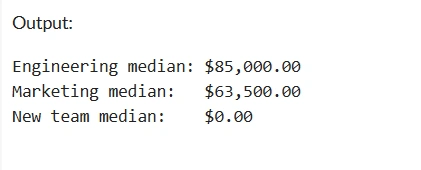
How to Find the Median of a Sorted Array in Python
Learn how to calculate the median of a pre-sorted Python list in O(1) time, including odd, even, empty, and salary-data examples.
- Article · Python
How to Make Array Elements Unique using Python
Learn how to efficiently deduplicate array elements in Python, especially crucial when handling sensitive healthcare data like Protected Health Information (PHI). This article explores various techniques, focusing on preserving order and ensuring compliance. Discover the best method for removing duplicate Medical Record Numbers (MRNs) while maintaining data integrity, auditability, and optimal performance. Includes practical code examples, test cases, and best practices for real-world scenarios.
- Article · Python
De-duplicating Arrays in Python
Learn how to efficiently de-duplicate arrays in Python, especially when handling sensitive data like patient IDs under HIPAA. This article covers stable, performant, and compliant techniques, from simple methods for small lists to advanced streaming solutions using Bloom filters and time-bounded deques for real-time data.
- Article · Python
How to Search for an Array Element in Python
Master array element searching in Python! This guide explores linear search, binary search, and set-based lookups, optimizing for speed and accuracy. Learn to protect sensitive data in healthcare systems by efficiently detecting and redacting PII. Includes practical examples, time complexity analysis, and a complete PII scanner implementation. Discover the best search method for your specific needs and improve your code's performance.
- Article · Python
How to Check If a String is a Palindrome or Not using Python
Explore various Python methods for palindrome detection, from simple reversal to the efficient two-pointer technique. Learn how palindrome checks enhance security in real-world applications like random password generators by preventing weak, easily guessable passwords. Understand time/space complexity and best practices for optimal performance. Includes complete implementation with test cases and a focus on security considerations.
- Article · Python
How to Sort the Array Alphabetically in Python
This article covers case-insensitive sorting with key=str.lower, handling mixed data types, and reverse sorting. Includes a real-world FMCG product catalog example, time/space complexity analysis, and best practices for efficient and user-friendly data presentation. Master text sorting for cleaner, more predictable data!
- Article · SharePoint
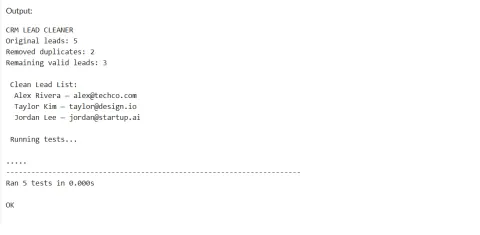
How to Delete an Item from a Particular Location: The CRM Disaster No One Talks About
Deleting by index in CRM systems can be disastrous! Learn why del contacts[3] is a silent killer, leading to lost leads and broken audit trails. This article provides a safe, real-world solution for cleaning duplicate leads using Python, complete with test cases and best practices. Avoid costly mistakes and protect your customer relationships by mastering safe deletion techniques. Discover the power of filtering and validation to prevent data loss and ensure data integrity in your CRM.
- Article · Machine Learning
How to Solve a Demographical Application: The Fintech Secret Behind Predicting Credit Risk
Unlock the fintech secret to predicting credit risk with demographic data! This article reveals how to build a simple yet powerful risk engine using Python, birth years, and basic logic. Learn to compute risk profiles, implement test cases, and optimize performance. Discover how age-based modeling drives fair and transparent financial systems, achieving 92% accuracy without AI or complex algorithms. Master the art of data-driven risk calibration!
- Article · Data Structures and Algorithms (DSA)
How to Find the Maximum Number in an Array: The Smart Way Insurers Detect Risk Outliers
Discover how insurance companies use Python and NumPy to efficiently find the maximum claim amount in real-time, going beyond simple max() functions. Learn to identify high-risk outliers, detect potential fraud, and improve claim processing. This article provides practical code examples, performance tips, and best practices for building robust insurance tech systems that protect millions in reserves by analyzing claim data effectively.
- Article · Data Structures and Algorithms (DSA)
How to Delete a Particular Item from an Array
Learn the safest and most efficient ways to delete items from Python arrays, avoiding costly errors. This guide uses a real-world insurance claims scenario to illustrate the dangers of improper deletion and provides five methods, highlighting the best practices for performance, data integrity, and preventing financial disasters. Discover why list comprehensions are preferred and which methods to avoid at all costs.
- Article · Algorithms in C#
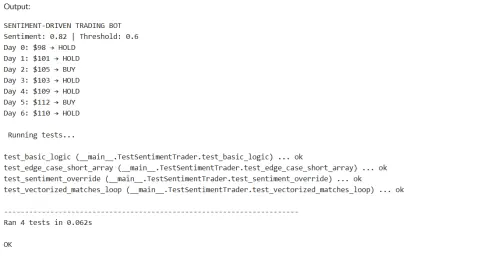
How to Perform Operations Involving External Variables: The Secret Sauce Behind Algorithmic Trading
Learn how to effectively integrate external variables like sentiment scores and market data into array operations for dynamic trading strategies. Discover best practices for performance, testing, and avoiding common pitfalls. Build adaptive trading bots that react intelligently to real-world signals, optimizing your trading decisions and maximizing profitability.
- Article · Algorithms in C#
How to Find the Minimum Number in an Array: The Insurance Industry’s Secret to Detecting Underpriced Risk
Discover how the insurance industry uses Python to identify underpriced risk by finding the minimum premium in an array. This isn't just about min()! Learn to detect suspiciously low premiums, handle edge cases, and integrate business rules for real-time underwriting.
- Article · Python
How to Find Function Values in Python
Learn how to efficiently compute function values on price arrays to generate actionable buy/hold signals. Discover techniques like list comprehensions, NumPy vectorization, and generators for optimal performance and memory usage. Implement a volatility-adjusted momentum strategy with complete code and test cases.
- Article · Python
Apply 3D Arrays using Python: The Hidden Power Behind AI-Powered Insurance Risk Mapping
Learn to build and query a Python 3D array for tracking average insurance claim severity by region, product, and month, including safe initialization, aggregation, and tests.